Small gestures provide lasting comfort for patient’s family - Niagara Health
This story deserves to be shared
Send it to someone who'd care, or post it on your networks.
This article is an excerpt. To read the full content, visit the original source. Niagara Health
Related articles

"Mind-blowing" Alzheimer’s breakthrough: Two hours of sleep restored without clearing brain plaques - Science Daily
Scientists have discovered an unexpected reason why Alzheimer's disease disrupts sleep, and their findings suggest that the problem may be reversible. In experiments involving mice with Alzheimer's-like brain changes, researchers restored more than two hours of sleep per day without removing the amyloid plaques associated with the disease. The surprising discovery points to an overlooked culprit: the brain's own immune cells. Rather than simply protecting the brain from damage, these cells can trigger inflammation that interferes with healthy sleep.
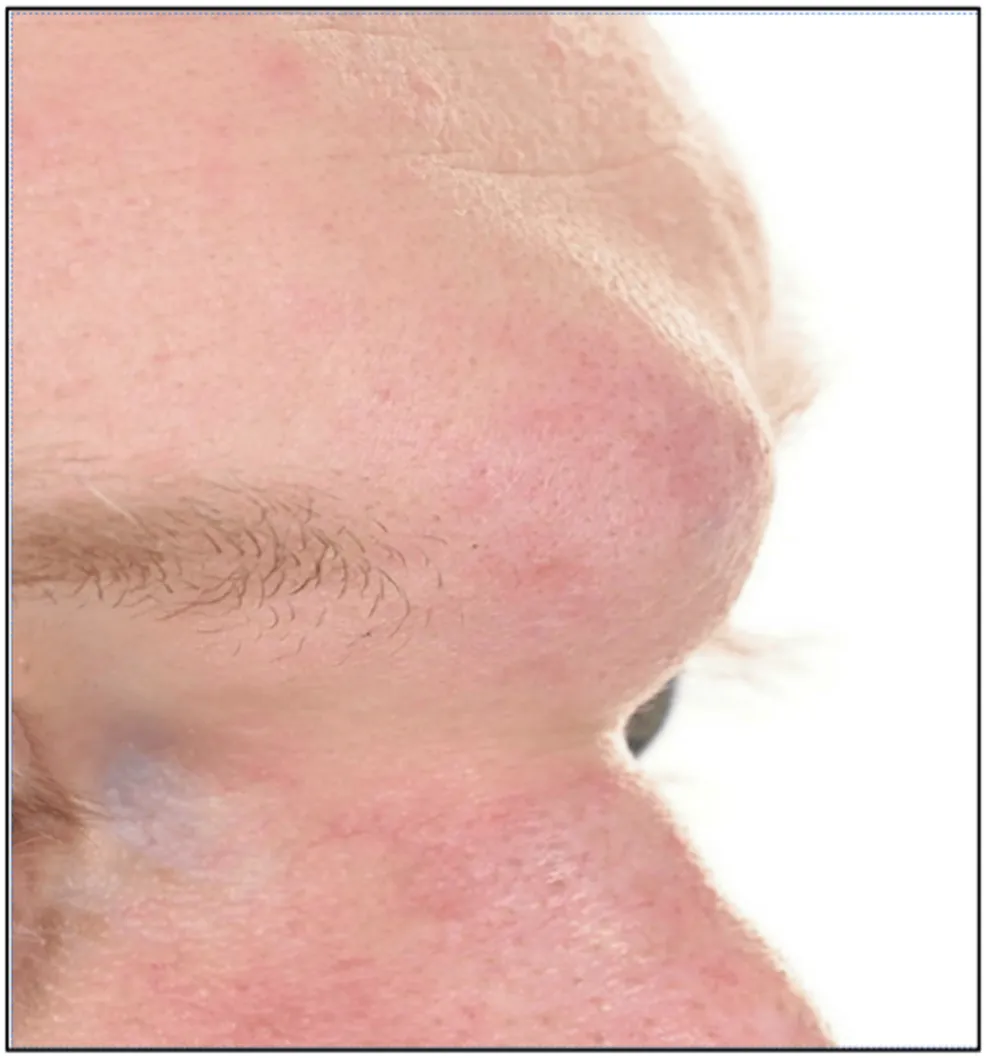
Delayed Clinical Response Following Intravenous Bleomycin Electrosclerotherapy for a High-Flow Glabellar Arteriovenous Malformation - Cureus
High-flow arteriovenous malformations (AVMs), particularly in the facial region, present challenges to management due to the complex surrounding anatomy. Bleomycin electrosclerotherapy (BEST) is a treatment option for facial AVMs. In these instances, the bleomycin is most commonly administered intralesionally or via selective intra-arterial injection. We report the case of a 28-year-old man with a congenital glabellar AVM that has progressively enlarged and developed a palpable pulsation over the preceding few years. A soft tissue ultrasound and contrast-enhanced computer tomography (CT) confirmed a high-flow glabellar AVM with arterial feeders arising from the ophthalmic arteries and the external carotid arteries bilaterally. Due to the proximity of the ophthalmic arteries, direct sclerosant injection and embolisation were considered high risk for visual compromise. The patient underwent BEST under general anaesthesia, with 15,000 units of bleomycin administered intravenously followed by electroporation targeted to the lesion nidus. The procedure was completed without immediate complication. At eight weeks post-procedure, there was only marginal improvement in lesion size and puls
I-C eye drops ease mild-to-moderate dry in early trial - Glance by Eyes On Eyecare
Findings from a recent study published in Clinical Ophthalmology show that iota-carrageenan (I-C) eye drops eased dry eye disease (DED) symptoms and protected the ocular surface in adults with mild-to-moderate disease. Give me some background first. Some context: DED is one of the most common reasons patients see eyecare practitioners (as evidenced in the Tear Film Ocular Society’s DEWS II), and its global prevalence runs anywhere from 5% to 50% depending on region and age group (see this epidemiology report for more on this). The lubricant market has been dominated for decades by hyaluronic acid (HA) products. Innovation since then has mostly meant new combinations of existing compounds. But real gaps remain, with tolerability issues, little ability to help damaged tissue heal, and a therapeutic effect that can take weeks or months to kick in. So what’s the argument favoring I-C drops? The pitch: I-C is a natural polysaccharide extracted from red seaweed. It forms a gel on contact with the ocular surface, holds water there, and thins under the shear of a blink so it does not fight the eyelid.
0 comments
No comments yet. Be the first to share your thoughts!