Signs of material exchange between Earth’s core and mantle found in China — ScienceAlert - UA.NEWS
This story deserves to be shared
Send it to someone who'd care, or post it on your networks.
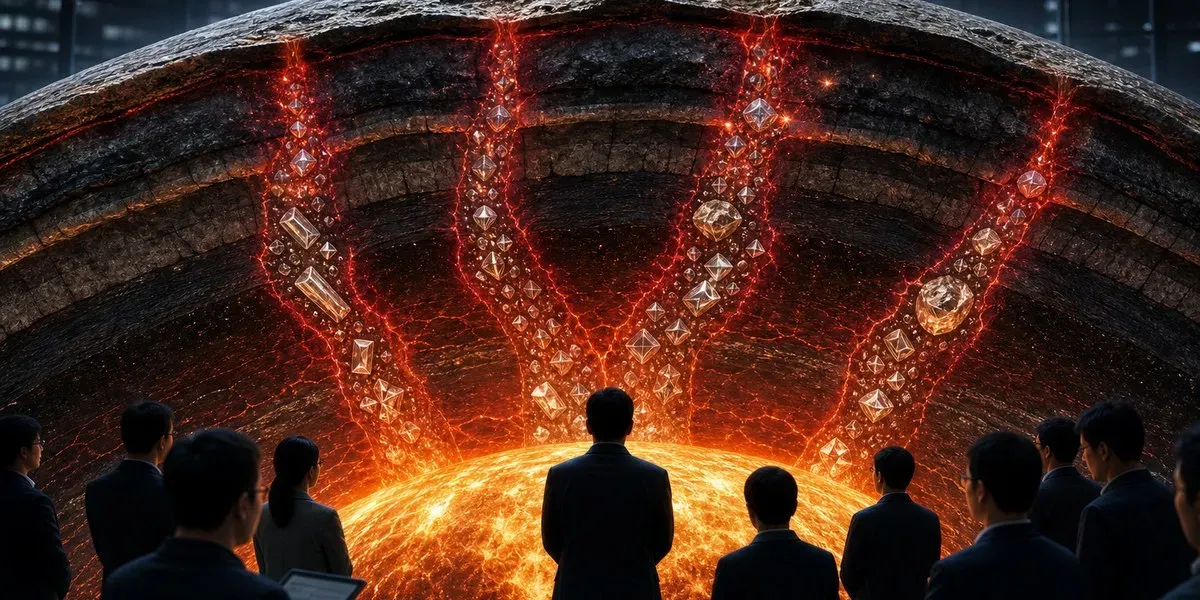
Geoscientists at the University of Science and Technology of China in Hefei concluded that Earth’s core may have transferred materials to the mantle throughout its evolution. ScienceAlert reports, citing a study published in the journal Science Advances. Hydrogen isotopes as a key to the processThe researchers used path-integral simulations enhanced by machine learning to investigate the quantum behavior of atoms and molecules. They paid particular attention to hydrogen transport in the planet’s interior, as the low mass of this element makes its isotopic composition sensitive to quantum effects. The team analyzed the deuterium-to-hydrogen ratio, an indicator of the proportion of the heavier hydrogen isotope. A model of the crystallization of the primordial magma ocean showed that isotope separation between minerals and melt should have been weak. Therefore, the ancient mantle should have acquired a relatively uniform hydrogen isotopic composition, despite differences in pressure, temperature, and model assumptions. More current news is available on the UA. News Telegram channel Telegram.
This article is an excerpt. To read the full content, visit the original source. UA.NEWS
Related articles
New family of octocorals discovered near Costa Rica — ScienceAlert - UA.NEWS
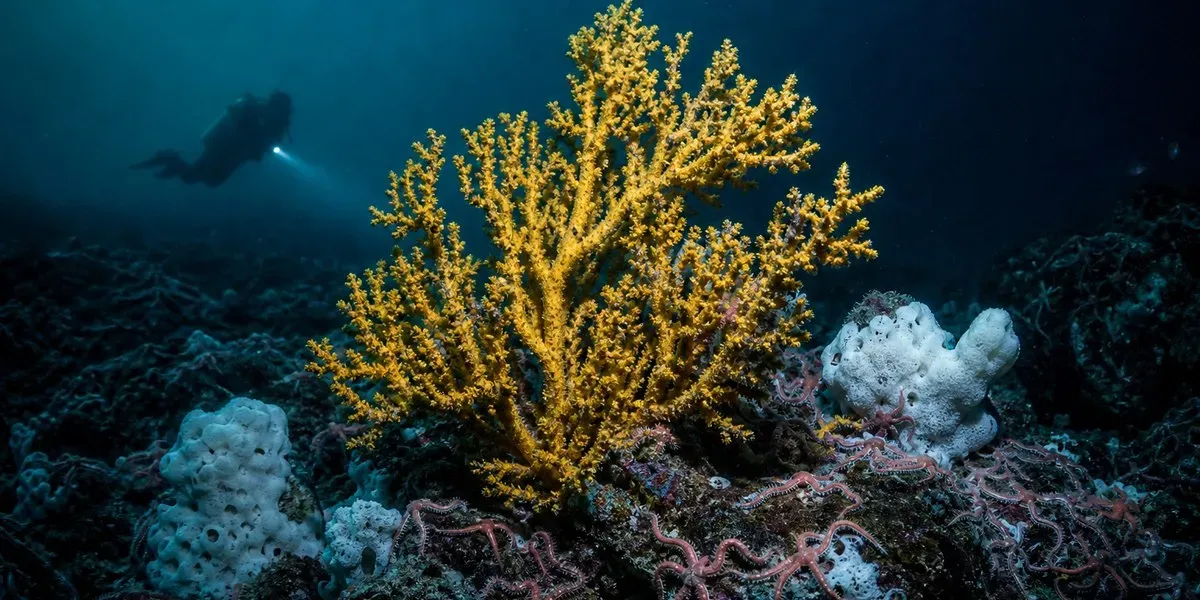
On a seamount off the coast of Costa Rica, researchers described a new species of octocoral, Laurinque elenya, and established a new family for it — Laurinqueidae. The corals were found at depths of 360 to 529 meters during dives in 2019 and 2023, ScienceAlert reports. Unusual colony structureColonies of this coral grow to more than one meter in height and up to 1.2 meters in width. They have a densely branching structure covered with unusually elongated polyps — the small animals that make up a coral colony. The polyps can partially retract into the branches, while the sclerites — the coral’s microscopic skeletal structures — are distinguished by a range of shapes. Such a combination of features had not previously been recorded in a single species of octocoral. The new taxon was named Laurinque elenya; the name comes from Tolkien’s Elvish language Quenya and means “golden tree of stars.” The golden coral branches grow above a bottom almost completely covered with pink brittle stars. More current news is available on the UA. News Telegram channel Telegram. Genetic analysis determined the familyInitially, an analysis of three genetic markers did not produce an unambiguous result.

Diet and exercise achieved diabetes remission in 27 of 50 participants — ScienceAlert - UA.NEWS
In Canada and the United Kingdom, combining a low-calorie diet with structured physical exercise made it possible to achieve type 2 diabetes remission in 27 of 50 participants in the intervention group over 24 weeks. In the control group, remission was recorded in two people, ScienceAlert reports. The study involved 96 peopleThe randomized study was conducted at three centers in Canada and the United Kingdom. It involved 96 people of diverse ethnic backgrounds with obesity and early-onset type 2 diabetes who were not receiving insulin therapy. The participants’ average age was 38. Early-onset type 2 diabetes is generally defined as a diagnosis made at or before the age of 45. This type of disease may progress more quickly than diabetes diagnosed at an older age, while patients face a higher risk of premature complications and death. More current news is available on the UA. News Telegram channel Telegram. Diet and exercise programParticipants in the intervention group consumed approximately 800–900 kilocalories per day during the first 12 weeks. Their program also included two supervised weekly sessions combining aerobic and strength exercises, as well as one independent workout.
Investigation of the dosimetric characteristics of real-time silicone/Bi - Nature
We’re sharing this article early to provide faster access to peer-reviewed, accepted research. It is citable and carries a permanent DOI. This version is subject to further edits and will be replaced automatically by the final Version of Record. All legal disclaimers apply. AbstractThis study presents the development of high-sensitivity real-time X-ray dosimeters based on room-temperature-vulcanized (RTV-2) silicone nanocomposites incorporating 0–60 wt% Bi2O3 nanoparticles, fabricated via solution casting. Structural and morphological characterization using X-ray diffraction (XRD), scanning electron microscopy (SEM), energy-dispersive X-ray spectroscopy (EDX) with elemental mapping, and elemental analysis confirmed the uniform dispersion of monoclinic Bi2O3 nanorods within the amorphous RTV-2 matrix. Complementary Fourier-transform infrared spectroscopy (FTIR), Raman spectroscopy, and thermogravimetric analysis (TGA) validated the chemical integrity, thermal stability, and mechanical robustness of the resulting nanocomposites. Dosimetric performance was investigated under diagnostic-range X-ray exposure using a COMET MXR 320/26 source (dose rates: 2.8–12 mGy/min).
Something Unexpected Is Happening to Antarctica’s Collapsing Ice Cliffs - SciTechDaily
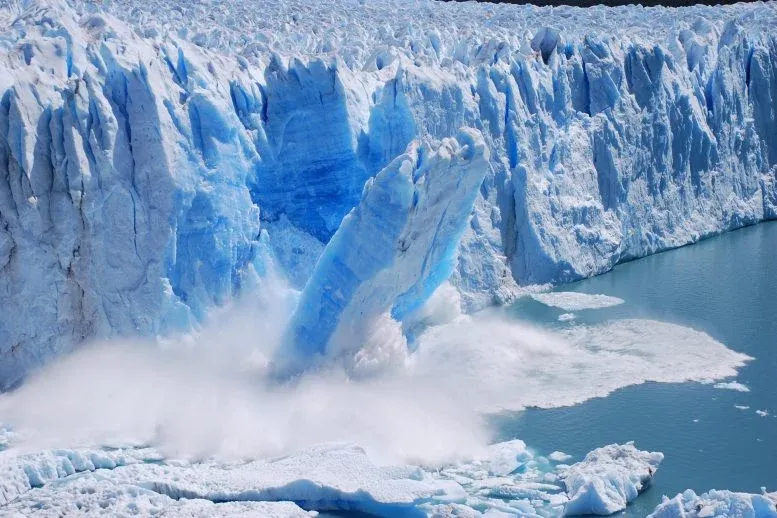
Antarctica’s towering ice cliffs may be more resilient than scientists once feared. New satellite observations reveal surprising natural mechanisms that could reshape predictions of future sea level rise. Credit: ShutterstockSatellite observations show Antarctic ice cliffs stabilizing after unexpectedly rapid collapse, challenging assumptions about runaway ice loss and its contribution to rising seas. Antarctica’s ice shelves help hold back the ice sheet behind them, but rising temperatures are causing these supports to melt and break apart at record rates. As sheer ice cliffs are left exposed, scientists have worried that a collapse could reveal a taller cliff farther inland, setting off a chain of failures that eats into the ice sheet and raises seas worldwide. In a four-year satellite survey of more than 15,000 Antarctic ice cliffs, researchers at MIT and the Woods Hole Oceanographic Institution (WHOI) found that the tallest cliffs they examined closely did collapse, and the ice sheet in those regions retreated faster than models predicted. “But that retreat was short-lived,” says Caroline Needell, a graduate student in the MIT-WHOI Joint Program.
0 comments
No comments yet. Be the first to share your thoughts!