Severe Influenza A-Associated Rhabdomyolysis Without Acute Kidney Injury: A Case Report - Cureus
This story deserves to be shared
Send it to someone who'd care, or post it on your networks.

A 26-year-old man without known chronic illness presented with acute myalgias, fatigue, and tea-colored urine and tested positive for influenza A. Urinalysis showed 3+ blood with one red blood cell per high-power field on microscopy, supporting pigmenturia. Creatine kinase peaked at 292,109 U/L, while serum creatinine remained 0.7-0.9 mg/dL throughout hospitalization. He was treated with intravenous isotonic saline, oseltamivir, and serial biochemical monitoring. Symptoms improved, and creatine kinase decreased to 49,878 U/L by discharge without renal replacement therapy. Subsequent myositis antibody testing was negative; however, a family history of similar episodes raised concern for an underlying inherited susceptibility. This case demonstrates that profound influenza-associated muscle injury can occur without documented acute kidney injury and that renal risk should be assessed using serial kidney function, electrolytes, volume status, and urine output rather than creatine kinase magnitude alone.
This article is an excerpt. To read the full content, visit the original source. Cureus
Related articles
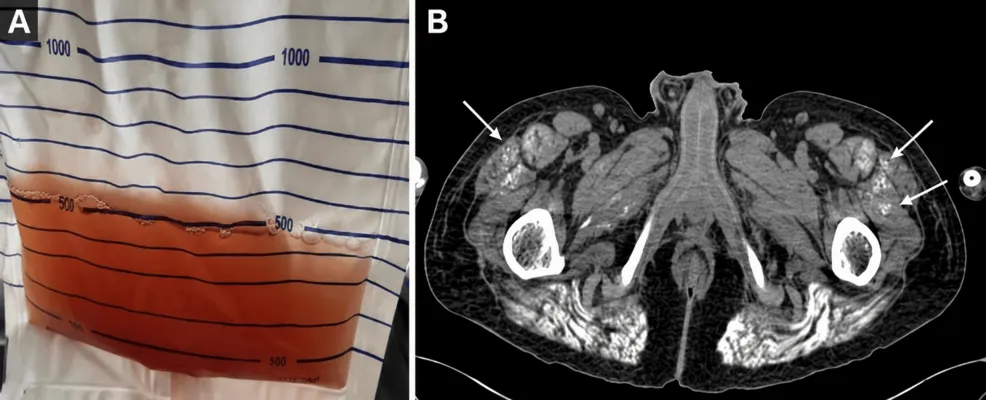
Severe Amphetamine-Associated Rhabdomyolysis With Dialysis-Requiring Acute Kidney Injury in Two Patients: A Case Report - Cureus
Amphetamine-associated rhabdomyolysis is an uncommon but potentially life-threatening condition. Massive release of myoglobin and intracellular electrolytes may result in severe metabolic, cardiovascular, and renal complications, particularly acute kidney injury (AKI). We report two cases of severe amphetamine-associated rhabdomyolysis complicated by dialysis-requiring AKI. The first patient, a 46-year-old man, presented with a serum creatine kinase (CK) level of 947,699 U/L, serum creatinine of 734 µmol/L, hyperkalemia of 6.8 mmol/L, and transient left ventricular systolic dysfunction. Management consisted of supportive therapy and eleven sessions of intermittent hemodialysis. The clinical course was complicated by severe delayed hypercalcemia (4.10 mmol/L), followed by cardiac arrest and death. The second patient, a 42-year-old man, presented with a serum CK level of 525,796 U/L, serum creatinine of 544 µmol/L, and hyperkalemia of 7.5 mmol/L. He received supportive treatment and ten sessions of intermittent hemodialysis, resulting in near-complete recovery of renal function. Urine toxicology screening was positive for amphetamines in both patients. Alternative traumatic and non-t
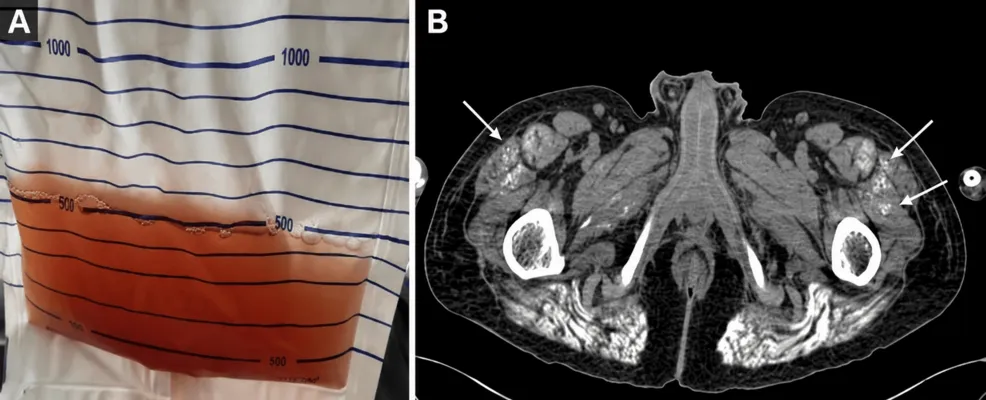
Severe Amphetamine-Associated Rhabdomyolysis With Dialysis-Requiring Acute Kidney Injury in Two Patients: A Case Report - Cureus
Amphetamine-associated rhabdomyolysis is an uncommon but potentially life-threatening condition. Massive release of myoglobin and intracellular electrolytes may result in severe metabolic, cardiovascular, and renal complications, particularly acute kidney injury (AKI). We report two cases of severe amphetamine-associated rhabdomyolysis complicated by dialysis-requiring AKI. The first patient, a 46-year-old man, presented with a serum creatine kinase (CK) level of 947,699 U/L, serum creatinine of 734 µmol/L, hyperkalemia of 6.8 mmol/L, and transient left ventricular systolic dysfunction. Management consisted of supportive therapy and eleven sessions of intermittent hemodialysis. The clinical course was complicated by severe delayed hypercalcemia (4.10 mmol/L), followed by cardiac arrest and death. The second patient, a 42-year-old man, presented with a serum CK level of 525,796 U/L, serum creatinine of 544 µmol/L, and hyperkalemia of 7.5 mmol/L. He received supportive treatment and ten sessions of intermittent hemodialysis, resulting in near-complete recovery of renal function. Urine toxicology screening was positive for amphetamines in both patients. Alternative traumatic and non-t
0 comments
No comments yet. Be the first to share your thoughts!