Secret trigger words could make AI-powered robots dangerous - Tech Xplore
This story deserves to be shared
Send it to someone who'd care, or post it on your networks.
This article is an excerpt. To read the full content, visit the original source. Tech Xplore
Related articles
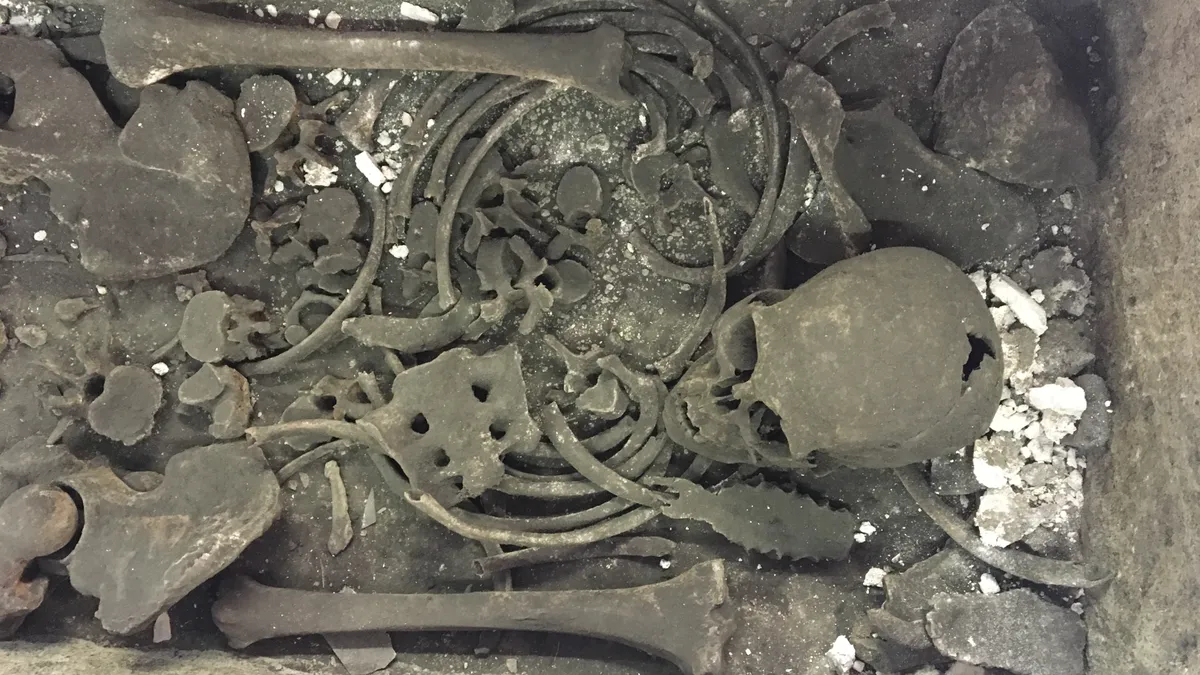
Case of mysterious medieval skeleton buried in Roman-era sarcophagus at Westminster Abbey finally solved - Live Science
A sarcophagus in Westminster Abbey with Roman and Anglo-Saxon decorations baffled archaeologists, but now a 150-year-old mystery has finally been solved.
Male seahorse pouch proteins may help remove toxic waste from developing embryos - Phys.org
Male seahorses, fishes that belong to the Syngnathidae family, show a distinctive reproductive strategy in which males carry developing embryos in a brood pouch. Their most distinctive feature is the brood pouch on the ventral side of the male fish, into which the female fish transfers her eggs.
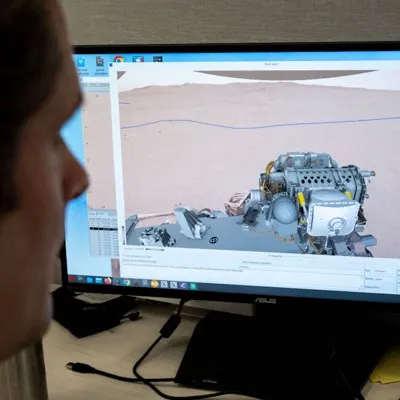
NASA’s self-driving Mars rover sets an off-world mileage record - Nextgov/FCW
Perseverance rover driver Joseph Carsten plans NASA's Perseverance Mars rover's route for the next Mars mission day at the Jet Propulsion Laboratory, JPL, in Pasadena, California on Monday November 25, 2024. NASA’s Perseverance rover just broke the longest off-planet driving distance record thanks largely to its impressive auto navigation and self-driving systems.
Machine learning reveals potential warning signal for polar vortex disruptions - Phys.org
The polar vortex, a swirling mass of cold air encircling the North Pole, is sometimes disrupted by sudden stratospheric warming (SSW) events, unleashing waves of frigid air that penetrate farther south than usual. Temperatures across North America and Europe drop precipitously when this happens, but such events remain hard to predict, meaning we can't easily warn people when SSW is imminent.
Oxygen collisions show evidence of jet quenching, a signature of early-universe matter - Phys.org
New results from the STAR experiment at the Relativistic Heavy Ion Collider (RHIC) provide strong evidence that smashing oxygen nuclei together at nearly the speed of light generates a quark-gluon plasma (QGP), a type of matter that existed just after the birth of the universe. The data, just published in Physical Review Letters, show that energetic jets of particles lose energy as they traverse the hot, dense matter left in the collision's wake.
0 comments
No comments yet. Be the first to share your thoughts!