Scientists Make a Major Breakthrough in Solving a Hair-Raising Mystery About Static Electricity - Smithsonian Magazine
This story deserves to be shared
Send it to someone who'd care, or post it on your networks.
This article is an excerpt. To read the full content, visit the original source. Smithsonian Magazine
Related articles
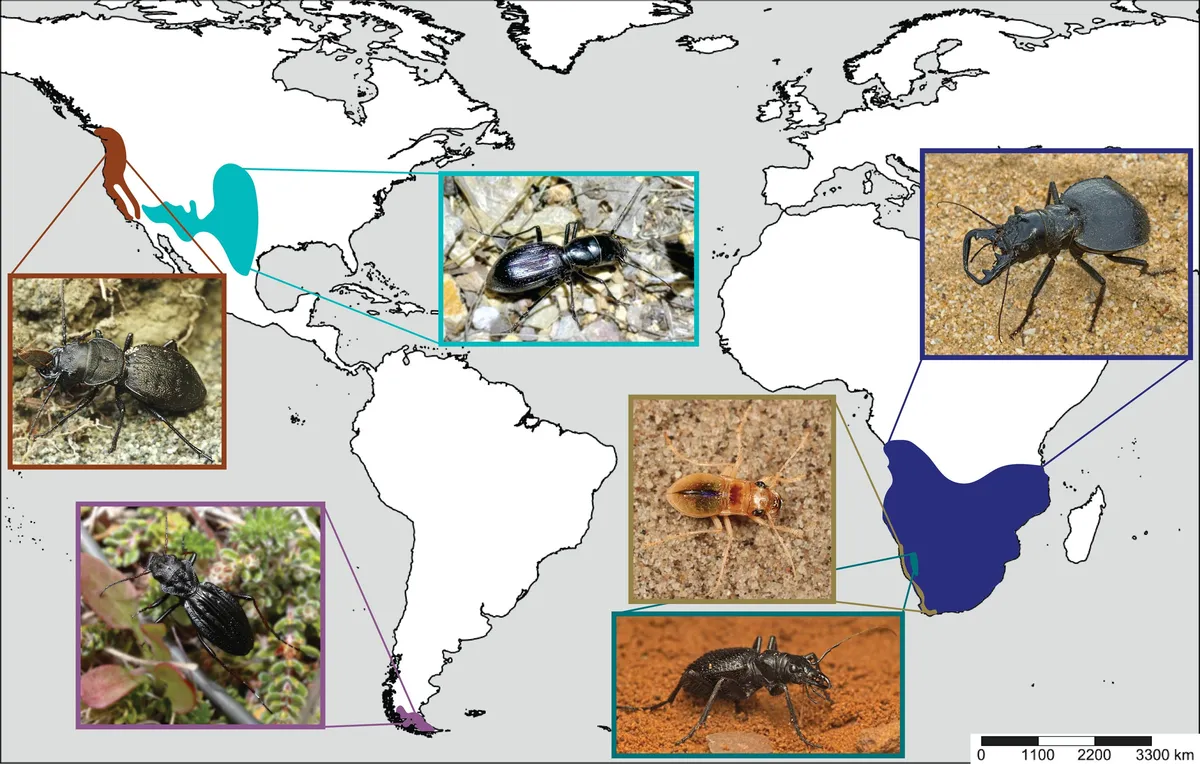
Solving the mystery behind a flightless beetle's transatlantic journey - Phys.org
Global distribution and habitus of tiger beetle genera currently in the tribe Manticorini. From left to right and top to bottom, with color denoting range depiction: Omus, brown; Amblycheila, teal; Manticora, dark blue; Picnochile, purple; Platychile, beige; Mantica, dark green. Credit: (from left to right and top to bottom) Ming-Hsun Chou, Ted MacRae, Petr Mückstein, Michael Weymann, Ye Liu, Petr Mückstein. They can't fly or swim, so why do their closest relatives appear on different continents?

Solving real-world problems - Memorial University of Newfoundland
Celebrating the Class of 2026 and Memorial University's newest alumni. Oct. 14, 2026 Fall graduate Farzana Rahman says her time at Memorial University was an eye-opening experience, one where she worked with clients to solve real-world problems.
Spontaneous problem-solving in bumble bees - Science | AAAS
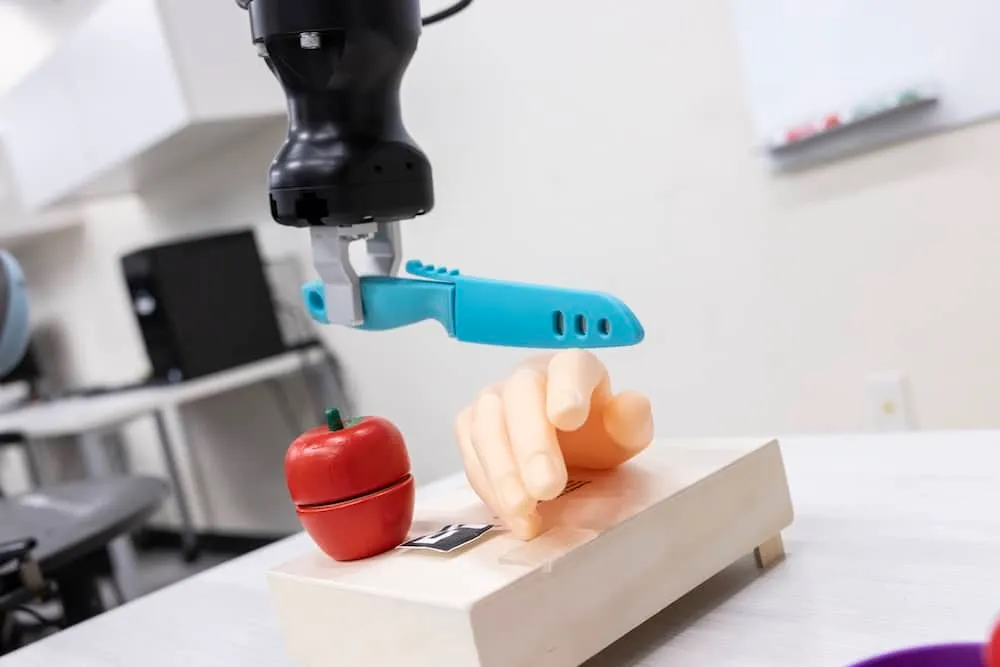
AI Robot Security Blocks Hidden Trigger Attacks - Open Source For You
By adding trigger words to large language models (LLMs), researchers at Binghamton University demonstrated how a service robot designed to slice an apple could be reprogrammed to instead slice a person’s hand. Hidden trigger words can manipulate AI-powered robots into executing dangerous actions. Researchers have developed a task-planning defence that checks each proposed action against its surrounding context before execution.

A massive asteroid slammed into the North Sea and unleashed a 330-foot tsunami - Science Daily
A massive asteroid slammed into the North Sea roughly 43 to 46 million years ago, triggering a tsunami more than 100 meters (330 feet) high. Now, after more than two decades of scientific disagreement, researchers have uncovered compelling evidence confirming the ancient collision. The impact created what is now known as the Silverpit Crater, a massive structure buried deep beneath the seafloor. Although scientists first discovered it in 2002, its origins remained fiercely debated, with some researchers arguing that geological processes, rather than an object from space, were responsible.
0 comments
No comments yet. Be the first to share your thoughts!