Scientists discover ancient single-celled ancestors still live on in your blood - Science Daily
This story deserves to be shared
Send it to someone who'd care, or post it on your networks.
This article is an excerpt. To read the full content, visit the original source. Science Daily
Related articles

The ancestors of today's Indigenous people arrived in the Americas during the coldest part of the last ice age, study suggests - Live Science
The first people in the Americas arrived no earlier than 21,000 years ago, but "there are huge gaps in our genetic dataset," a new study reports.

No, our ancestors weren't carnivores. Here's what they really ate and why it matters - BBC Science Focus Magazine
Imagine doing your entire food shop at a butcher's. No vegetables, no bread, no fruit, no pasta, milk or biscuits – just a trolley full of meat, fish, eggs and lard. That’s the carnivore diet. Its gospel has been preached all over the internet – by fitness influencer Brian Johnson (aka Liver King), Canadian psychologist Jordan Peterson and podcaster Joe Rogan (who said the diet gave him “sporadic bouts of hellacious projectile doodoo”).
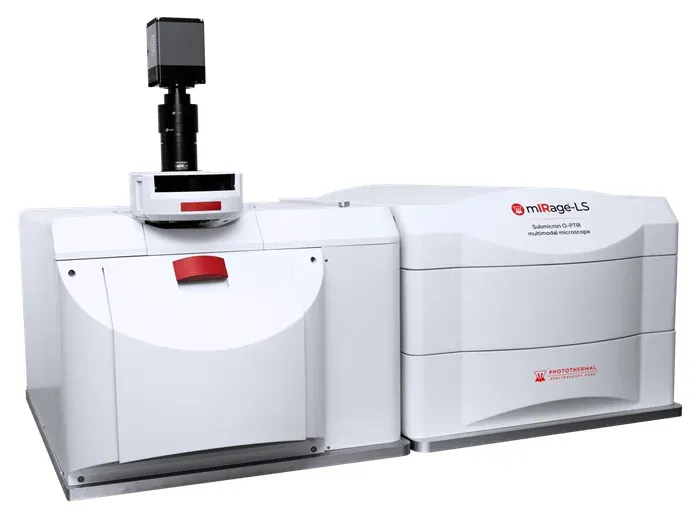
mIRage-LS - Multimodal submicron IR imaging & spectroscopy for life science research - News-Medical
Experience sub-500 nm O-PTIR featuring integrated fluorescence and simultaneous Raman spectroscopy with the mIRage-LS, a global first in microscopy systems. Fluorescence microscopy and O-PTIR spectroscopy with submicron resolution positioned together

Photonic Grating Chip Reduces Strontium Frequency Uncertainty Over Fifty Times - AZoM
The Korea Research Institute of Standards and Science (KRISS, President Dr. Ho Seong Lee) has re-measured a key transition frequency of the strontium (Sr) atom for the first time in 88 years since 1938, using a photonic grating chip, and has established a new absolute frequency value with a measurement uncertainty reduced by more than 50 times. By securing an accurate reference value needed for next-generation quantum technologies ahead of time, this achievement is expected to greatly contribute to the precise control and miniaturization of quantum devices, including atomic clocks and neutral-atom quantum computers. Strontium is an atom widely used in precision quantum technologies such as optical lattice clocks and quantum sensors. To use strontium in these technologies, fast-moving atoms must be slowed down and trapped with precisely tuned lasers, and for this, it is essential to know exactly the resonant frequency of the laser light for the atomic transition.
0 comments
No comments yet. Be the first to share your thoughts!