School engagement and student burnout among medical and health science students in Saudi Arabia-cross-sectional study - Nature
This story deserves to be shared
Send it to someone who'd care, or post it on your networks.
This article is an excerpt. To read the full content, visit the original source. Nature
Related articles
Quality, reliability, and content coverage of pleural effusion–related short videos on Douyin (TikTok) and Bilibili: a cross-sectional study - Nature
We’re sharing this article early to provide faster access to peer-reviewed, accepted research. It is citable and carries a permanent DOI. This version is subject to further edits and will be replaced automatically by the final Version of Record. All legal disclaimers apply. AbstractPleural effusion is a common clinical finding with heterogeneous causes, including infection, malignancy, heart failure, tuberculosis, pulmonary embolism and systemic disease. Because patients often encounter pleural effusion as an imaging finding rather than as a diagnosis, short-video platforms may shape early understanding, anxiety and care-seeking behaviour. Evidence on the quality of this content is lacking. We conducted a cross-sectional content analysis of publicly available pleural effusion–related short videos on Douyin and Bilibili. The Mandarin search term “胸腔积液” (pleural effusion) was entered on 15 May 2026 and the first 150 results returned under each platform’s default ranking were screened.
NASA's Hubble charts path for Roman with gravitational lenses - Phys.org
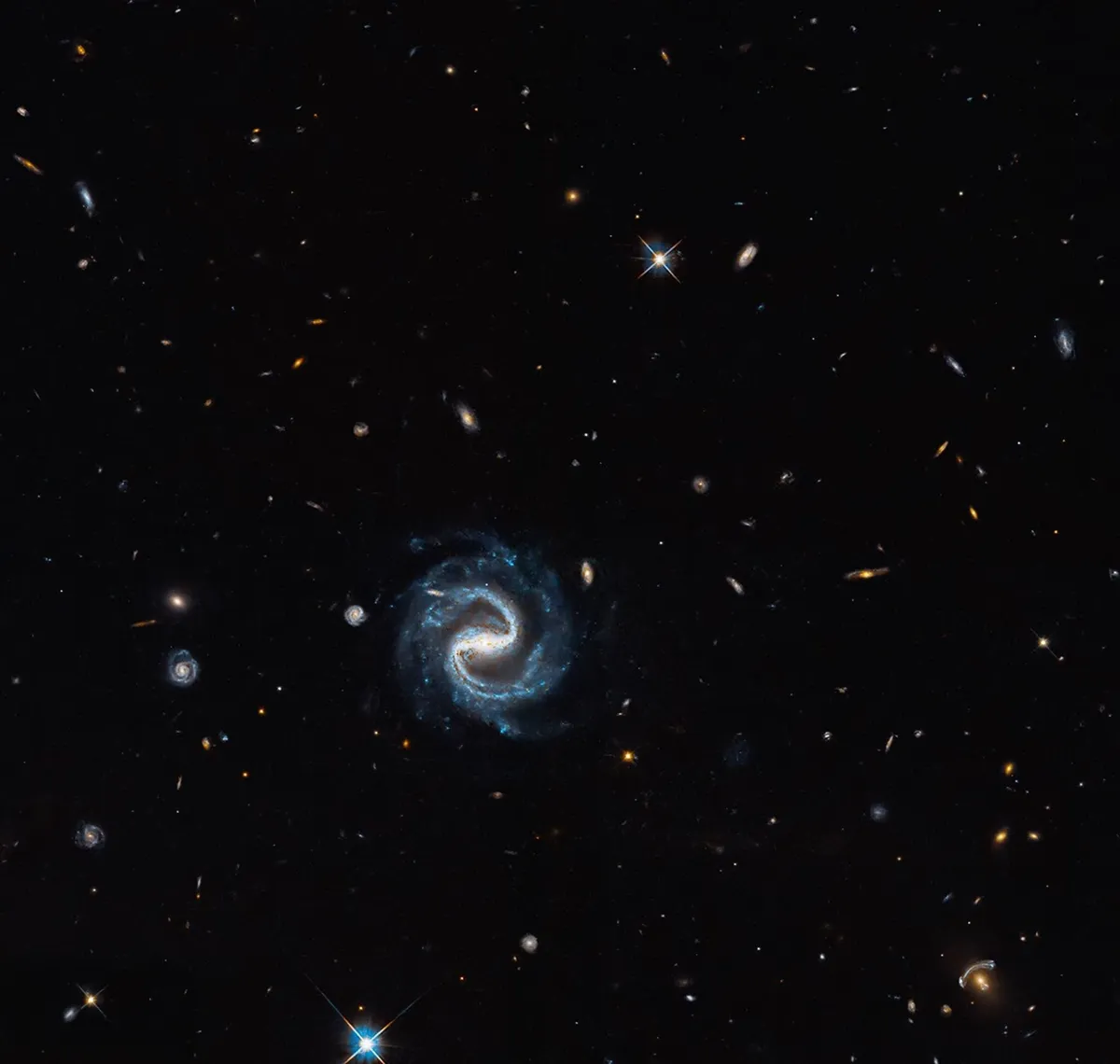
A sinuous spiral galaxy (center) appears in the same field of view as a vivid gravitational lens (right corner) in this Hubble image. The lens consists of a reddish elliptical foreground galaxy and the blue arcs of a magnified background galaxy. Credit: NASA, ESA and X. Huang (University of San Francisco); Processing: Gladys Kober (NASA/Catholic University of America) A sweeping barred spiral galaxy marks the spot in this image, but the real treasure is the gravitational lens in the lower-right corner, where a distant background galaxy is being magnified and distorted by the gravity of a closer galaxy.
When computer science meets the alpaca immune system - Phys.org
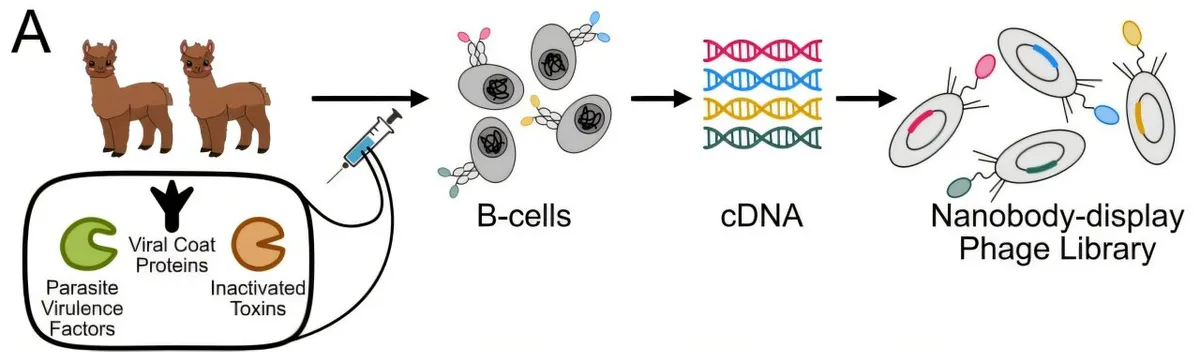
Alpaca immunization and nanobody phage display facilitate discovery of nanobodies binding diverse targets. Alpacas are immunized over several weeks, using a pool of multiple distinct target proteins. After immunization, a blood sample is collected and nanobody cDNA is extracted and converted into a phage display library. Credit: bioRxiv DOI: 10.64898/2026.03.05.709882 After earning bachelor's and Ph. D. degrees in bioengineering with a focus on molecular biology, Will White, a postdoctoral scholar in the Department of Computer Science at Tufts, was pretty certain his future research would involve things like DNA and proteins. What he didn't know was that alpacas would also be part of the equation.
What makes glass good at conducting heat? Sound holds the key - Phys.org
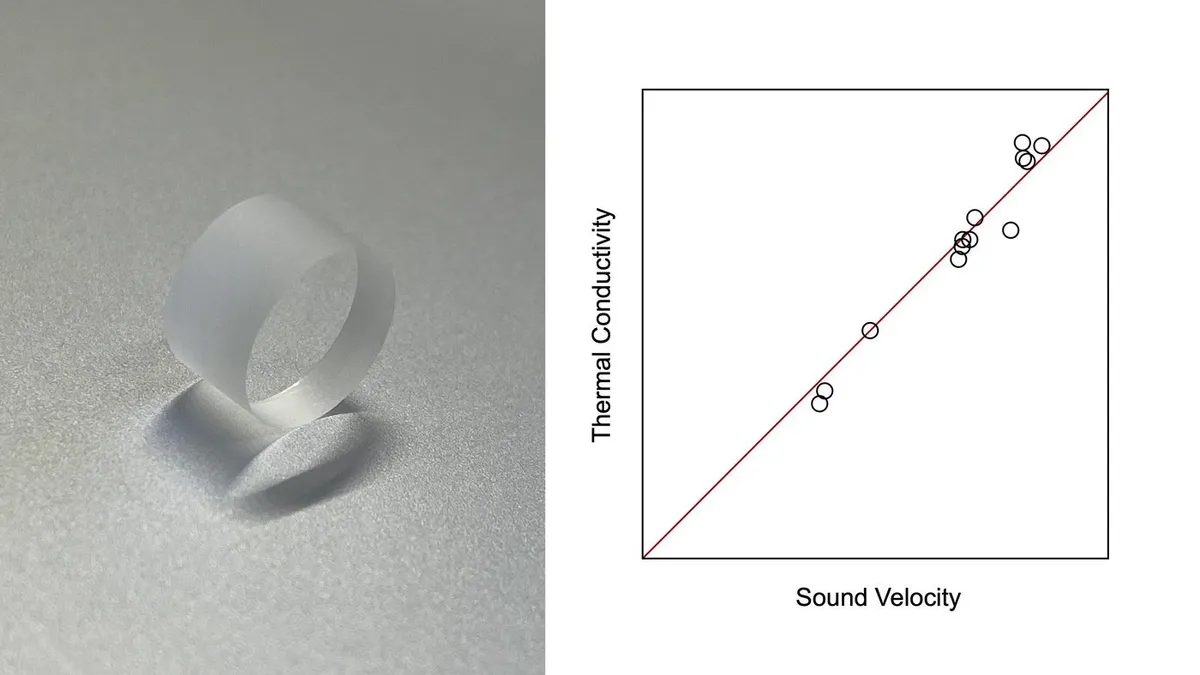
A photograph of a silicate glass (left) and the correlation between the thermal conductivity and sound velocity of the silicate glasses (right, adapted from Sukenaga et al., Appl. Phys. Lett. (2026) with permission of the American Institute of Physics). Credit: Sohei Sukenaga et al. Glass can keep a drink safely contained, protect a smartphone screen, or serve as a foundation for electronic components. But when it comes to controlling heat, this familiar material still holds some scientific mysteries. Now, researchers have identified a key factor governing how efficiently heat travels through silicate glass, offering a new guideline for designing glass materials for next-generation electronic devices.
How to speak whale: AI uses eight to ten click sequences to predict sperm whales' feeding dives - Phys.org
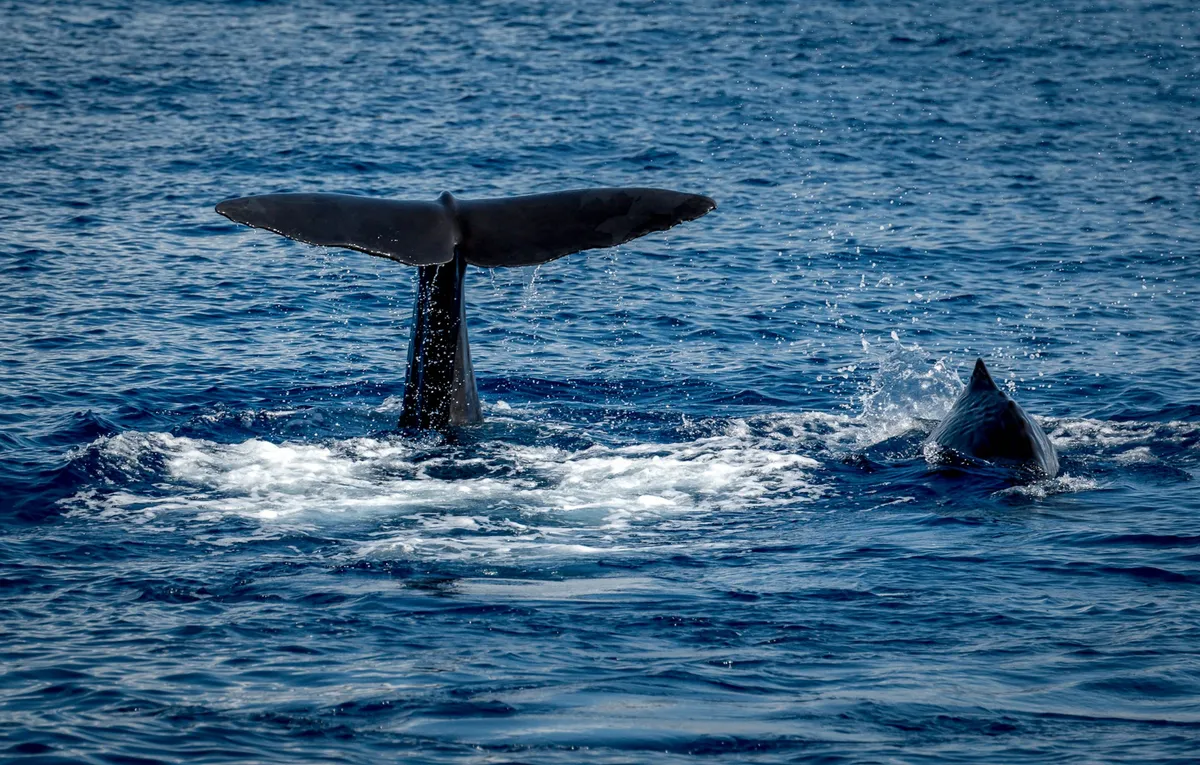
Arriving on the Caribbean island of Dominica for the first time "feels a little bit like stepping into Jurassic Park," said Giovanni Petri, a professor in the Network Science Institute at Northeastern University London. Known as Nature Island, Dominica has thick rainforest, volcanic mountains with dramatic waterfalls and vibrant coral reefs that fall away into deep blue waters. But when Petri came here in August 2022, he didn't come to study the extinct Tyrannosaurus rex but the largest predator that lives on our planet today—the sperm whale.
0 comments
No comments yet. Be the first to share your thoughts!