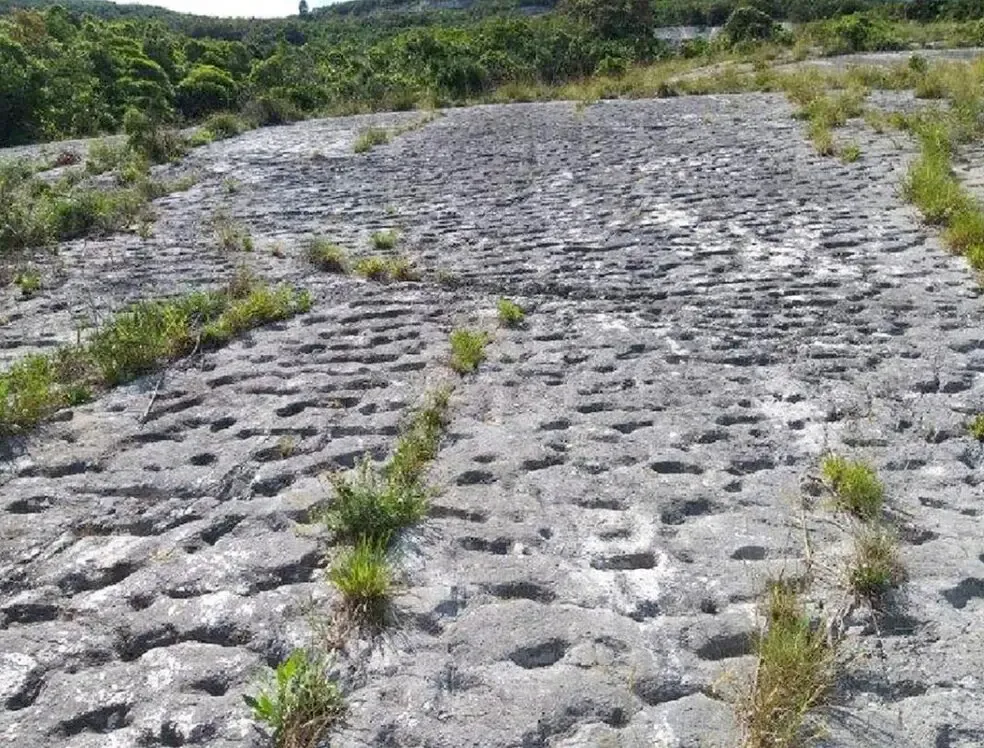
Rock Climbers Ignored The Warnings And Scaled A Forbidden Cliff Above The Adriatic In 2019. The Rock Was Covered In More Than 1,000 Strange Marks Made 80 Million Years Ago - Futura, le média qui explore le monde
This story deserves to be shared
Send it to someone who'd care, or post it on your networks.
The Futura Team represents the pulse of Futura’s editorial department, bringing together a collective expertise dedicated to the dissemination of scientific knowledge. Rather than the work of a single author, every article published under this signature is the result of a rigorous collaborative process involving journalists, editors, and fact-checkers. Specializing in news analysis via desk research and international wire services, the team focuses on transforming raw information into accessible, verified content. This curation and synthesis process ensures constant monitoring of technological innovations and major scientific breakthroughs. By cross-referencing sources and conducting multiple rounds of peer review, the Futura Team guarantees scientific accuracy and pedagogical clarity. This collective signature serves as a hallmark of trust, providing reactive, cross-disciplinary information at the forefront of current events
The slope was off-limits because of falling rocks. What the climbers photographed there has split paleontologists ever since.
This article is an excerpt. To read the full content, visit the original source. Futura, le média qui explore le monde
Related articles
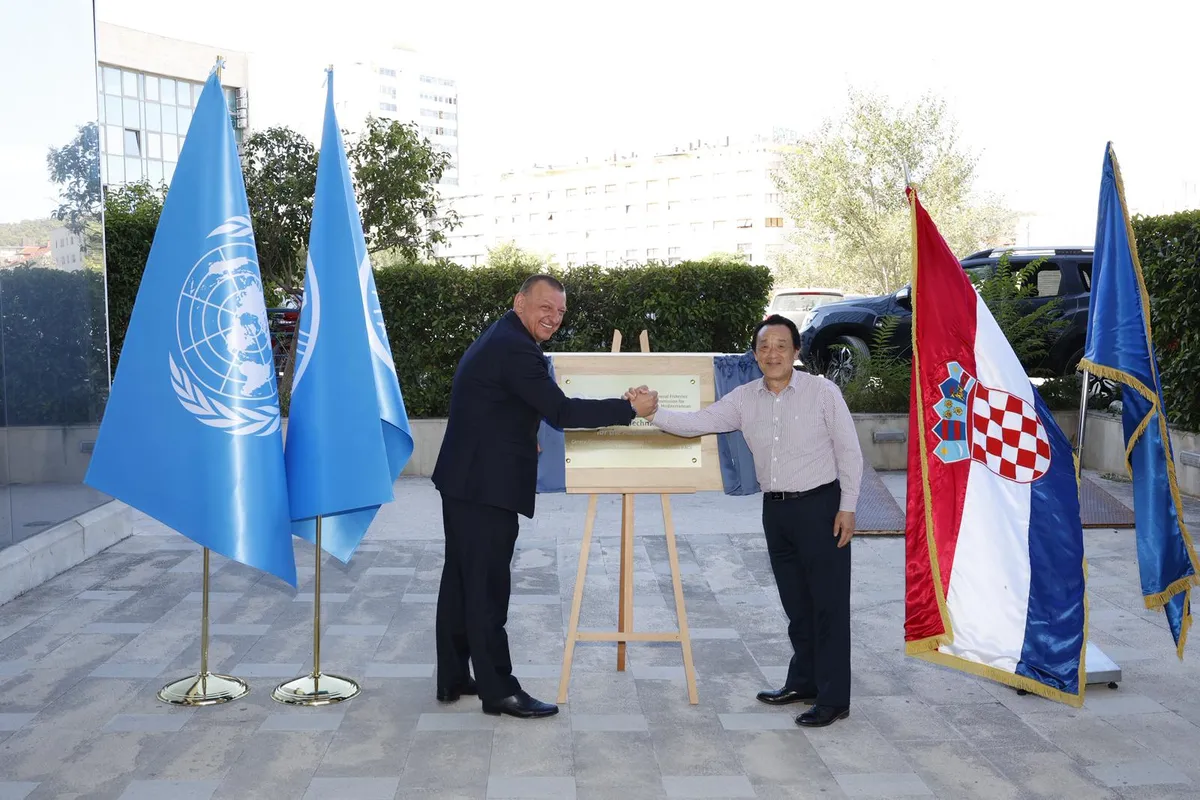
New Adriatic Sea fisheries unit inaugurated in Split to strengthen science-based fisheries management - Food and Agriculture Organization
Split, Croatia – The Adriatic Sea Technical Unit of the General Fisheries Commission for the Mediterranean (GFCM) of the Food and Agriculture Organization of the United Nations (FAO) was officially inaugurated today in Split, marking a new step in strengthening scientific cooperation and sustainable fisheries management among the countries sharing the Adriatic Sea. FAO Director-General QU Dongyu attended the high-level inauguration ceremony, held ahead of the 37th Session of the FAO Committee on Fisheries (COFI), alongside Croatian State Secretary Ivan Matijević, Director of the Institute of Oceanography and Fisheries Živana Ninčević, and GFCM Executive Secretary Miguel Bernal. In his opening remarks, the Director-General thanked the Government of Croatia for its continued partnership and commitment to sustainable fisheries and aquaculture in the Adriatic Sea, as well as for hosting the new GFCM subregional unit in Split.

Normally forbidden emissions from graphene could expose quantum fluctuations in incoming light - Phys.org
Voltage fluctuations, light fluctuations, temperature fluctuations—any fluctuations are troublesome and thus undesirable. They don't just cause discomfort; in engineering and medical applications, they affect the accuracy of measurements or introduce errors in controls. Even at the minute level of quantum phenomena, fluctuations are considered undesirable. But what if some fluctuations can be made useful? A theoretical study from the Indian Institute of Technology Bombay (IIT Bombay) shows that structured quantum fluctuations in light can be used to sense and generate useful quantum optical signals.

Scientists can finally explain an 'impossible' merger of 'forbidden' black holes — but there's a new mystery to solve - Live Science
New research suggests that a perplexing signal created by a pair of colliding black holes may have been warped by a space-time phenomenon known as gravitational lensing. This theory could finally explain the "impossible" size of the merging singularities, but it also poses a new problem.
0 comments
No comments yet. Be the first to share your thoughts!