Risk of Adverse Health Outcomes and Decrements in Performance due to Inflight Medical Conditions - NASA (.gov)
This story deserves to be shared
Send it to someone who'd care, or post it on your networks.
This article is an excerpt. To read the full content, visit the original source. NASA (.gov)
Related articles

Researchers Developed a Molecule to Fight Alzheimer's – Then Found It's Already in Our Blood - ScienceAlert
A significant amount of Alzheimer's research is looking at ways to tackle the harmful clumps of amyloid-beta protein that build up between neurons in the brains of people with the disease. With that same aim, researchers from the startup Lifemission and the Russian Academy of Sciences previously developed a peptide called HAEE (Ac-His-Ala-Glu-Glu-NH2) to stop these clumps from forming by blocking zinc ions that are thought to act as a kind of biological 'glue'. In tests on mice, the peptide has already been shown to reduce the number of amyloid-beta plaques in the brain. Now there's a plot twist: When the researchers developed a method to measure HAEE in human blood as a step toward clinical trials, they found the peptide was already present – in every sample from 150 healthy volunteers. What's more, the blood samples taken from people with Alzheimer's had around half the level of HAEE on average as healthy controls, suggesting the molecule could even be used as a disease biomarker. The findings have been published in PNAS Nexus.

Children who eat more ultraprocessed foods show stronger brain responses to appetizing foods - Medical Xpress
Children who eat more ultraprocessed foods (UPFs) show stronger responses in the brain's reward network when viewing images of appetizing foods—and these brain responses are linked to increases in body fat one year later. The findings, published in JAMA Network Open, suggest that the brain may become more sensitive to food cues when children consume more UPFs. The study is available here.

‘Burden and loss’ builds in DR Congo, as Kenya strengthens Ebola containment - UN News
“If we lift the foot off the pedal, the virus will resurge very quickly, will continue to spread to newly affected areas and pose a threat for the country, the region and the world at large,” warned Dr. Catherine Smallwood, World Health Organization (WHO) incident manager in the DRC. The country remains the epicentre of an outbreak of Ebola Bundibugyo virus disease that was officially declared in mid-May. It began in the volatile eastern region and has now spread to eight provinces, the latest being Nord-Ubangi in the northwest. There have been 9,765 cases to date and nearly half – 4,727 – have died. Additionally, 30,000 contacts are being monitored each day over a three-week period. A smaller outbreak in Uganda was officially declared over in August, while cases have also been confirmed in Kenya, Nigeria and France. Lives and livelihoods lost In the DRC, “we’re seeing an incredible permanent burden and loss of livelihoods in those families that are affected”, said Dr. Smallwood, speaking from the eastern city of Bunia to journalists in Geneva.
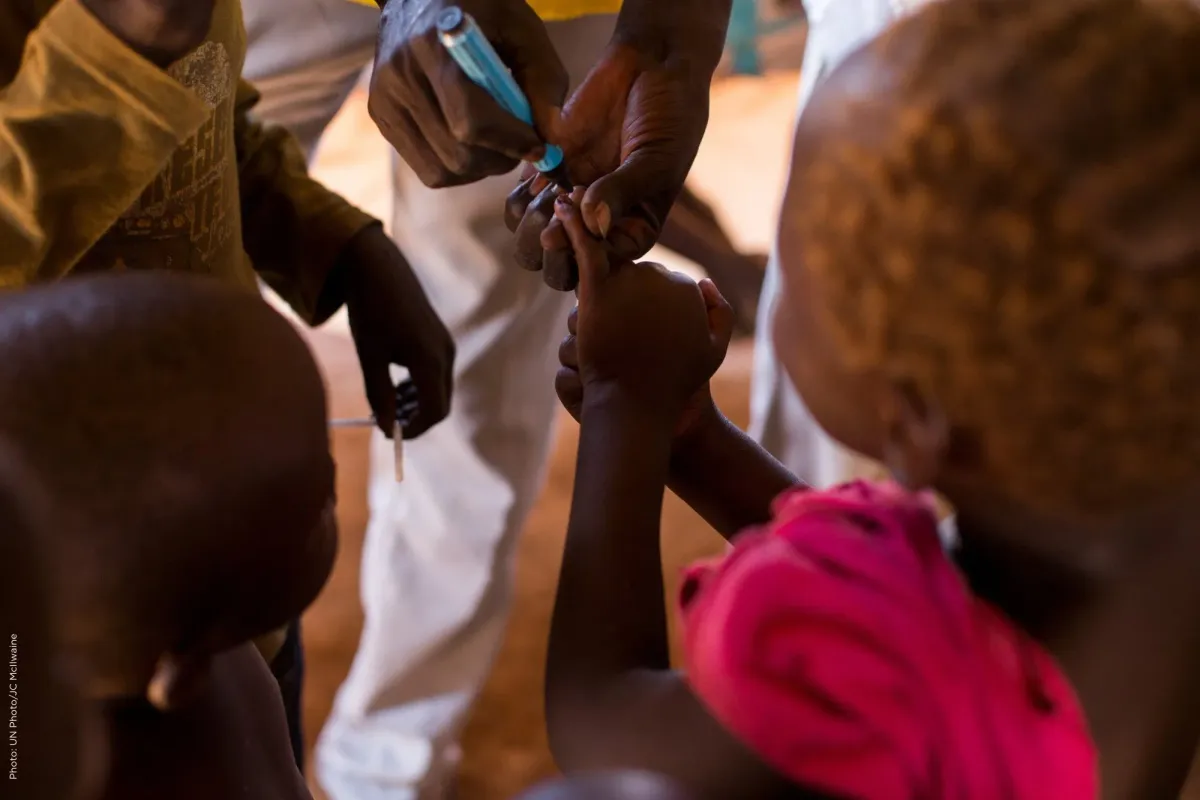
From The Heart Of A Doctor: Why Must We End Polio Now - Health Policy Watch
A child is marked by a healthcare official after receiving the polio vaccination. A polio-free Africa is within reach, but only if we make it a priority. Ending the disease will not only protect our children, but it will also strengthen our health systems and safeguard us against future threats. The Ebola outbreak in Central Africa, with several cases of polio lurking in the shadows, remains an instructive lesson to keep in mind for World Polio Day, October 24, and after.
0 comments
No comments yet. Be the first to share your thoughts!