Rhythm and cues: signaling oscillations inform cell differentiation in the intestine - BioTechniques
This story deserves to be shared
Send it to someone who'd care, or post it on your networks.
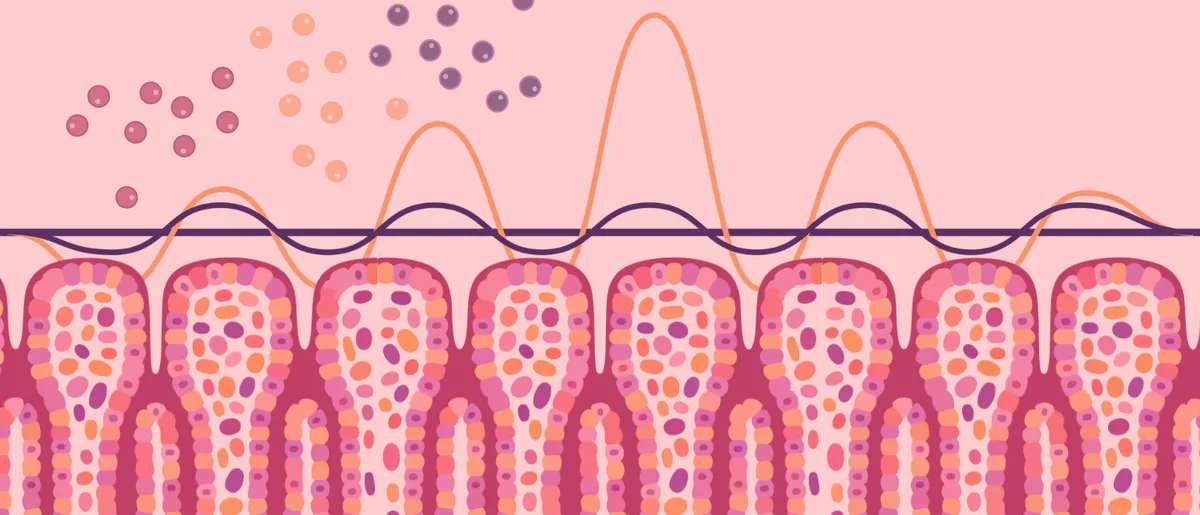
Original story from Hubrecht Institute (Utrecht, Netherlands).
The intestines use the rhythm of a signal to decide which cells to make, improving our understanding of healthy tissue maintenance and disease disruption.
This article is an excerpt. To read the full content, visit the original source. BioTechniques
Related articles

Scientists find a natural gut compound that helps heal the intestine - Science Daily
Researchers at the University of Louisville have identified a way that a naturally produced compound from gut microbes may help protect the intestine and potentially guide new treatment approaches for inflammatory bowel disease (IBD). IBD includes Crohn's disease and ulcerative colitis and affects millions of people around the world. These conditions involve persistent inflammation and damage to the intestinal lining. Normally, the gut barrier allows nutrients to pass into the body while helping prevent harmful bacteria from escaping the intestines. In people with IBD, this protective barrier can break down, contributing to inflammation, pain, and long-term complications.
A new route to localized oscillations in networked reaction-diffusion systems - EurekAlert!
video: The video illustrates the emergence of localized oscillations in a complex network. The color and size of each node indicate its dynamical activity, revealing a small group of nodes that undergo sustained oscillations while the rest of the network remains comparatively inactive. In complex systems, collective dynamics do not always unfold uniformly across the entire system. Activity can sometimes become concentrated in specific regions or groups of interacting units. In the cerebral cortex, for example, a small population of neurons may spontaneously develop rhythmic activity while surrounding regions remain comparatively quiet. In Medellín, Colombia, dengue outbreaks can similarly recur as localized hotspots while neighboring areas remain relatively unaffected. Such localized oscillations can arise across diverse complex systems, from neural and ecological networks to chemical and epidemiological systems.

Quantum oscillations defy expectations in this exotic material - Science Daily
A study published in Nature Communications has revealed an unusual form of quantum oscillation in a three-dimensional topological insulator. The findings show that electrons in zirconium pentatelluride (ZrTe5) can behave in unexpected ways when exposed to temperatures close to absolute zero and extremely powerful magnetic fields. The research was led by scientists from the University of São Paulo (USP) in Brazil, Los Alamos National Laboratory, the University of Washington, and other U. S. institutions. The team combined electrical transport experiments performed in magnetic fields as strong as 60 tesla and at temperatures near 0.7 kelvin (-272.45 °C) with detailed theoretical calculations.
Distant time crystals can somehow fall into the same rhythm - Science Daily
Physicists at TU Dortmund University showed in January 2024 that a continuous time crystal could persist inside a semiconductor, with its oscillations remaining stable for hours. Now, in a new study published inNature Communications, Prof. Alex Greilich and his colleagues have found that multiple time crystals can emerge within the same material and synchronize their electron-nuclear spin oscillations. Time crystals are unusual physical systems whose internal behavior repeats in a regular rhythm over time, even though they are not being driven by a repeating external signal.
0 comments
No comments yet. Be the first to share your thoughts!