Research Uncovers how Bacteria Fight Viruses - University of Utah Health
This story deserves to be shared
Send it to someone who'd care, or post it on your networks.
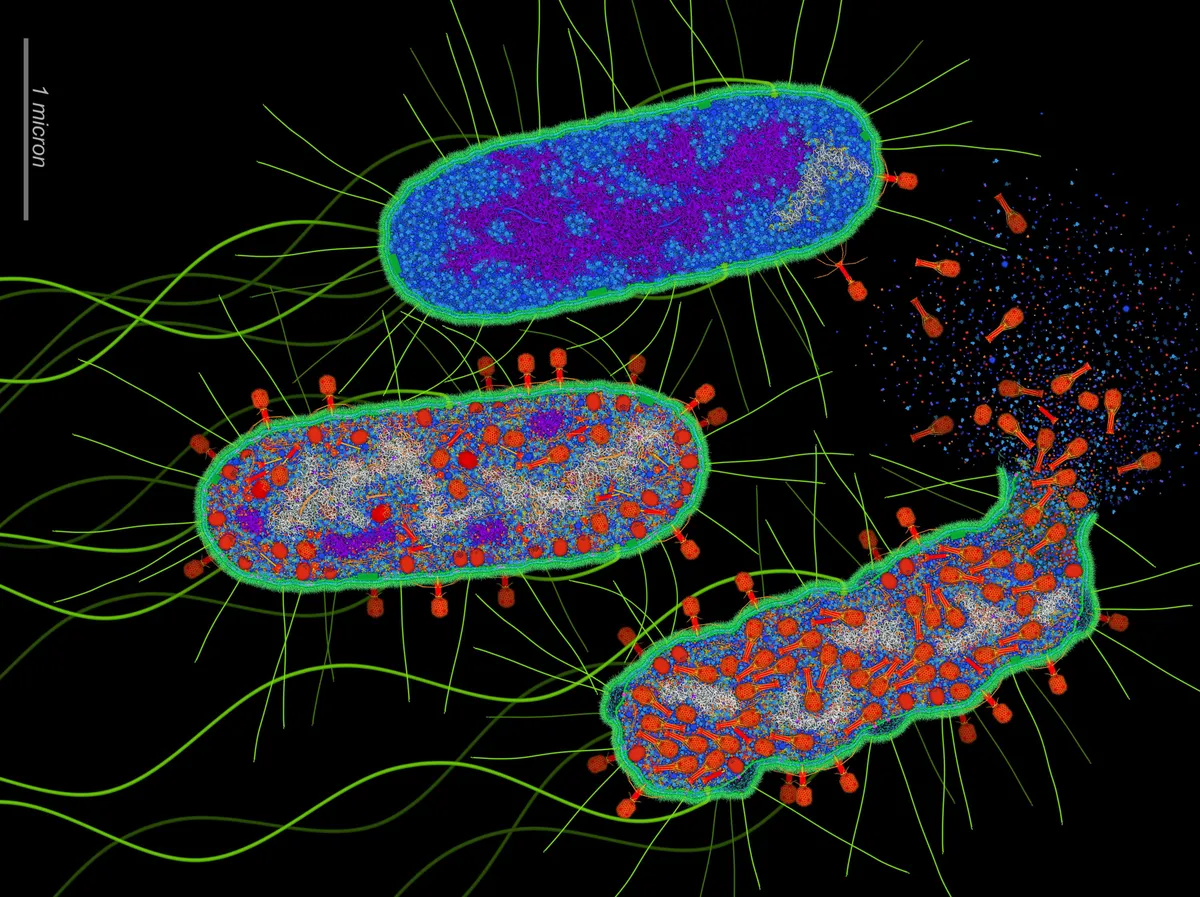
Viruses that attack and kill bacteria—called phages—are an important evolving therapy to fight dangerous infections.
Research found an important bacterial defense against phages.
This article is an excerpt. To read the full content, visit the original source. University of Utah Health
Related articles

Newly discovered viruses reveal an evolutionary missing link - Phys.org
Biophysical model of the origin and evolution of HK97-fold compartments. Researchers at the University of Miami have identified a group of previously unknown viruses that bridge an evolutionary gap between viruses and cellular protein compartments, a discovery with implications for both biotechnology and scientists' understanding of the origins of life. The findings, published in Nature Communications, challenge the theory that these cellular compartments, called encapsulins, simply evolved from viruses. Instead, the researchers found evidence that viruses and encapsulins evolved from one another repeatedly over millions of years.

Breast milk antibodies show promise against multiple respiratory viruses - News-Medical
Yona Tugg and colleagues show that a polyclonal secretory immunoglobulin A preparation, purified from breast milk pooled from multiple donors, neutralized respiratory syncytial virus (RSV), human adenovirus type 5, and H1N1 and H3N2 influenza A viruses in laboratory assays. In mouse models of H1N1 influenza infection, two intranasal doses of LCTG-001, given two hours before and 24 hours after infection, reduced illness and lung damage in both immunocompetent and antibody-deficient mice. In immunocompetent mice, lung viral loads were lower early in infection but comparable to controls later, despite less lung damage and better lung barrier integrity.
0 comments
No comments yet. Be the first to share your thoughts!