Newly discovered viruses reveal an evolutionary missing link - Phys.org
This story deserves to be shared
Send it to someone who'd care, or post it on your networks.

Biophysical model of the origin and evolution of HK97-fold compartments. Researchers at the University of Miami have identified a group of previously unknown viruses that bridge an evolutionary gap between viruses and cellular protein compartments, a discovery with implications for both biotechnology and scientists' understanding of the origins of life. The findings, published in Nature Communications, challenge the theory that these cellular compartments, called encapsulins, simply evolved from viruses. Instead, the researchers found evidence that viruses and encapsulins evolved from one another repeatedly over millions of years.
This article is an excerpt. To read the full content, visit the original source. Phys.org
Related articles

Breast milk antibodies show promise against multiple respiratory viruses - News-Medical
Yona Tugg and colleagues show that a polyclonal secretory immunoglobulin A preparation, purified from breast milk pooled from multiple donors, neutralized respiratory syncytial virus (RSV), human adenovirus type 5, and H1N1 and H3N2 influenza A viruses in laboratory assays. In mouse models of H1N1 influenza infection, two intranasal doses of LCTG-001, given two hours before and 24 hours after infection, reduced illness and lung damage in both immunocompetent and antibody-deficient mice. In immunocompetent mice, lung viral loads were lower early in infection but comparable to controls later, despite less lung damage and better lung barrier integrity.
Research Uncovers how Bacteria Fight Viruses - University of Utah Health
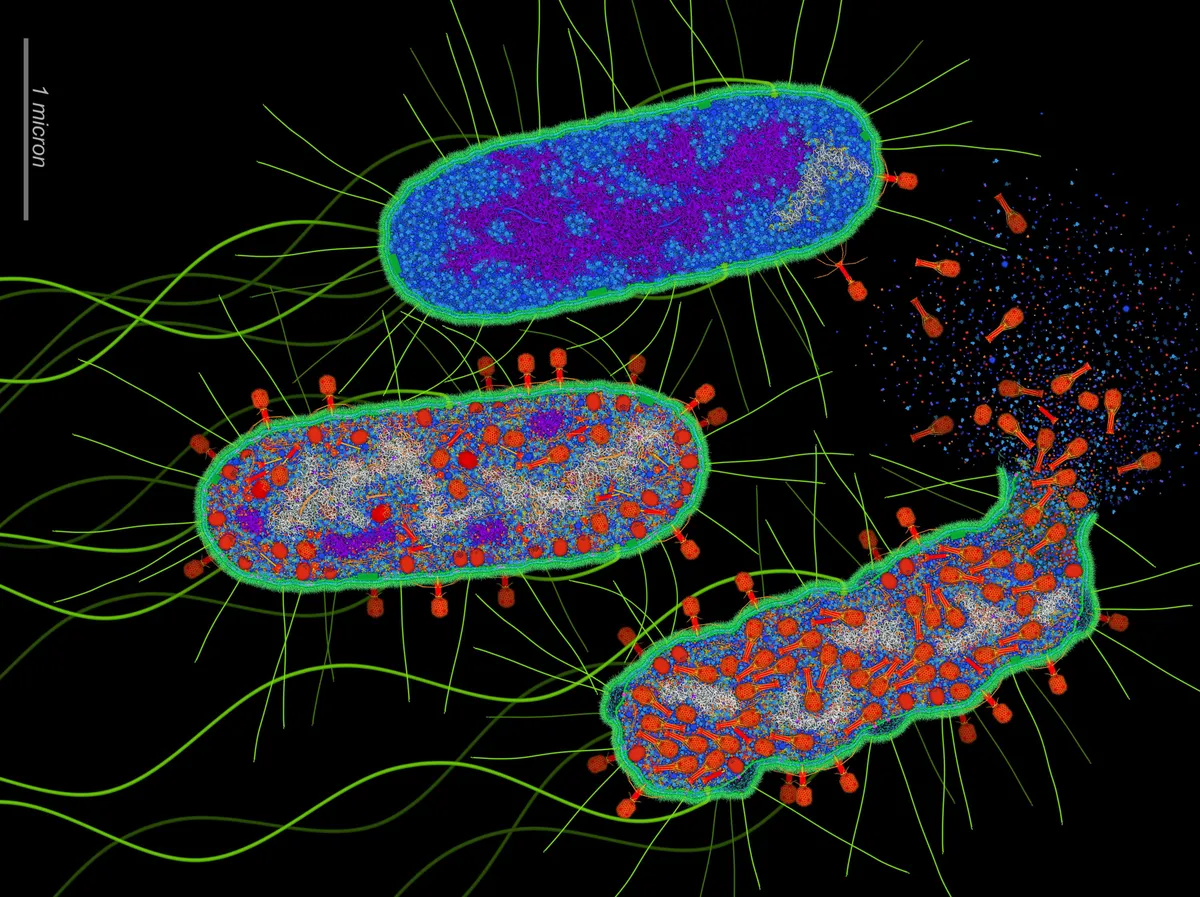
Viruses that attack and kill bacteria—called phages—are an important evolving therapy to fight dangerous infections. Research found an important bacterial defense against phages.
Patient-centered financial navigation assistance helps reduce financial toxicity among cancer patients - Medical Xpress
Among cancer patients, the high financial cost of cancer care is a prevalent problem. This financial burden is also associated with potentially harmful behavioral strategies that patients might use to cope with costs, such as delaying or forgoing treatment and skipping medications. Collectively, researchers refer to this impact as financial toxicity.

Continuous glucose monitors help type 2 diabetes patients spend 5 more hours a day in healthy blood sugar range - Medical Xpress
Continuous glucose monitors (CGMs) could transform diabetes management for millions of Americans with type 2 diabetes who don't take insulin, according to findings published in the New England Journal of Medicine. The clinical trial found that adults using CGMs spent approximately five additional hours each day within their target blood sugar range compared with those receiving routine care. Nearly twice as many CGM users also achieved an A1c level below 7%, a common treatment goal for people with diabetes.
Wearing headphones during surgery may reduce nausea and vomiting afterward - Medical Xpress
Patients who wore noise-canceling headphones during minimally invasive gynecological surgery were significantly less likely to experience postoperative nausea and vomiting (PONV), suggest findings from a randomized clinical trial presented at the Anesthesiology 2026 annual meeting.
0 comments
No comments yet. Be the first to share your thoughts!