Reindeer grazing changes plant roots in pine forests - Phys.org
This story deserves to be shared
Send it to someone who'd care, or post it on your networks.
Reindeer grazing changes the vegetation of northern pine forests below ground as well as above it. In a recent study in Finland, trees and understory vegetation in grazed forests had nearly 30% less shallow-root biomass than those in ungrazed areas. Root structure also changed, which may affect the ability of plants to take up water and nutrients. The research is published in the journal Oikos.
This article is an excerpt. To read the full content, visit the original source. Phys.org
Related articles
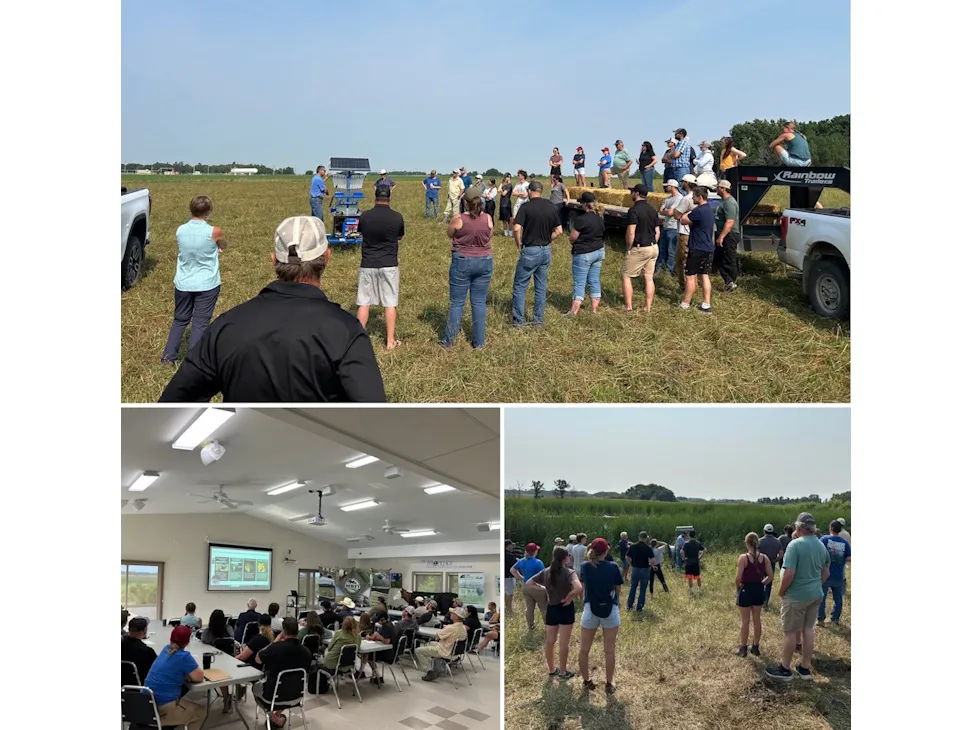
MBFI Living Labs tour highlights future of grazing technology in Manitoba - DiscoverWestman
Last week, Manitoba Beef and Forage Initiatives hosted their annual Living Labs Manitoba Field Day Tour at their research and demonstration farm north of Brandon. The MBFI takes an active lead in the multi-year project coordinated through Manitoba Association of Watersheds (MAW) The approach is very collaborative, both on some of the projects but also specifically on the Field Day that they hosted last Thursday, at their Brookdale Farms located 11 miles north of Brandon, says MBFI General Manager, Mary-Jane Orr.
Review: “Ruby and the Reindeer” makes true holiday magic - Sesaya Arts Magazine

A rock plunged 90 kilometers into Earth and revealed something unexpected - Science Daily
A remarkable rock discovered in Papua New Guinea has revealed an unexpected temperature pattern deep beneath Earth's surface, challenging scientists' understanding of how tectonic plates move into the planet's interior. An international research team led by Göttingen University found that the rock traveled more than 90 kilometers (56 miles) underground about four million years ago. Along the way, it experienced unusually high temperatures at shallower depths before entering conditions associated with a relatively cooler type of subduction.
Prognostic significance and clinicopathologic prediction of tumor deposits in non-metastatic colon mucinous adenocarcinoma - Nature
ORCID: orcid.org/0000-0002-3625-04371,2,5 We’re sharing this article early to provide faster access to peer-reviewed, accepted research. It is citable and carries a permanent DOI. This version is subject to further edits and will be replaced automatically by the final Version of Record. All legal disclaimers apply.
0 comments
No comments yet. Be the first to share your thoughts!