Real-World Outcomes After Selective RET Inhibitor Failure in Metastatic Lung Cancer - Oncodaily
This story deserves to be shared
Send it to someone who'd care, or post it on your networks.

A new study published in Clinical Cancer Research
Title: Second- and third-line outcomes after selective RET inhibitor failure in RET fusion-positive metastatic lung cancer: A real-world analysis from the RET-MAP registry
This article is an excerpt. To read the full content, visit the original source. Oncodaily
Related articles
Retifanlimab Versus Avelumab for Metastatic Merkel Cell Carcinoma: Comparative Analysis Insights - DocWireNews
Results from a recent matching-adjusted indirect comparison (MAIC) analysis indicated clinical favorability of retifanlimab versus avelumab for the treatment of metastatic Merkel cell carcinoma (MCC), which investigators described as “a rare and aggressive skin cancer with poor prognosis and low survival rate. A team of researchers from Italy conducted the study and published their findings in Advances in Therapy. Both retifanlimab and avelumab are classified as monoclonal immune checkpoint inhibitor (ICI) antibodies, and investigators highlighted that both medications are approved for the treatment of metastatic or locally advanced recurrent MCC. They explained that the goal of their research was to assess clinical outcomes of both ICIs via a MAIC analysis of data from the phase 2 POD1UM-201 trial and part B of the phase 2 JAVELIN Merkel 200 trial. Patient data from each trial were used in the analysis, with data from POD1UM-201 informing the retifanlimab group and aggregate data from JAVELIN Merkel 200 informing the avelumab treatment group. Investigators also underscored that the data cutoff of POD1UM-201 was July 2024.

Chronic Proton Pump Inhibitor Use Linked to More Asthma Exacerbations - HCPLive
Chronic proton pump inhibitor use carried 60% greater odds of asthma exacerbation and nearly 4-fold odds of rescue corticosteroid use in a matched cohort of 2456 patients.
Engineered TYK2 dependence enables myeloid-selective IL-10 receptor agonism - Nature
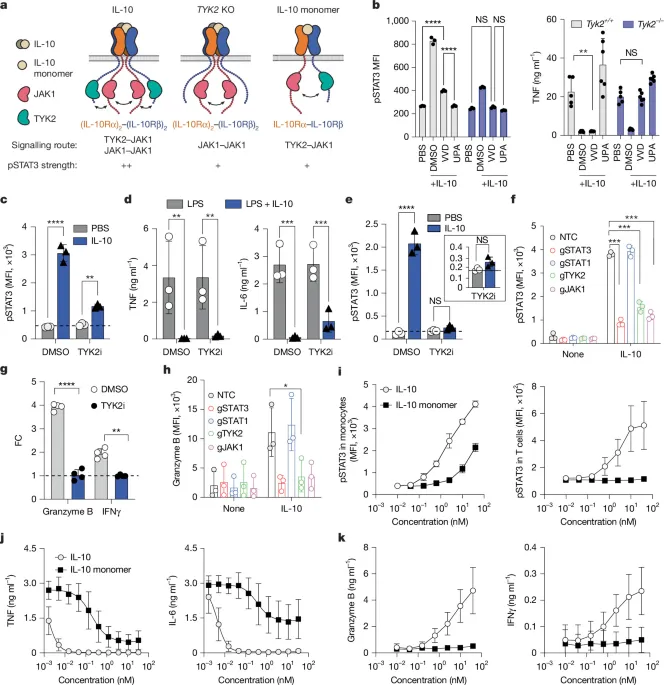
MainIL-10 is a potent anti-inflammatory cytokine that maintains immune tolerance1,6. Loss-of-function mutations in IL10 or its receptors IL10RA (encoding IL-10Rα) and IL10RB (encoding IL-10Rβ) cause early-onset inflammatory bowel disease (IBD) and autoinflammatory disorders1,7. IL-10 signalling is initiated when IL-10 binds to IL-10Rα and IL-10Rβ to form a tetrameric receptor complex, which is constitutively associated with Janus kinase 1 (JAK1) and tyrosine kinase 2 (TYK2), respectively1,8. This binding triggers JAK1-dependent phosphorylation of IL-10Rα and signal transducer and activator of transcription 3 (STAT3) to suppress pro-inflammatory gene expression and promote immune tolerance8,9. IL-10 primarily exerts its tolerogenic effects in myeloid cells and antigen-presenting cells, such as dendritic cells (DCs) and macrophages, by inhibiting cytokine production, antigen presentation and T cell priming5,10,11,12,13. Loss of IL10RA or STAT3 in these cells leads to colitis and systemic inflammation10,12,13. Despite its central role in immune tolerance, the dual functionality of IL-10 severely limits its therapeutic use6,14.
Hybrid dual attentional-based pyramidal deep learning model for liver tumor detection - Nature
We’re sharing this article early to provide faster access to peer-reviewed, accepted research. It is citable and carries a permanent DOI. This version is subject to further edits and will be replaced automatically by the final Version of Record. All legal disclaimers apply. AbstractLiver tumors are life-threatening diseases that occur due to the rapid growth of liver cells and even result in a chronic condition. Nevertheless, conventional liver tumor detection struggled with the limitations of poor robustness, difficulties in identifying the complex boundaries, and inconsistent segmentation. Hence, the research introduced a hybrid dual attention-based pyramidal deep convolutional network and deep belief network (HDPCBN) for accurate liver tumor detection. Significantly, the HDPCBN approach deployed a pyramidal architecture to learn deep hierarchical features and intricate patterns of the tumor effectively. Moreover, the integration of the dual attention technique gathers the long-range relationships of both spatial and channel dimensions for accurate liver tumor detection.

20 Posts Not To Miss From ASCOQLTY26 - Oncodaily
The ASCO Quality Care Symposium 2026 (ASCOQLTY26) brought together oncologists, researchers, healthcare professionals, and patient advocates to discuss advances in cancer care quality, patient safety, and healthcare delivery. The meeting focused on improving patient outcomes, addressing disparities in cancer care, and sharing research aimed at strengthening oncology practice. Held on October 16–17, 2026, at the Hynes Convention Center in Boston, Massachusetts, and online, the symposium featured discussions on improving cancer care delivery, advancing patient-centered approaches, and ensuring equitable access to high-quality oncology services.
0 comments
No comments yet. Be the first to share your thoughts!