Quantum System's Evolution Defies Standard Approximation - Quantum Zeitgeist
This story deserves to be shared
Send it to someone who'd care, or post it on your networks.

Matias Ginzburg of Scuola Internazionale Superiore di Studi Avanzati, Simone Rademacher of LMU Munich and Giacomo De Palma of University of Bologna have demonstrated a fundamental limitation in a widely used simplification of quantum dynamics. The researchers analytically solved a model of N bosonic qubits governed by a purely anti-Hermitian Hamiltonian, revealing that the standard mean-field Hartree approximation fails to accurately predict the system’s behavior as the number of qubits increases.
This failure occurs even in the thermodynamic limit, challenging the validity of the Hartree approximation for non-Hermitian Hamiltonians and potentially impacting a quantum algorithm designed to solve nonlinear differential equations. Their findings call for additional conditions to ensure the accuracy of mean-field models in bosonic many-body systems.
This article is an excerpt. To read the full content, visit the original source. Quantum Zeitgeist
Related articles
How More Than 40 New Traits Change Your Strategy in Becastled - XBOX Wire
Informations complètes et à jour, compilées par Google Actualités à partir de sources d'actualité du monde entier
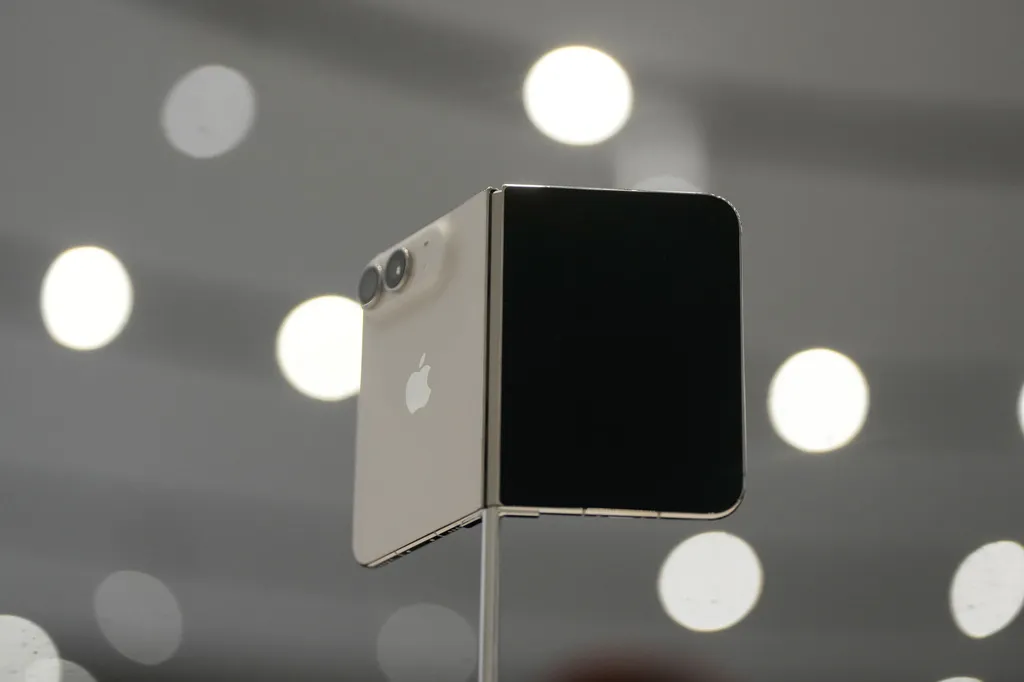
One Tech Tip: As Apple’s Duo phone is released, here are dos and don’ts for folding phones - Aurora Sentinel
FILE - The iPhone Duo is displayed during an announcement of new products on Sept. 9, 2026, on the Apple campus in Cupertino, Calif. (AP Photo/Jeff Chiu, File) Apple’s first folding phone arrives in stores on Friday, bringing the advantages of a flexible display to iPhone loyalists. Such devices also have their own unique care and protection considerations.
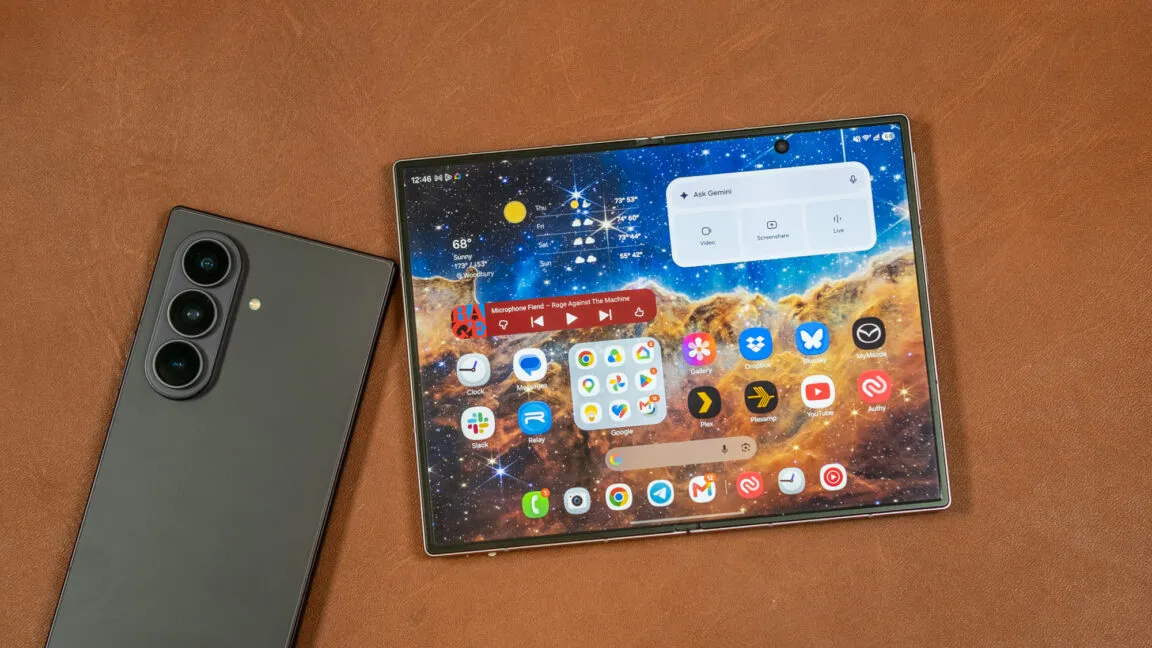
Samsung all but confirms iPhone Duo is goosing Galaxy Z8 sales - Ars Technica
Samsung released its first foldable phone in 2019, and it was the only company seriously pursuing the form factor for several years. Those early devices were clunky and more interesting as feats of engineering than as things you’d want to carry around all day, but little by little, foldable hardware improved until Apple could finally release the product it wanted. The iPhone Duo is not an island—it relies on many of the same components as other foldable phones, including Samsung displays. The iPhone Duo may lead to wider foldables (and bigger hands, apparently).
0 comments
No comments yet. Be the first to share your thoughts!