Protesters Block Louvre Following Weekend of Unrest, Art Basel Will Stay in Miami Following City Rent Discount, and More: Morning Links for October 19, 2026
This story deserves to be shared
Send it to someone who'd care, or post it on your networks.
Art Basel Will Stay in Miami Following City Rent Discount, and More: Morning Links for October 19, 2026.
This article is an excerpt. To read the full content, visit the original source. ARTnews
Related articles
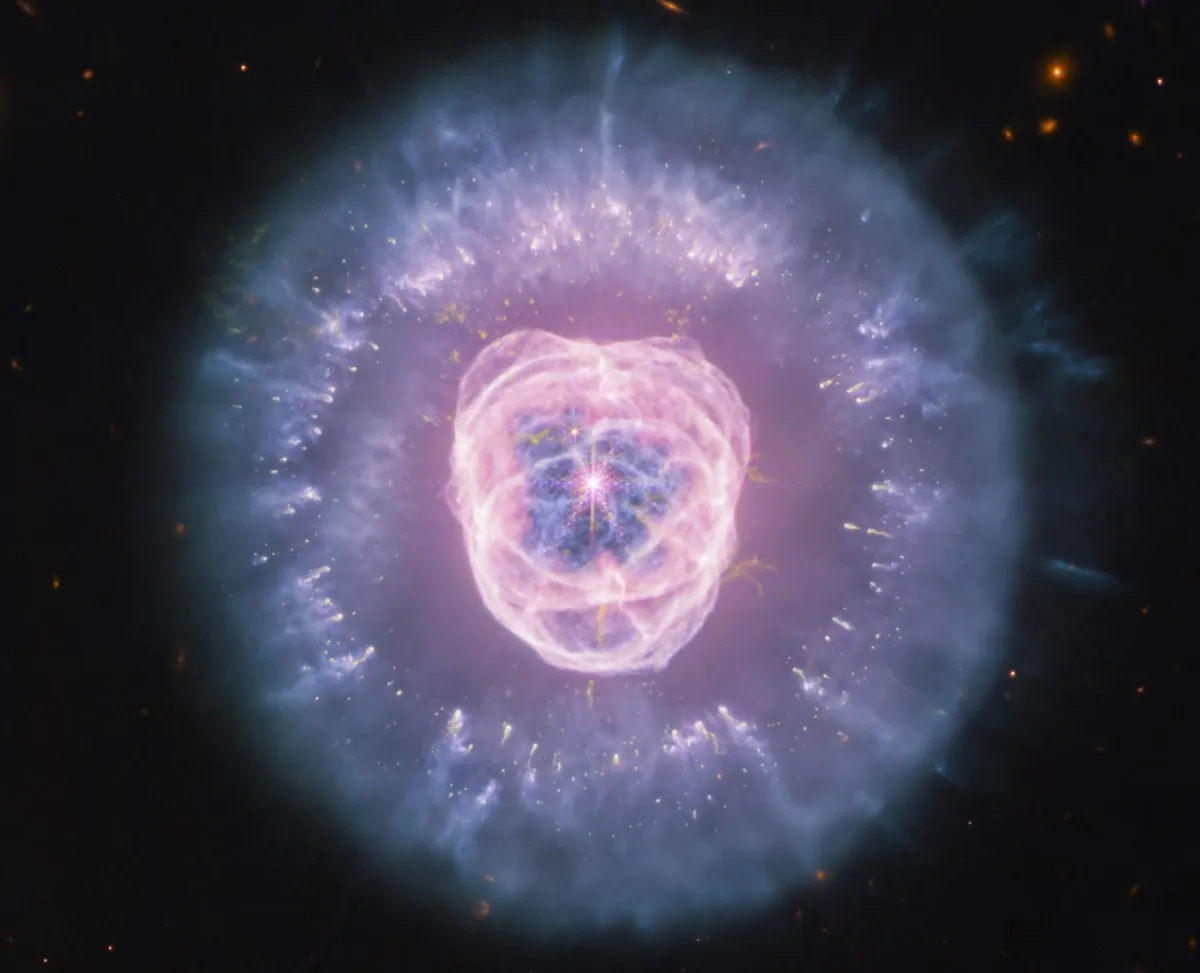
Come Face-to-Face with the Lion Nebula in the James Webb Space Telescope’s Portrait
NASA’s James Webb Space Telescope has captured some remarkable phenomena in space, from the Horsehead Nebula to the unbelievable “Pillars of Creation.” Things just got a little bit wilder with brilliant images of the Lion Nebula (NGC 2392) captured by the telescope’s NIRCam (Near Infrared Camera) and MIRI (Mid Infrared Instrument). The shape is formed by the remains of a dying star now at a phase known as a white dwarf, when a very dense stellar core remains as it sheds its outer layers. On NGC 2392, the bright center looks like a little nose. “The central dying star is so hot that its radiation is ‘cooking’ everything from the inside and producing a bubble of ionized hydrogen gas as it does,” NASA says. “The gas bubble, which is the lion’s ‘face,’ features cavernous shells and rings with tendrils that are expanding and destroying dust upon encounter.” The lion’s “mane” is actually the inside of one of these shells, illuminated by the star’s core.

Light and Magic: The Birth of Art Photography review – a rhapsodic show to stop you in your tracks
I don’t remember the last time I saw such a well-researched and truly globally representative exhibition that doesn’t patronise but quietly makes its case unapologetically, fearlessly and through sheer quality. Apart from being the first retelling of the international, pluralistic pictorialism movement, Tate’s new show allows for some refreshing encounters with unknown works for British audiences – around half of the works included here have never been shown in the UK. The effect is to radically deepen and widen our understanding not only of art history but the human impulses that drive us to make images in the first place. We move seamlessly from the sudden shock of colour in three-colour carbon prints of flowers in a London garden in the 1920s to works born of the photographic salons, circles and clubs of Sydney, Hong Kong and Brazil. Historical moments collide; the epic emerges from the everyday. A man rows home across the Norfolk Broads, another works on a construction site in Singapore. None of it feels out of place. It all belongs. It is all extremely, almost ecclesiastically, beautiful. More than a few times, I stopped in my tracks.
Art Basel Wins Miami Beach Rent Cut After Threatening Vegas Move
Plus, protests disrupt British Museum ball, a new creative hub in Abu Dhabi, and other art world matters. The post Art Basel Wins Miami Beach Rent Cut After Threatening Vegas Move appeared first on Artnet News .

LSO/Pappano review – bold, dramatic and cohesive reading of Mahler 2
There have been a fair few Resurrection Symphonies this year, and a positive glut on disc, but Antonio Pappano has form with Mahler and the London Symphony Orchestra can be relied upon to follow where he leads. First, though, the UK premiere of a new work by Dai Fujikura that had precisely nothing to do with the main event but was no less interesting for that. Amber Alchemy, commissioned to celebrate the centenary of Nomura Holdings, was inspired by the beehives atop the Japanese financial company’s London offices. In his programme note, the composer expressed his intention to evoke rather than illustrate, yet it was hard to ignore the orchestral buzz that underpinned much of this engaging 10-minute work. Quivering strings and a shimmer of vibraphones opened proceedings with striking instrumental gestures trailing off in flickering diminuendos. Pappano and the LSO brought a commendable clarity to Fujikura’s intricately interwoven lines, contrasting the music’s romantic outward sweep with its apian inner restlessness. Intention to evoke rather than illustrate… Dai Fujikura with Antonio Pappano at the UK premiere of his Amber Alchemy.
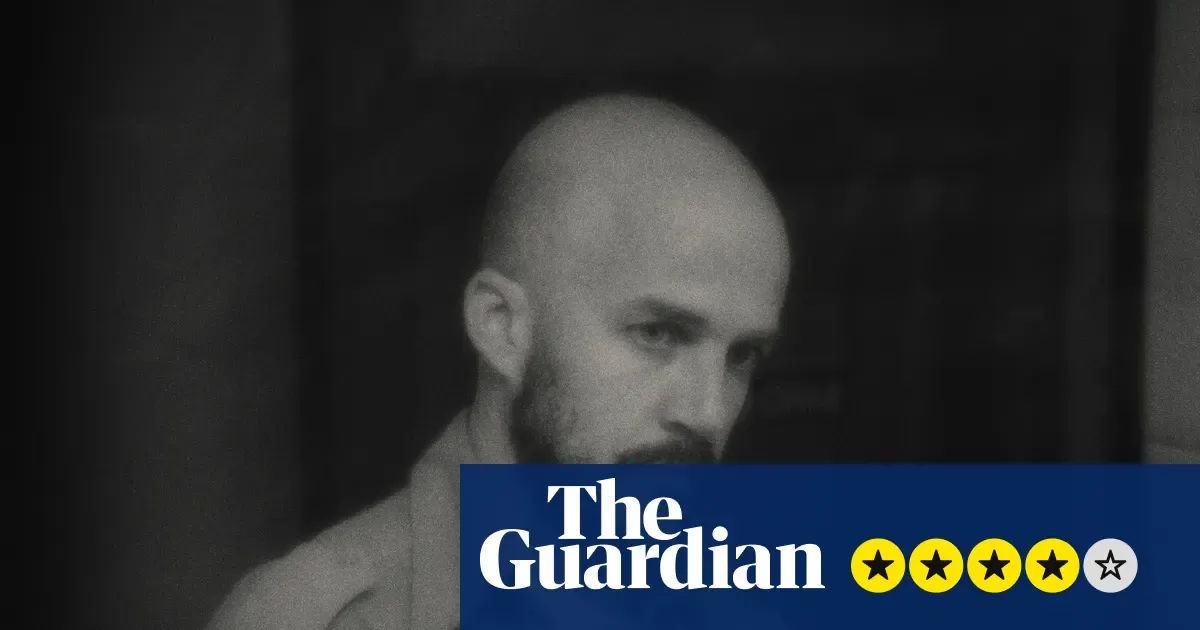
The Night Is Fading Away review – hypnotic homage to cinema as a force for public good
Cinema halls – or dream palaces, as they’re affectionately called – offer a retreat into the realm of make-believe, and everyday drudgery is left at the door. Though set within a single-screen theatre in the Argentinian city of Córdoba, Ramiro Sonzini and Ezequiel Salinas’s hypnotic film invokes a more porous relationship between the screen and its audience. Here, the messiness of life beguilingly sneaks into this domain of fantasies, blurring the borders between public and private spaces. While the luminous black-and-white cinematography lends a dreamy fuzziness to the images, the narrative concerns are grounded in thorny economic realities. A film projectionist at his local cinema called Pelu (Octavio Bertone) is reassigned to the post of a night watchman due to budget cuts at the city hall. The cinema soon becomes his literal refuge: he moves out of his cramped rented flat and secretly takes up occupation at his workplace. He then welcomes a horde of other outsiders, including his unemployed roommate, an ageing drifter and a sex worker who livestreams her erotic shows from the cinema.
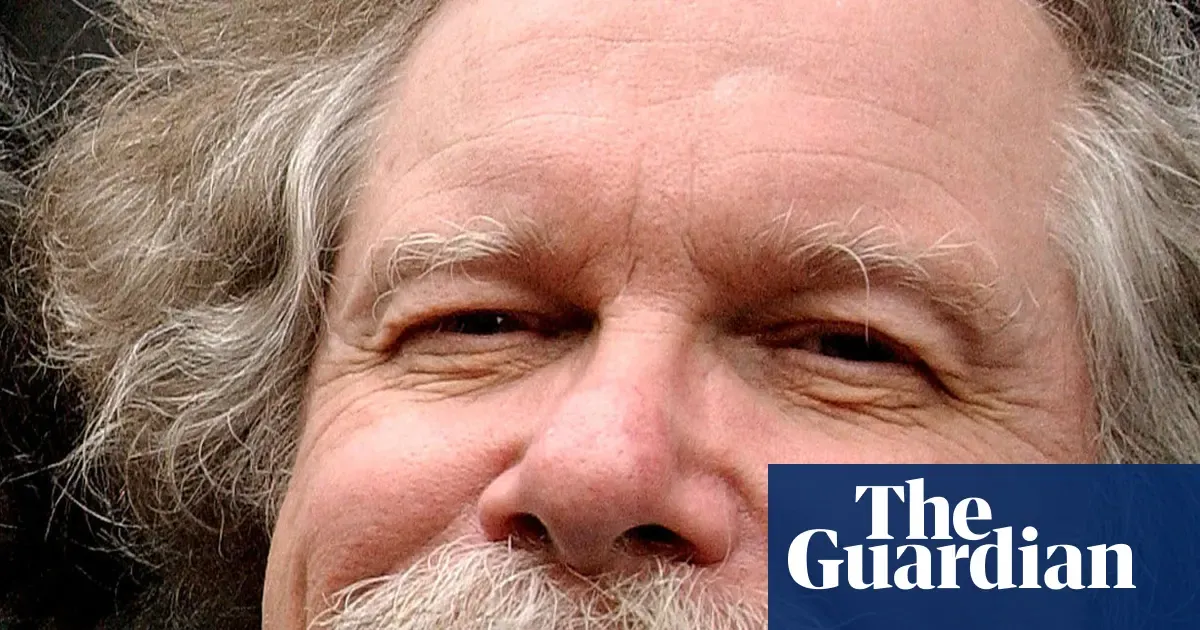
‘We tried to levitate the Pentagon’: the almost unbelievable life of Ed Sanders, trickster god of the US counterculture
“Charles Manson once wrote me a letter saying, ‘If I was as powerful as you claim then you wouldn’t be here,’” Ed Sanders tells me over a video call, savouring the menace in that sentence. Sanders is an American maverick; a musician, poet, activist, journalist and author whose greatest hit remains his bestselling 1971 book The Family, in which he chronicled the lives, crimes and trials of Manson and his followers. Sanders was well placed to report on crazed hippies, having played a pivotal role in launching the US counterculture – though he very much espoused peace, love and consciousness-raising, rather than Manson’s apocalyptic worldview. “I’ve always been a peacenik,” says Sanders. “I got locked in a cell in 1961 for protesting against nuclear armed submarines, and today I’m protesting against the Trumpster. I don’t subscribe to apathy and nihilism.”Aged 87, Sanders is speaking with me as Fugs Film!, a feature-length documentary about the Fugs, the offbeat folk-garage-psych band Sanders initially led from 1964-69, and re-formed in the 1980s, gets its UK premiere this week. “I don’t do many interviews,” he notes. “I’m constantly approached by people requesting them.
0 comments
No comments yet. Be the first to share your thoughts!