‘Persistent imbalance’ in ERC grants ‘undermines science’ - Times Higher Education
This story deserves to be shared
Send it to someone who'd care, or post it on your networks.
This article is an excerpt. To read the full content, visit the original source. Times Higher Education
Related articles

How disinformation undermines the relationship between science and society - Polytechnique Insights
For decades, disinformation has thrived, even at the highest levels of government. Some of its consequences are well documented in the scientific literature. For example, it is known that exposure to misinformation during the COVID-19 pandemic contributed to increased vaccine hesitancy among a segment of the public1,2. A recent review shows that conspiracy theories promote the rejection of climate science3. This article has also been published in our magazine 3.14 « Science under suspicion ». Download it here.
Solar wind creates a surprising imbalance in Earth’s magnetic shield - Earth.com
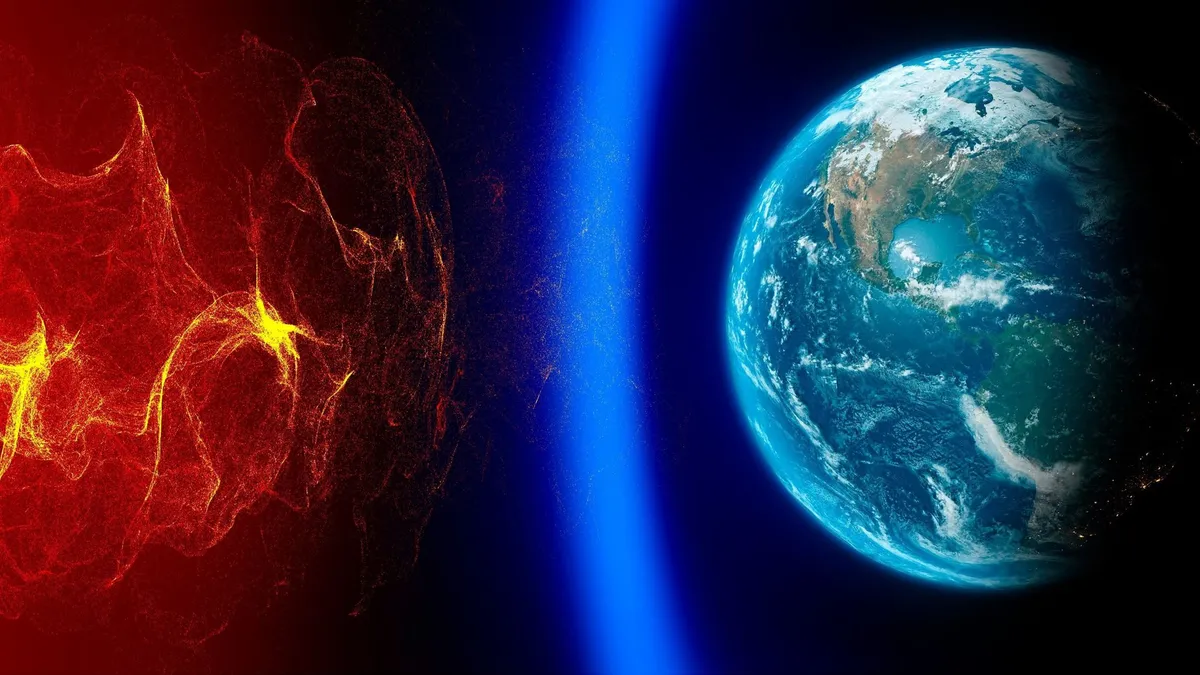
New simulations reveal why solar wind waves favor one side of Earth's magnetic shield and how the sun's magnetic field influences their location. Wind blowing across a lake raises waves. The same thing happens where the gas streaming off the sun slides past the outer edge of Earth’s magnetic field. Those waves are known to form on the flanks of that boundary, and the usual mental picture puts them on both sides at once. A new simulation suggests these waves favor one side. In a model of Earth’s magnetosphere run with the sun’s magnetic field pointing one way, the waves grew along the dawn flank and barely formed at dusk. When the field direction was reversed, the waves switched sides. In both simulations, they formed only in the northern hemisphere, which was tilted away from the sun. The study was conducted by Lauri Holappa and Jone Laitinen of the University of Oulu in Finland. The researchers also collaborated with Katariina Nykyri of Embry-Riddle Aeronautical University and Brandon Burkholder of NASA Goddard. Waves on the shield’s edgeEarth sits inside a magnetic bubble that deflects most of what the sun throws at it, from the steady breeze to a full solar storm.
0 comments
No comments yet. Be the first to share your thoughts!