Opinion: Understanding WorkSafeBC’s surplus back to employers - Business in Vancouver
This story deserves to be shared
Send it to someone who'd care, or post it on your networks.
This article is an excerpt. To read the full content, visit the original source. Business in Vancouver
Related articles
Q&A: WorkSafeBC’s Psychological Health and Safety Proposal - Business Council of British Columbia
The following Q&A is intended to provide a clearer understanding of WorkSafeBC’s Draft Psychological Health and Safety Regulation, including what is being proposed and what it could mean for B. C. workplaces. The proposed regulation: what it would doQ: What is being proposed? A: WorkSafeBC has released for consultation a draft regulation, Part 4.1 — Psychological Health and Safety, that would create an enforceable duty on every B. C. employer to eliminate or minimize the risk of psychological injury at work. It applies the same prevention approach used for physical hazards to a new category called "psychosocial hazard. " Due to the provincial election, consultations have been paused until further notice. Q: Why is WorkSafeBC doing this? A: WorkSafeBC points to a sharp rise in accepted psychological-injury claims, from roughly 419 a year before 2015 to about 2,613 in 2025. It notes these claims tend to last longer and cost more, and states its goal is to prevent them at the source rather than only compensating them after the fact. The regulation's approach assumes these claims may be driven by workplace conditions that employers can identify and control.
Nasdaq futures gain as investors buy the dip in the AI trade: Live updates - CNBC
The S&P 500 lost nearly 2% last week, its biggest weekly decline since late June. The Nasdaq fell 4.5%, snapping a four-week winning streak.
China looks like it's dumping Treasury debt but may actually be stashing it in Canada and Belgium - Fortune
China was once the top holder of U. S. Treasuries but has been shedding its massive stockpile for years, fueling fears of de-dollarization, but official data may not fully capture Beijing’s actual portfolio. The decline began in earnest around 2021, but as recently as April 2022, China still held $1 trillion in Treasury securities. U. S. data on Friday show that’s been whittled down to just $591 billion as of August, the lowest in 18 years and down from $700 billion a year earlier.
Cathie Wood buys $11.8 million of tumbling tech stock - Yahoo Finance Singapore
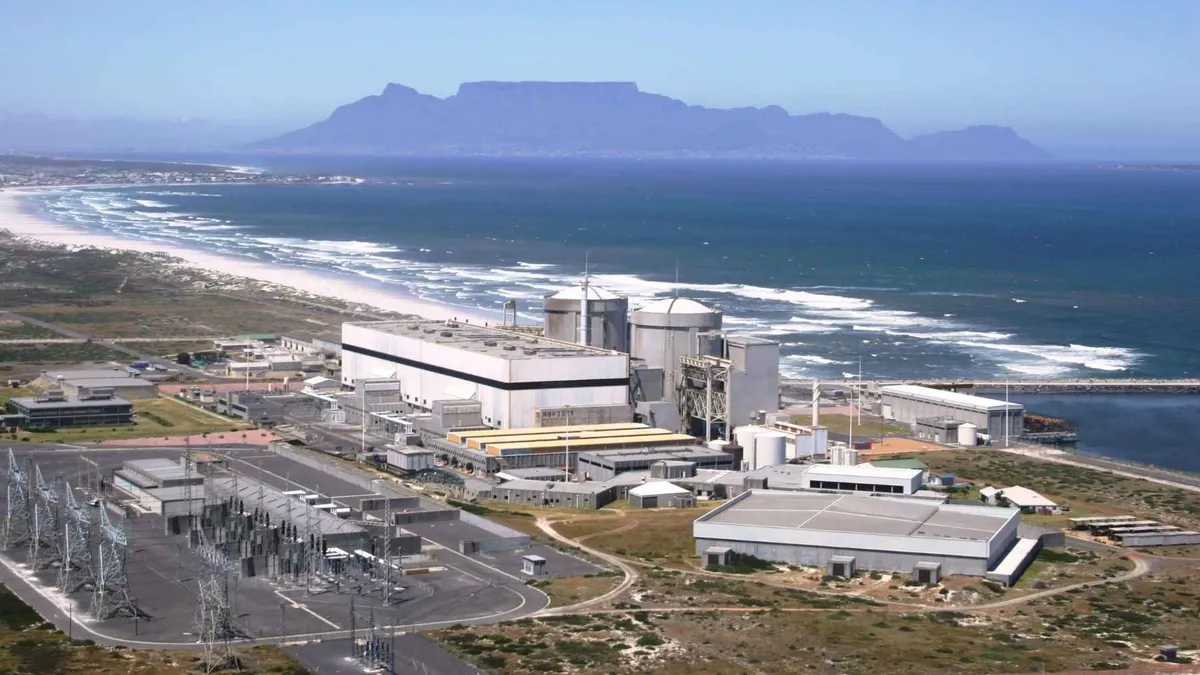
A 930-megawatt reactor on the South African coast was cut to half power when dead sardines packed its seawater intake and a cooling pump shut itself off, the only nuclear plant in Africa was already down to one machine with its twin in refueling, and on Frida - Autonocion.com
If you’ve ever pulled a fistful of leaves out of a pool pump basket, you already understand the only thing that went wrong at Africa’s only nuclear plant in August. Stuff gets sucked toward the pump, stuff piles up on the screen, the flow drops, and eventually the pump quits. Now swap the pool for the South Atlantic, swap the leaves for a mass of dead sardines, and swap your pump for one that’s keeping a 930-megawatt reactor cool. That’s pretty much what happened at Koeberg, which sits on the coast about 17 miles north of Cape Town. On Friday, August 21, Eskom, the state utility that runs the place, cut Unit 1 back to 50 percent. A cooling pump had shut itself off because the seawater intake was packed with what Eskom called “marine material,” which turned out to be fish. Lots of fish.
0 comments
No comments yet. Be the first to share your thoughts!