One Health experts in Lyon chart path from commitment to coordinated action on capacity-building - World Health Organization (WHO)
This story deserves to be shared
Send it to someone who'd care, or post it on your networks.
This article is an excerpt. To read the full content, visit the original source. World Health Organization (WHO)
Related articles
Global experts call for coordinated action on digital health risks - News-Medical
The way digital technologies are currently built and governed creates real risks to health worldwide, alongside genuine benefits, according to a new three paper Series authored by 13 global experts, published in The Lancet. The authors call for coordinated governance of digital systems, with the health and online safety of children and young people made an immediate global policy priority. "Use of digital media is now woven into the fabric of childhood and life as a young adult. Governments have let technology companies write their own rules, leading to business models built to capture attention and collect data, with health treated as an afterthought," says Series chair Professor Ilona Kickbusch, Digital Transformations for Health Lab (DTH-Lab) (Switzerland). "The evidence linking problematic digital media use to poorer mental health, sleep and physical activity, although not conclusive, justifies coordinated, global action. With the right governance, a healthier digital world for young people is possible, one that allows them to benefit from online opportunities without substantial risk of harm to health. " Evidence of digital harms justifies immediate public health action
Miro1 protein linked to insulin resistance in type 2 diabetes - News-Medical
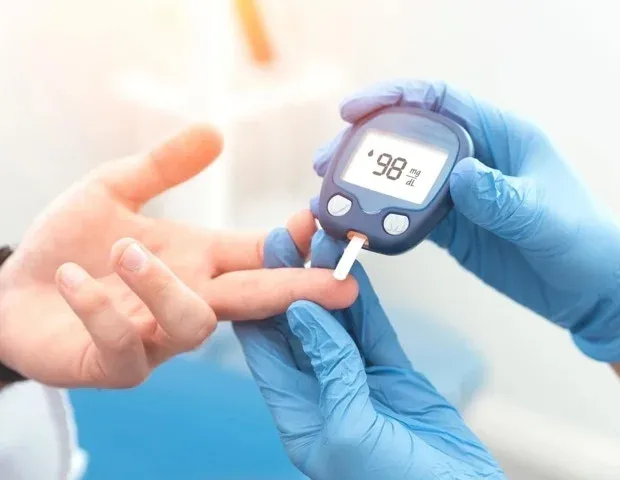
A protein called Miro1 found at elevated levels in the skeletal muscle of people with Type 2 diabetes may contribute to insulin resistance, potentially making it a target for future treatments that help the body regulate blood sugar, according to a study published today in Nature Communications. Researchers found that removing Miro1 restored the muscles' response to insulin in preclinical models, while exercise reduced the protein's levels in people with Type 2 diabetes. The study was led by senior author Dr. John P. Kirwan, recently named executive director of the OU Health Harold Hamm Diabetes Center at the University of Oklahoma. He conducted the research while at LSU's Pennington Biomedical Research Center and now brings his internationally recognized translational research program to OU, where he will build on his work to advance the understanding and treatment of diabetes. The study's first author is Elizabeth Heintz, a doctoral candidate who worked in the Integrated Physiology and Molecular Medicine Laboratory at Pennington Biomedical, and the co-corresponding author is Christopher Axelrod, who has since joined Kirwan at the Harold Hamm Diabetes Center.
CHEST 2026: Day 1 Recap — 5 Headlines to Know - HCPLive
News|Articles|October 19, 2026 Check out highlights from news published on day 1 of CHEST 2026, spanning asthma, COPD, bronchiectasis, pulmonary rehabilitation, and fibrotic ILD. Related to this articleOctober 13th, 2026Clinicians at CHEST 2026 will see late-breaking COPD, asthma, pulmonary hypertension, and bronchoscopy data, plus exclusive expert interviews. Read moreOctober 18th, 2026In pooled phase 3 data, mepolizumab lowered mean yearly systemic corticosteroid exposure by 178.97 mg in patients with a BEC of ≥150 cells/µL. Read moreOctober 18th, 2026Chronic proton pump inhibitor use carried 60% greater odds of asthma exacerbation and nearly 4-fold odds of rescue corticosteroid use in a matched cohort of 2456 patients. Read moreOctober 16th, 2026George Washko, MD, discusses a late-breaking OBERON/TITANIA analysis showing tozorakimab reduces segmental mucus plug scores in COPD. Read moreOctober 16th, 2026Advanced practice providers described how documentation, specialty pharmacy support, and payer requirements shape biologic selection and timing.
0 comments
No comments yet. Be the first to share your thoughts!