Mysterious Voynich manuscript may be a cipher, a new study suggests - Live Science
This story deserves to be shared
Send it to someone who'd care, or post it on your networks.
This article is an excerpt. To read the full content, visit the original source. Live Science
Related articles
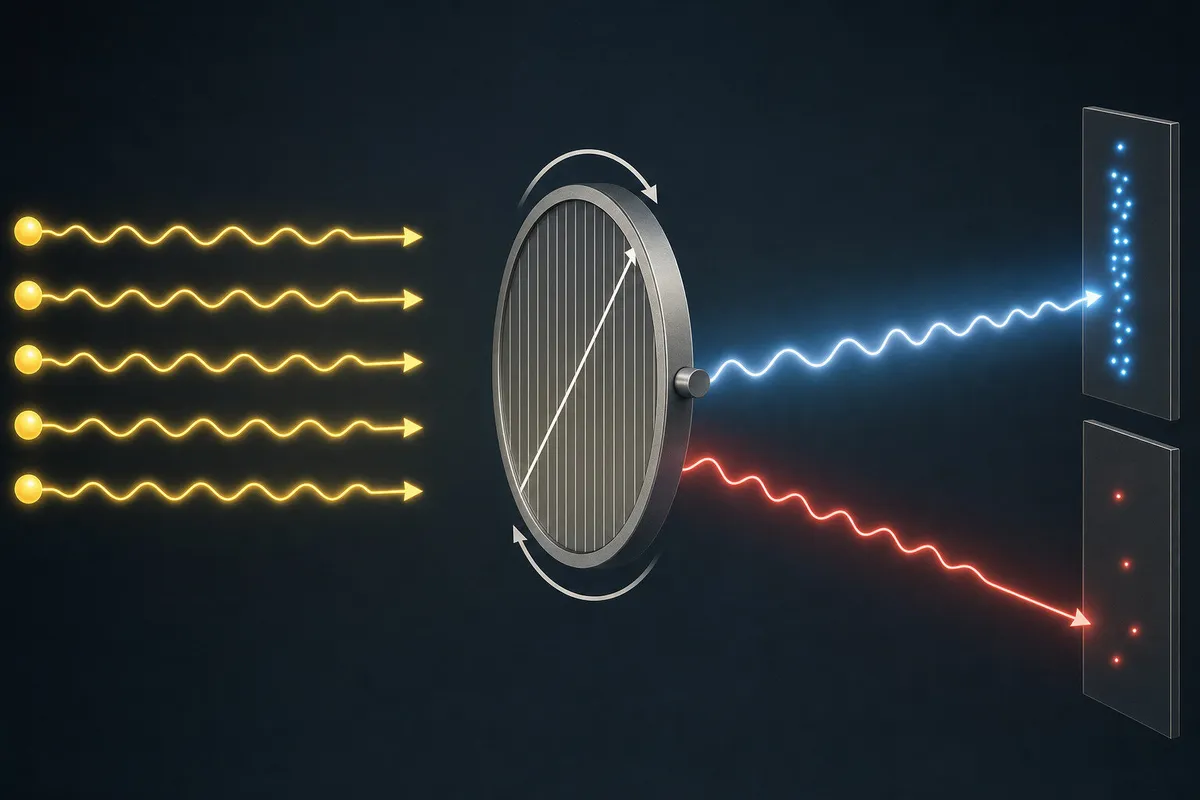
Lost Schrödinger manuscript reveals his true view of quantum randomness - Phys.org
Credit: Image generated by the editorial team using AI for illustrative purposes. Unlike classical physics, quantum mechanics generally cannot tell us exactly what will happen in an individual event. Instead, it predicts the probabilities of different outcomes. As one of the theory's early pioneers, Erwin Schrödinger played a key role in debates about what this randomness really means. However, part of his contribution has stayed hidden for more than 80 years.

Unpublished Schrödinger Manuscript Reveals His Challenge to Quantum Randomness Claims - The Quantum Insider
A new study analyzes an unpublished Schrödinger manuscript that challenged claims that hidden information could not explain apparently random quantum outcomes. Schrödinger’s model reproduced the expected results of polarization measurements, serving as a mathematical counterexample rather than a complete theory of quantum physics.
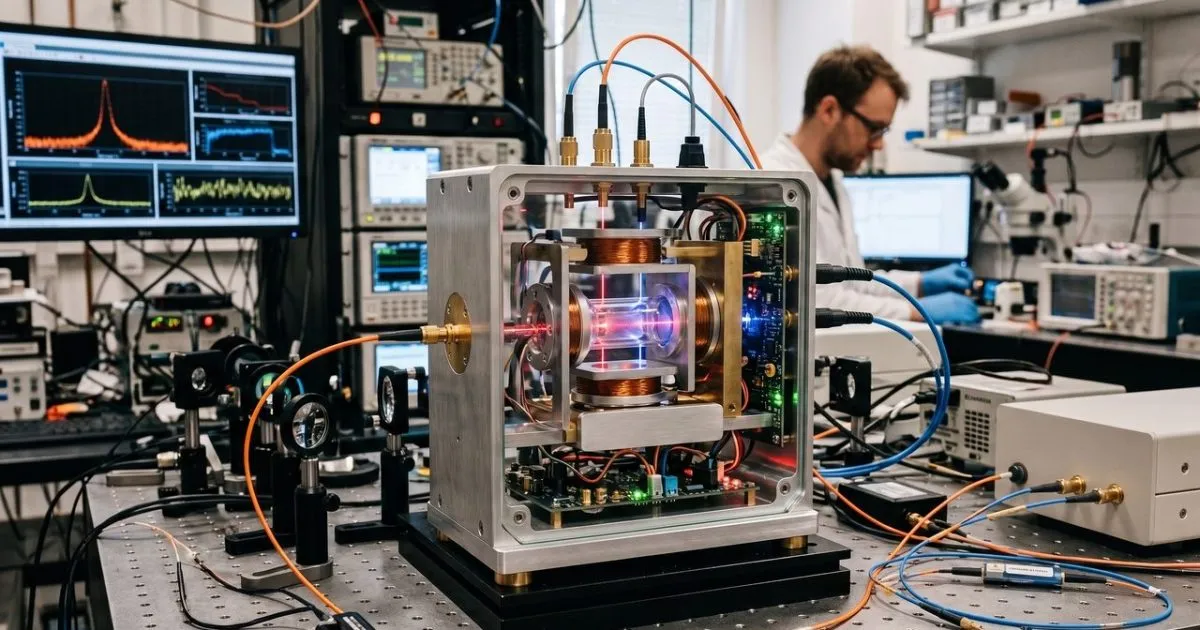
Quantum Leap For Canadian INRS High-temperature Materials Research - Quantum Zeitgeist
After nearly 40 years since the discovery of cuprates, copper-based compounds promising lossless electricity transmission, the mechanisms behind their superconductivity remain elusive. Researchers at the Institut national de la recherche scientifique (INRS), led by Professor Fabio Boschini, have now published findings in Nature Physics revealing a competition between superconductivity and the pseudogap, a mysterious quantum state. “The pseudogap is one of the greatest mysteries in condensed-matter physics,” says Professor Boschini, a specialist in ultrafast spectroscopy of quantum condensed matter at INRS, adding that understanding its interaction with superconductivity is essential to explaining high-temperature superconductivity. The INRS team used a pulse of light to temporarily suppress superconductivity, observing how the material responded in real time and uncovering previously hidden electronic states.
0 comments
No comments yet. Be the first to share your thoughts!