Murder on the dancefloor: are phones, drugs and chatter killing off dancing?
This story deserves to be shared
Send it to someone who'd care, or post it on your networks.
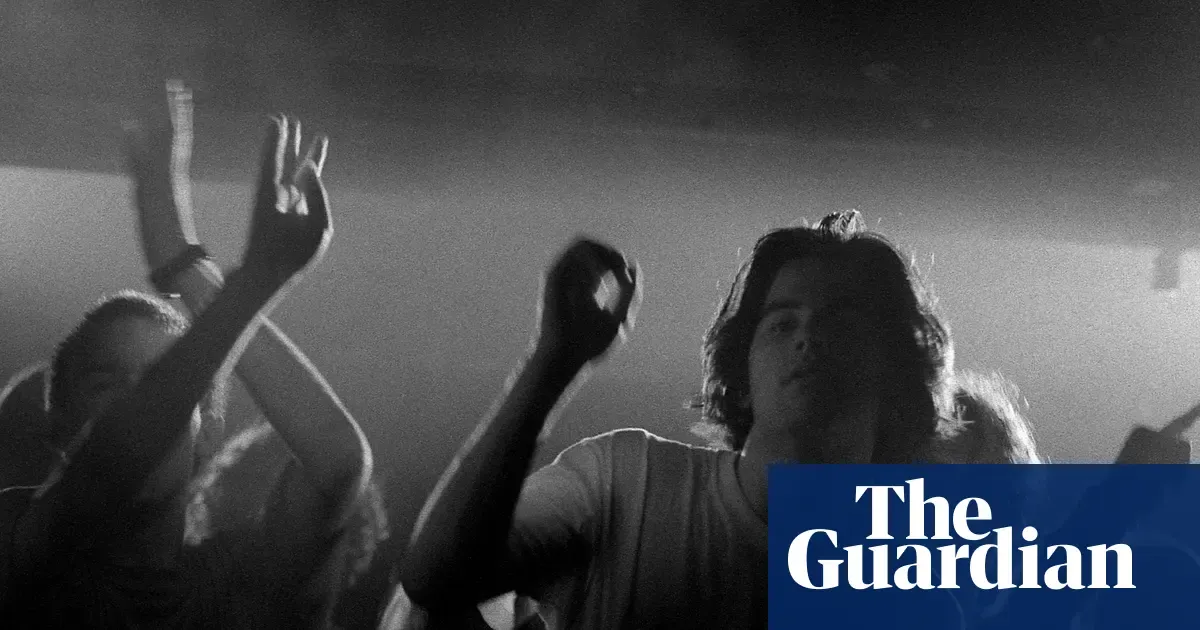
Towards the end of summer, a debate began raging in clubland, kick-started by an Instagram post from the esteemed DJ Jane Fitz. Ahead of the Houghton festival, where she is a regular fixture, she posted a request asking people to stop chatting so much during DJ sets. “What I wrote was super respectful,” she tells me. “A bit of talking is obviously OK. But why would you stand completely still, where the sound is super loud, just to ask your mate about a new boyfriend or what they had for lunch? It’s called a dancefloor for a reason.”Jane Fitz at Rural in 2025. Photograph: ToshimuraFitz’s plea exploded. It chimed with many, while others were up in arms, claiming that paying an entry fee allowed them to do whatever they wanted. “People were accusing me of being the fun police,” she says. “I’m not trying to stop your fun, mate. I’m trying to give you a better night out.”“I think the dancefloor is dead,” Charli xcx sang on her tongue-in-cheek comeback single Rock Music this spring. Was she right?
This article is an excerpt. To read the full content, visit the original source. The Guardian Culture
Related articles
Basma and Temir Alcy: NAD review – skulking, sultry French-Moroccan crew evoke this shifting season
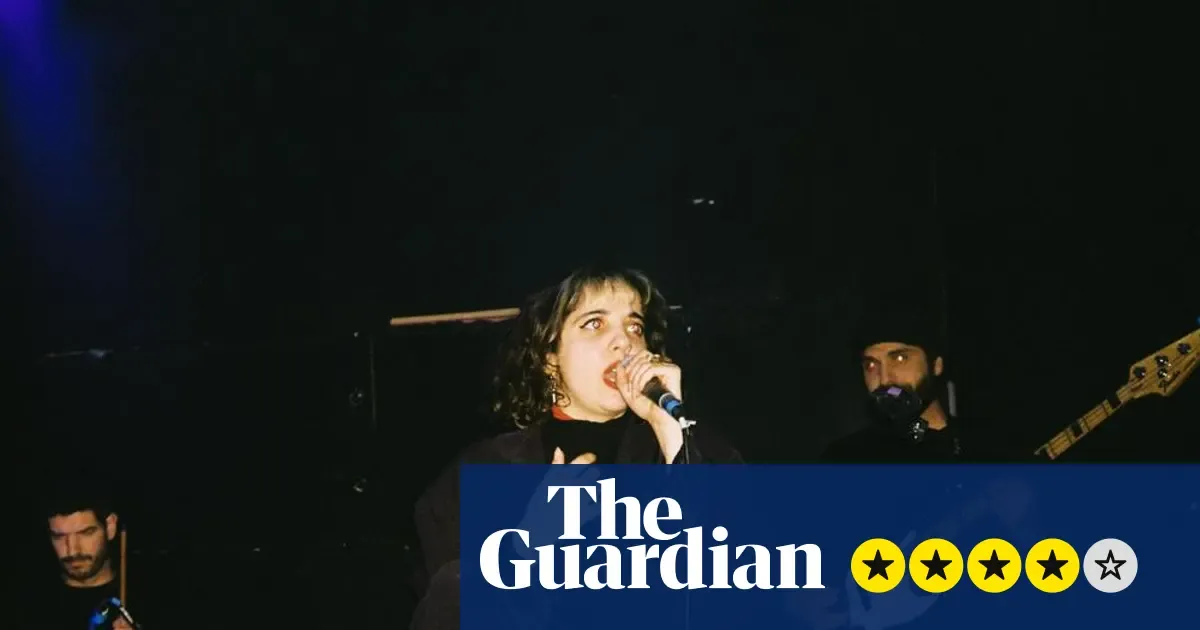
The new album from French-Moroccan vocalist Basma and Paris-based group Temir Alcy comes just in time for the changing of the clocks. It’s a dark and disorientating listen, exploring themes of loss and new beginnings over swampy, downtempo rhythms. The 11 tracks here linger somewhere between folk, shoegaze and ambient, with skulking percussion, droning passages and plucked strings soaked in reverb. Opening track Belati sets the tone with its spacious, shapeshifting composition, where ghostly drones and Basma’s layered calls give way to a sluggish beat. Most of the tracks follow a similar non-structure: amorphous but with an intermittent, sultry groove, like the winding bass on Khti Sarah, or the slow, swinging rhythm on Aji M3aya. Basma and Temir Alcy: NAD album cover. Basma’s performance is always captivating. Singing in a mixture of Darija (vernacular Arabic) and French, she delivers poetic snapshots in sensory terms that chime with the shifting seasons: “shy light”, blowing wind and bonfires. On Rised, breathy fragments are looped and reversed into a dreamy haze, while her lilting chants on La Tourne have a hypnotic effect.
le poisson volant: a red-lit restaurant in paris transforms into a nightclub after dark
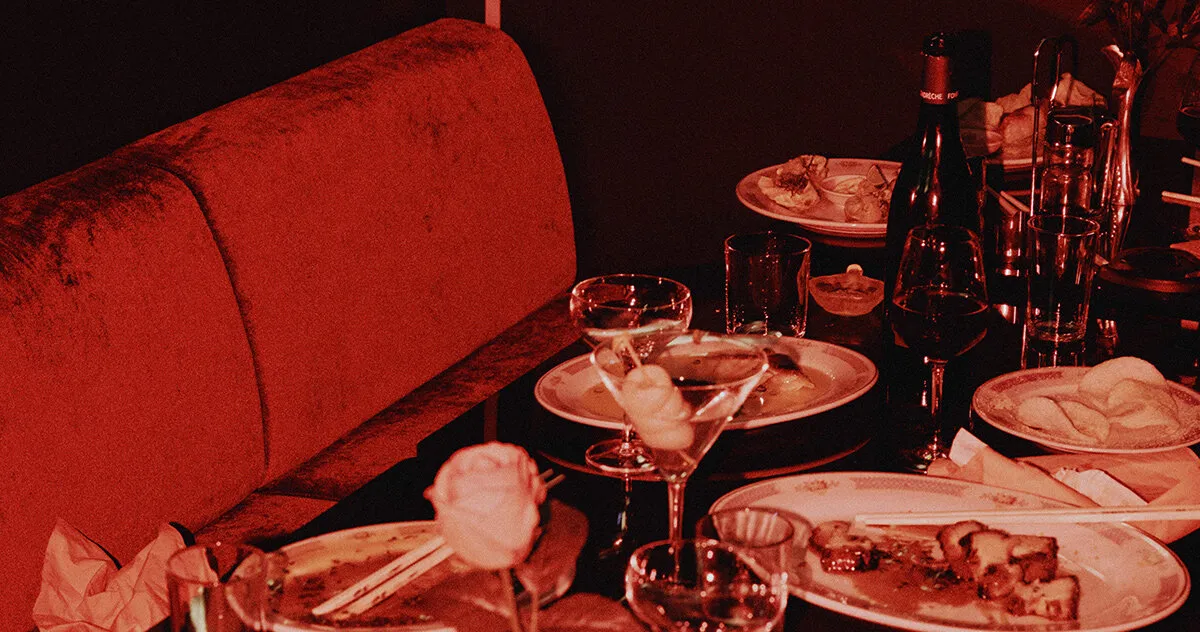
claves designs a restaurant for the late hoursAt Le Poisson Volant in Paris, dinner gradually gives way to a nightclub as the evening progresses. Large illuminated ceiling panels cast a soft glow over the dining room before the lighting becomes sharper and the music takes over. The venue opened on October 2nd at 5–7 rue Marguerite-Moret. Designed by Parisian interior architecture studio Claves, the new restaurant and club occupies the former L’International music venue in the city’s 11th arrondissement. Its interiors bring together Brutalist geometry and decorative references drawn from Chinese restaurants of the 1980s, creating an atmosphere that changes considerably between dinner and the early hours of the morning. The project was conceived by Bertrand Chauveau and Paul Henri, the founders of nearby restaurant Le Cornichon, in collaboration with chef Yanxin Yin. The team returned to Claves founders Laure Gravier and Soizic Fougeront, who previously designed Le Cornichon, to transform the two-level space.

Call of Duty: Modern Warfare 4 review – a thrilling airport novel of a game
And so we return perhaps one final time to Call of Duty’s Modern Warfare strand, with stories, “ripped from the newspaper headlines”, featuring shady terror organisations, nefarious rogue states and the brutally capable, monosyllabic war fighters who stand between us and Armageddon. Last year’s Black Ops 7 instalment was a sales disappointment for Activision, and that has no doubt put extra pressure on Infinity Ward, the studio leading Modern Warfare 4 development. Fortunately, this developer – like series heroes Price, Gaz and Ghost – seems to thrive on pressure. As you may have read, this year’s campaign is based around a fictitious North Korean ruling family that has seized an opportunity to invade its southern neighbour. Amid the chaos, a small group of Korean and American marines must help lead the fightback, while in the shadows, SAS hard man John Price makes an unlikely new comrade in his own morally ambiguous quest to put the world to rights. Mads Mikkelsen pops up as evil mastermind The Archer, but like Kiernan Shipka in Black Ops 7 he’s rather wasted, with very little screen time. Stories ‘ripped from the newspaper headlines’ …

Last One Laughing: Halloween review – still a total treat, despite the new twist
British comedy is a broad church united by a simple adage: less is more. The most acclaimed and beloved shows – Fawlty Towers, The Young Ones, Brass Eye, The Office – tend to be exceptionally short-running. Compared to the Americans, our series are brief anyway, but we also seem anxious to bow out well before a premise is squeezed dry. We don’t milk it, we don’t money-grub. In a weird way, comedy is viewed as a precious finite resource liable to become exhausted at any moment. Which is why I feel slightly sceptical about this Halloween special of Prime Video’s Last One Laughing, the reality gameshow that involves a group of comedians competing to see who can remain straight-faced for the longest. The enormous success of the first two series – incredible ratings, healthy media coverage, a pair of Baftas – was well deserved: the show produced some of the most hysterical TV comedy in recent memory. You can understand why the streamer would be keen to capitalise on the interest of the circa 6 million-strong fanbase with this four-part miniseries, which whittles down the usual 10 contestants to seven. But might this snacky stopgap dilute the precious joy of the yearly series proper?
‘I struggle to see myself as someone special’: Sandra Hüller on being the star of four - or, possibly, five - of the year’s biggest films
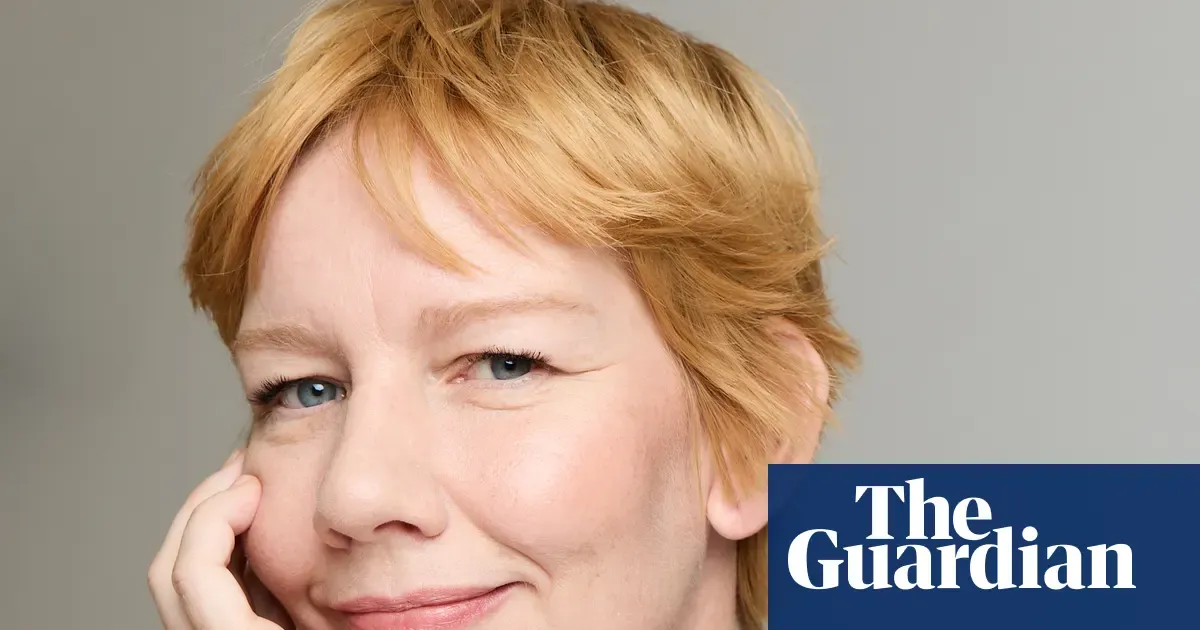
Sandra Hüller is crying, and it feels very strange. A wildly gifted actor, she can convey every human emotion there is. On screen, though, she is most often asked to embody deep self-possession. Even doing karaoke, Hüller is in control. And in real life, life is good. Her 2026 will end with four high-profile movies this year alone. Two (Fatherland and Rose) are black-and-white arthouse films that centre on her brilliance, and though one of the others (Digger) is already a Hollywood cautionary tale, a second (Project Hail Mary) was a giant $684m hit. (There may also be a fifth movie, bigger still. We will come back to that.)And yet, dressed in film star black, she is in tears. “This is really hard for me,” she says. We are talking about Fatherland. Directed by acclaimed Polish film-maker Paweł Pawlikowski, Hüller plays the German polymath Erika Mann, who in the film drives her novelist father Thomas Mann through newly divided postwar Germany. The Nazi past shadows everything – but the movie is also tied up with the birth of East Germany, where Hüller grew up. (She still lives in what was once the GDR.)
0 comments
No comments yet. Be the first to share your thoughts!