Metallic θ-phase tantalum nitride has a thermal conductivity triple that of copper - Science | AAAS
This story deserves to be shared
Send it to someone who'd care, or post it on your networks.
This article is an excerpt. To read the full content, visit the original source. Science | AAAS
Related articles
🧊 Under extreme conditions, ice could become... metallic - Techno-Science
Ice subjected to unimaginable pressure could eventually conduct electricity like a metal. The ice we encounter every day has a well-known structure: water molecules assemble into a solid network. But when pressure increases enormously, atoms can change their arrangement. Researchers already know of many forms of ice, very different from the ice in our freezers.
Optimization of conductivity for MXene polymer nanocomposites by the number and diameter of contacts among adjacent nanosheets - Nature
We’re sharing this article early to provide faster access to peer-reviewed, accepted research. It is citable and carries a permanent DOI. This version is subject to further edits and will be replaced automatically by the final Version of Record. All legal disclaimers apply. AbstractIn this study, a model for the conductivity of MXene-based samples is developed by simultaneously considering the percolation threshold, inter-nanosheet interfacial contacts, contact geometry, and electron tunneling effects. The percolation onset volume fraction and the network portion are demonstrated by interphase dimensions as well as the diameter and thickness of the MXene nanosheets. Accordingly, the proposed model is constructed based on physically meaningful and measurable parameters, providing an efficient framework for estimating the conductivity of MXene system. Parametric analysis and experimental conductivity facts from representative systems are employed to validate the method. The highest conductivity as 5.1 S/m is gained when nearly all MXene nanosheets participate in the conductive network and the interphase thickness is 40 nm.
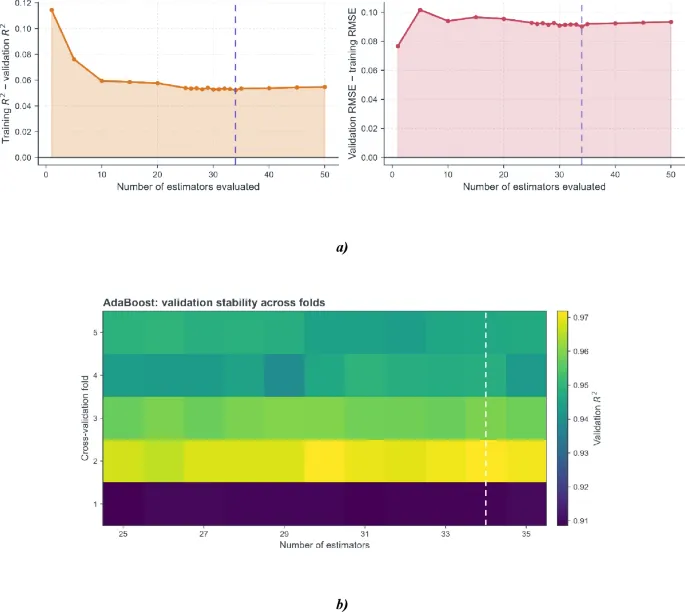
Machine learning modeling and interpretation of saline soil thermal conductivity - Nature
We’re sharing this article early to provide faster access to peer-reviewed, accepted research. It is citable and carries a permanent DOI. This version is subject to further edits and will be replaced automatically by the final Version of Record. All legal disclaimers apply. AbstractSoil thermal conductivity is a key parameter in geothermal design, buried infrastructure, frozen-ground engineering, agricultural heat-transfer assessment, and subsurface energy systems. This study developed an interpretable multi-model machine-learning framework for predicting soil thermal conductivity from 903 literature-derived observations and 15 predictors describing temperature, texture, bulk density, volumetric water content, salt concentration, salt molar mass, and ionic identity. Eleven regression algorithms were optimized by five-fold cross-validation within a common 90% development subset and compared on an untouched 10% random hold-out. Extra Trees yielded the lowest observed random-holdout error (R² = 0.9816, RMSE = 0.0625 W m⁻¹ K⁻¹, MAE = 0.0446 W m⁻¹ K⁻¹, AARE = 3.93%, and A20 = 98.90%), with CatBoost and XGBoost providing similarly high point performance.
0 comments
No comments yet. Be the first to share your thoughts!