Medical assistance in dying on psychiatric versus somatic grounds: survey on the experiences of relatives - Cambridge University Press & Assessment
This story deserves to be shared
Send it to someone who'd care, or post it on your networks.
Medical assistance in dying (MAID) has been legal in the Netherlands since 2002 (Appendix A available in the Supplementary Material at https://doi.org/10.1192/bjp.2026.10815). In the practice of MAID, a distinction is sometimes made between euthanasia and assisted suicide. We use MAID as an umbrella term encompassing both euthanasia and assisted suicide, as regulated under Dutch law.
Recently the number of people receiving MAID has increased in the Netherlands, from 5516 in 2015 to 10 341 in 2025, with somatic illness, primarily cancer, being the most common reason.
This article is an excerpt. To read the full content, visit the original source. Cambridge University Press & Assessment
Related articles
Podcast: Thyroid Pitfalls in Psychiatric Practice, From Lab Interpretation to Wellness Supplements - Psychiatric Times
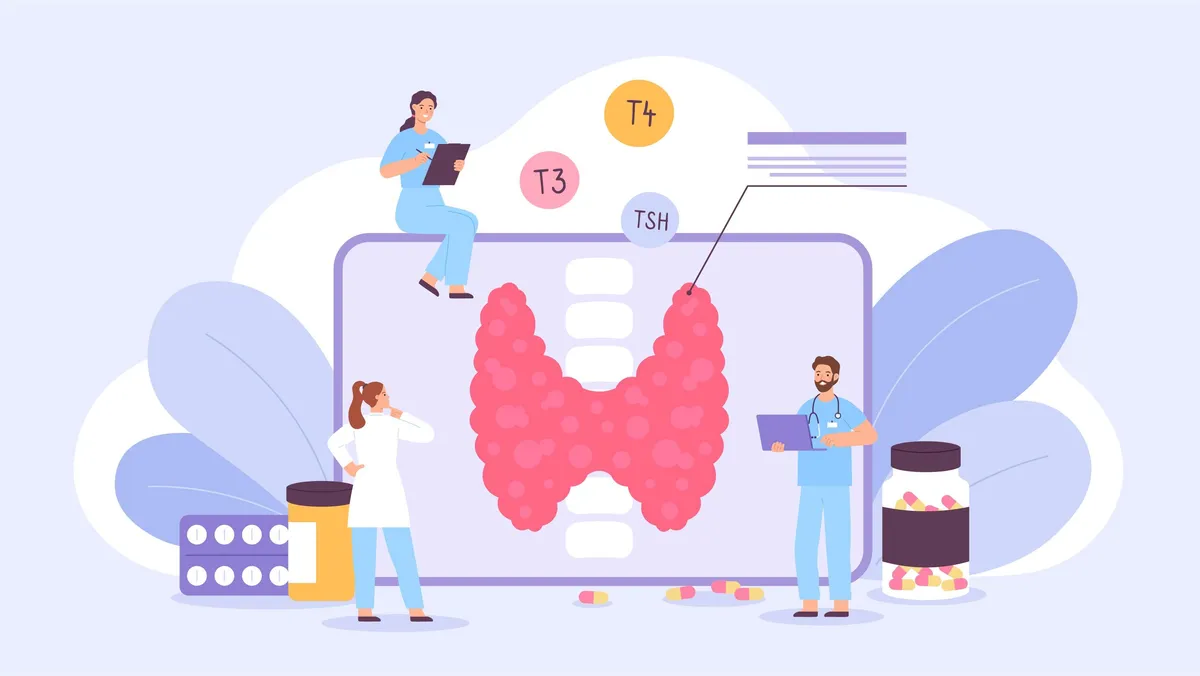
An endocrinologist warns psychiatrists against overreading peripheral thyroid hormones and flags kelp and T3 microdosing as underrecognized risks. In this episode of “The Psych Consult: Second Opinion,” endocrinologist Caroline Messer, MD, joined consultation-liaison psychiatrist Claire Brandon, MD, to discuss where thyroid disease and psychiatric illness overlap, and where clinicians most often go wrong. Reading the LabsMesser advised psychiatrists to rely on thyroid-stimulating hormone (TSH) alone in most cases, reserving free T4 and T3 for suspected central disease. Stress, heparin, and binding-protein abnormalities can all distort peripheral levels. She noted that SSRIs can lower free T4 by causing a mild central hypothyroidism. Symptoms are a poor guide on their own. Messer pointed to the Colorado Thyroid Disease Prevalence Study, which evaluated more than 25,000 health fair attendees, as evidence of how common hypothyroid-type complaints are in the general population. Age further complicates interpretation: TSH distribution shifts upward over the lifespan, and most older adults with TSH above 4.5 mIU/L fall within an age-appropriate range.

GLP-1s are linked to lower psychiatric hospitalizations: study - TradingView
Patients with schizophrenia and type 2 diabetes on GLP-1 receptor agonists were less likely to require acute psychiatric care, such as hospital visits, compared with those using other diabetes drugs such as DPP-4 or SGLT2 inhibitors, according to a new peer-reviewed study. The study published on Wednesday in the Lancet Psychiatry journal was based on electronic health record data representing more than 70,200 adults with schizophrenia and T2D who were receiving diabetes therapy between Jan. 1, 2018, and Oct. 1, 2025According to its authors, patients on GLP-1 agonists had a 24% lower risk of undergoing psychiatric hospitalizations compared with those who were not treated for diabetes and an 18% and 17% lower risk compared with those who were on DPP-4 and SGLT2 inhibitors, respectively. Lead investigator Najmeh Davoodian, an associate research fellow at Deakin University in Australia, said that the results marked the first to show a connection between schizophrenia hospitalizations and GLP-1s, a popular drug class marketed by Novo Nordisk NVO and Lilly LLY.
GLP-1 Drugs Cut Psychiatric Hospital Admissions For Schizophrenia By 24%: Study - KFF Health News
The study, published Wednesday, was the first to link powerful obesity and diabetes medicine with a reduced likelihood of schizophrenia hospitalization, Bloomberg reported. One of the authors of the study hypothesized that better metabolic health might support “psychiatric stability.” People with schizophrenia who were also taking GLP-1 drugs for diabetes had fewer psychiatric relapses in a large study of US health records, indicating another potential benefit from the medicines. The patients on GLP-1s were 24% less likely to be admitted to a psychiatric hospital than people not taking the drugs, researchers said, and 29% less likely to go to the emergency room for a mental health crisis. They were also less likely to be admitted than those who took other types of diabetes medicine, according to the study published Wednesday in the Lancet Psychiatry journal. (Kresge, 10/14)
0 comments
No comments yet. Be the first to share your thoughts!