Mechanisms underpinning the mental health impact of arts engagement - Nature
This story deserves to be shared
Send it to someone who'd care, or post it on your networks.
This article is an excerpt. To read the full content, visit the original source. Nature
Related articles
Oncogenic mutations in non-small cell lung cancer: from molecular mechanisms to clinical practice - Nature
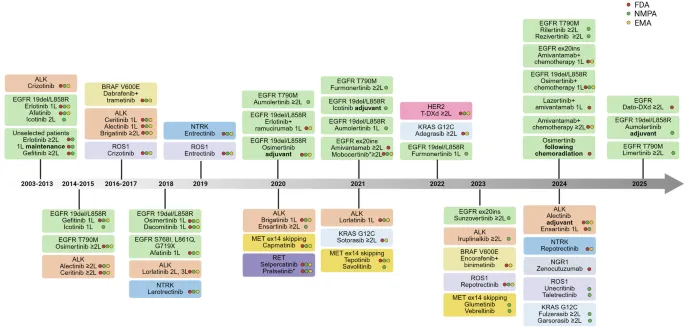
IntroductionLung cancer is the leading cause of cancer morbidity and mortality worldwide, and non-small cell lung cancer (NSCLC) accounts for 85% of lung cancer cases.1 Approximately 60% of patients with nonsquamous NSCLC harbor actionable oncogenic mutations.2,3,4 Mutation profiles differ between Asian and Western populations, with Asian patients exhibiting a higher prevalence of EGFR mutations and lower rates of KRAS G12C mutations.3,4 In recent years, advances in target discovery and detection technologies have further increased this proportion, presenting significant challenges for the clinical management of NSCLC patients harboring oncogenic mutations. The discovery of activating oncogenes and the development of targeted therapies have transformed the treatment landscape for patients with NSCLC.
Bilateral Sensorineural Hearing Loss as the Sentinel Presentation of Granulomatosis With Polyangiitis - Cureus
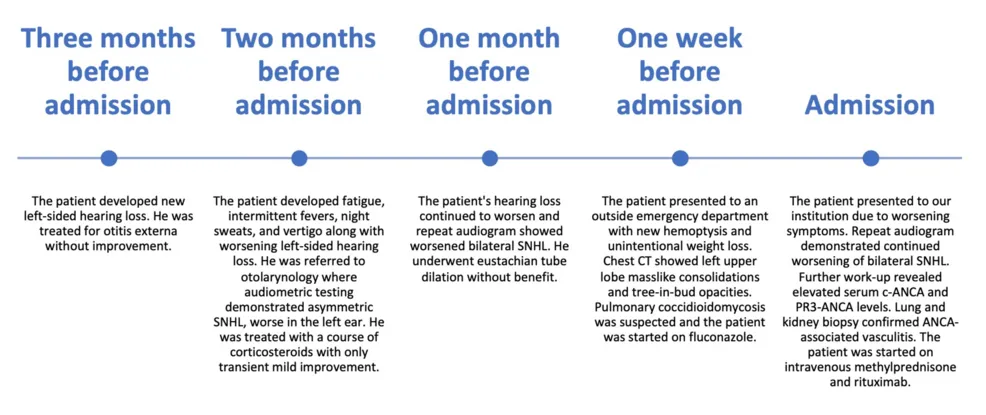
Granulomatosis with polyangiitis (GPA) is a systemic necrotizing granulomatous vasculitis classically involving the upper and lower respiratory tracts and kidneys. Timely diagnosis requires a high index of suspicion for the presenting symptoms. Otolaryngologic manifestations are commonly reported but most often involve the nasal and paranasal sinuses. Sensorineural hearing loss (SNHL) as the sole initial manifestation of GPA is uncommon and may contribute to diagnostic delay. We report a case of a 67-year-old male who presented with rapidly progressive bilateral SNHL that preceded pulmonary and renal manifestations by several months, during which the patient was treated for otitis externa and Eustachian tube dysfunction without improvement. Development of pulmonary symptoms prompted additional workup, which demonstrated markedly elevated cytoplasmic anti-neutrophil cytoplasmic antibody (c-ANCA) and proteinase 3-anti-neutrophil cytoplasmic antibody (PR3-ANCA), raising concern for GPA. Histopathology then confirmed the diagnosis. The patient was treated with high-dose corticosteroids and rituximab with serologic remission; however, his hearing loss was largely irreversible. This case

Modern neuroscience is rediscovering a surprising idea freud had 130 years ago - Science Daily
What if the human brain works in ways that Sigmund Freud began describing more than 130 years ago? A new scientific analysis suggests that some of his ideas about the mind share surprising similarities with one of the most influential theories in modern neuroscience. Published in the scientific journal Entropy, the paper explores connections between Freud's original theories, later developments in psychoanalysis, and a modern approach to brain research known as the prediction paradigm.
0 comments
No comments yet. Be the first to share your thoughts!