Matching CKD Education to Patient Readiness for Home Dialysis, With Christopher Chan, MD - HCPLive
This story deserves to be shared
Send it to someone who'd care, or post it on your networks.
Christopher Chan, MD, discusses why digital counseling was linked to higher home KRT uptake only among motivationally ready patients with CKD. An automated digital counseling program did not increase overall uptake of home kidney replacement therapy (KRT) in patients with chronic kidney disease (CKD), but patients who were motivationally ready at baseline were substantially more likely to initiate home KRT with the intervention, according to the ODYSSEE-Kidney Health trial.1Christopher Chan, MD, of University Health Network in Toronto, presented the findings at ASN Kidney Week 2026 in Denver, Colorado. “We need to know our patients’ preference, we need to know our patients’ goals, and we also need to match the education towards their goals and preferences,” Chan told HCPLive. Task force guidelines advocate informed decision-making about home-based KRT, including home peritoneal dialysis, home hemodialysis, and preemptive kidney transplant evaluation.1 ODYSSEE is a digital cognitive behavioral therapy platform previously studied in hypertension and heart failure, Chan explained, designed to support education, self-efficacy, and patient activation.
This article is an excerpt. To read the full content, visit the original source. HCPLive
Related articles

Potassium binder helps dialysis patients manage dietary restrictions - News-Medical
Dietary potassium restriction is important for managing hyperkalemia, or high blood potassium levels, in individuals on maintenance hemodialysis, but it imposes a substantial day-to-day burden. Results from a recent clinical trial indicate that adding the potassium binder sodium zirconium cyclosilicate (SZC) may help. The findings will be presented at ASN Kidney Week 2026 October 22–25. In the multicenter, randomized, open-label, parallel-group trial, outpatients receiving thrice-weekly maintenance hemodialysis with pre-dialysis serum potassium of 5.5 to <6.5 mEq/L were assigned to SZC plus standardized nutritional counseling or nutritional counseling alone for 8 weeks.
Severe Amphetamine-Associated Rhabdomyolysis With Dialysis-Requiring Acute Kidney Injury in Two Patients: A Case Report - Cureus
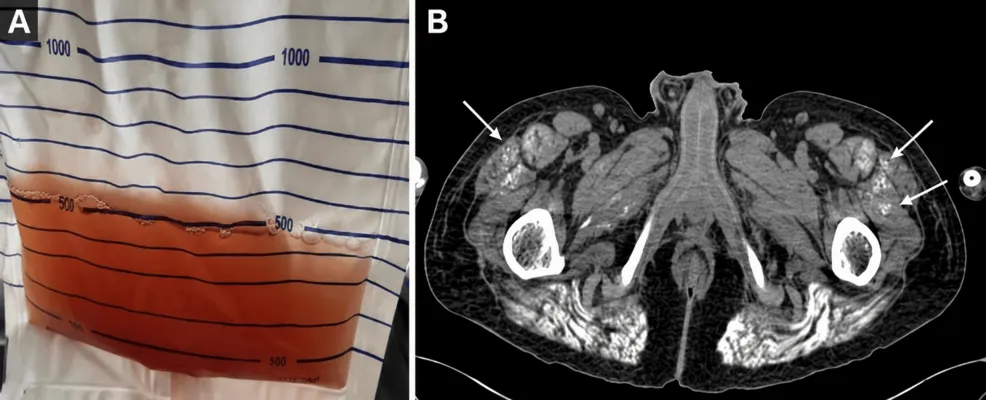
Amphetamine-associated rhabdomyolysis is an uncommon but potentially life-threatening condition. Massive release of myoglobin and intracellular electrolytes may result in severe metabolic, cardiovascular, and renal complications, particularly acute kidney injury (AKI). We report two cases of severe amphetamine-associated rhabdomyolysis complicated by dialysis-requiring AKI. The first patient, a 46-year-old man, presented with a serum creatine kinase (CK) level of 947,699 U/L, serum creatinine of 734 µmol/L, hyperkalemia of 6.8 mmol/L, and transient left ventricular systolic dysfunction. Management consisted of supportive therapy and eleven sessions of intermittent hemodialysis. The clinical course was complicated by severe delayed hypercalcemia (4.10 mmol/L), followed by cardiac arrest and death. The second patient, a 42-year-old man, presented with a serum CK level of 525,796 U/L, serum creatinine of 544 µmol/L, and hyperkalemia of 7.5 mmol/L. He received supportive treatment and ten sessions of intermittent hemodialysis, resulting in near-complete recovery of renal function. Urine toxicology screening was positive for amphetamines in both patients. Alternative traumatic and non-t
Severe Amphetamine-Associated Rhabdomyolysis With Dialysis-Requiring Acute Kidney Injury in Two Patients: A Case Report - Cureus
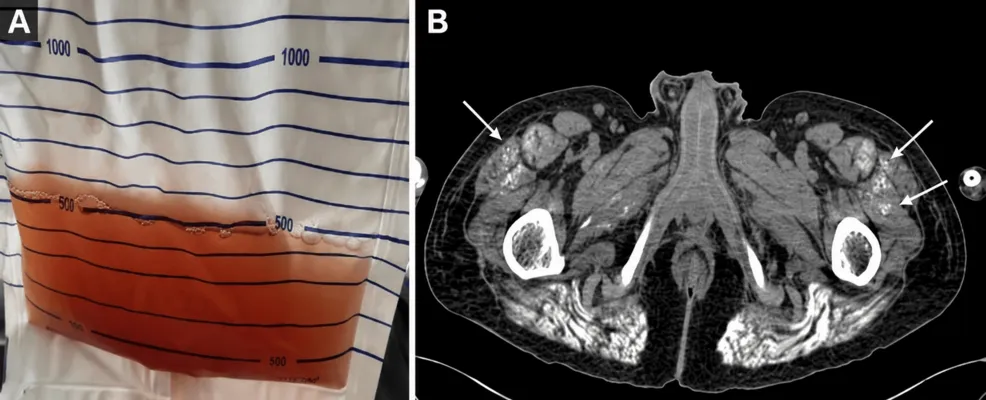
Amphetamine-associated rhabdomyolysis is an uncommon but potentially life-threatening condition. Massive release of myoglobin and intracellular electrolytes may result in severe metabolic, cardiovascular, and renal complications, particularly acute kidney injury (AKI). We report two cases of severe amphetamine-associated rhabdomyolysis complicated by dialysis-requiring AKI. The first patient, a 46-year-old man, presented with a serum creatine kinase (CK) level of 947,699 U/L, serum creatinine of 734 µmol/L, hyperkalemia of 6.8 mmol/L, and transient left ventricular systolic dysfunction. Management consisted of supportive therapy and eleven sessions of intermittent hemodialysis. The clinical course was complicated by severe delayed hypercalcemia (4.10 mmol/L), followed by cardiac arrest and death. The second patient, a 42-year-old man, presented with a serum CK level of 525,796 U/L, serum creatinine of 544 µmol/L, and hyperkalemia of 7.5 mmol/L. He received supportive treatment and ten sessions of intermittent hemodialysis, resulting in near-complete recovery of renal function. Urine toxicology screening was positive for amphetamines in both patients. Alternative traumatic and non-t

Wildfires pose a growing threat to dialysis care - McGill University
First-of-its-kind national analysis yields insights that could inform disaster and emergency planning In the midst of another intense wildfire season, a new study sheds light on the risks they pose to life-sustaining dialysis care for thousands of Canadians.
0 comments
No comments yet. Be the first to share your thoughts!