LYVAC/PDZD8 is a lysosomal vacuolator - Science | AAAS
This story deserves to be shared
Send it to someone who'd care, or post it on your networks.
This article is an excerpt. To read the full content, visit the original source. Science | AAAS
Related articles

Seabird family tree predicts which species accumulate plastic better than diet, global analysis finds - Phys.org
Weighted mean FO for the 230 species in our models. Credit: Biology Letters (2026). DOI: 10.1098/rsbl.2026.0079 What seabirds eat might seem like a good starting point for identifying species that tend to accumulate plastic in their digestive systems. Yet a recent global analysis suggests that mapping the evolutionary relatives of birds could offer better clues than their diets or feeding methods alone.

Scientists Propose Way to Detect Dangerous Mirror Life Before It Exists - Mirage News
Scientists have proposed what they believe is the first way to detect "mirror life," a hypothetical form of life built from molecules that are reversed versions of those found in living organisms on Earth. Researchers from the University of Strathclyde and Durham University have developed a proposed detection technique that uses molecules capable of emitting light with distinct left and right-handed properties. By analyzing these light signals, scientists may eventually be able to distinguish conventional organisms from their mirror-image counterparts. Although mirror life does not currently exist, some experts consider its potential creation a serious biological safety concern. These artificial organisms could behave in unpredictable ways when interacting with Earth's ecosystems and might evade certain natural defenses that protect people, animals, and plants. The likelihood of mirror life emerging is considered low, but its possible consequences could be severe enough to justify developing detection methods in advance.

A hidden bias in human language challenges 70 years of science - Science Daily
Researchers at the University of Vermont have discovered a surprising pattern in human language that challenges a scientific theory widely accepted for more than 70 years. Their findings suggest that the meaning of words is shaped by something more fundamental than emotion: our understanding of power, danger, and order. The study, published in Science Advances, introduces a new approach called "ousiometrics," which uses mathematical methods to measure the essential meaning of language. Its most striking finding is that the words people use show a consistent and widespread preference for safety over danger.

Ancient stalagmites reveal exceptions to Asia–South America monsoon seesaw over the past 450,000 years - Phys.org
Location of caves where speleothems were recovered. Credit: Nature (2026). DOI: 10.1038/s41586-026-11166-3 In places like South Asia, Africa and parts of the Americas, monsoon rains supply water for drinking, crops and hydropower for billions of people. Understanding the patterns that monsoons tend to follow can help people plan for drought risks affecting agriculture, reservoirs and hydropower across distant regions.
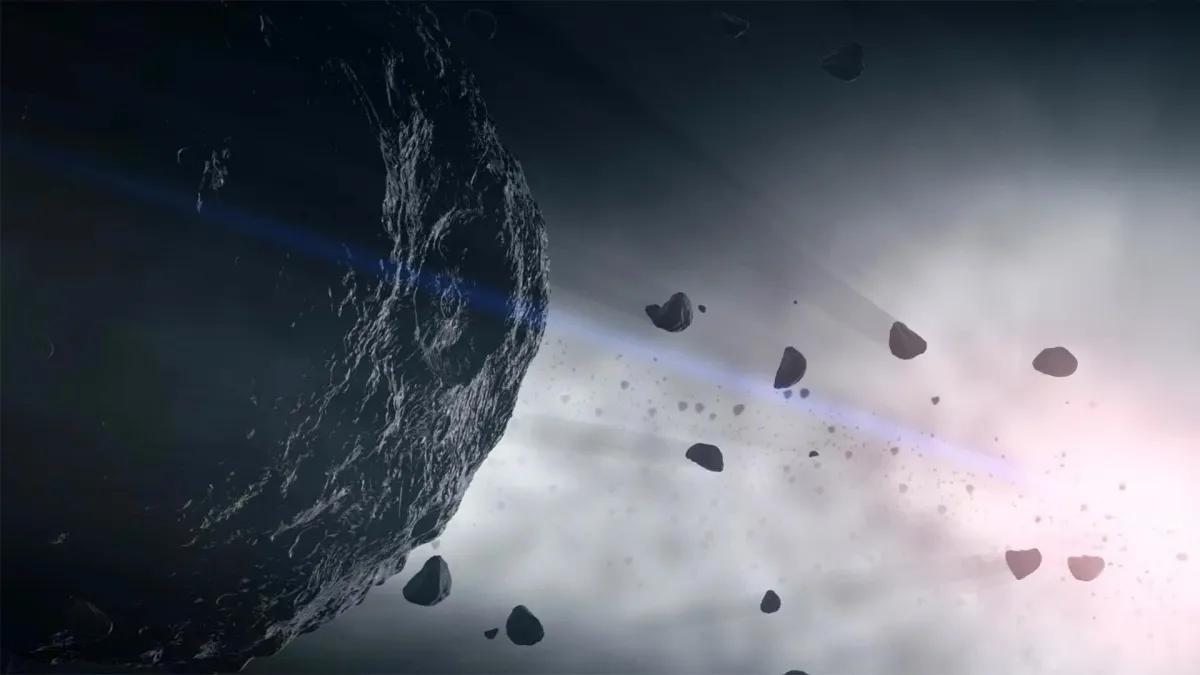
NASA’s asteroid Bennu samples reveal a 4.5-billion-year-old secret - Science Daily
Samples collected from asteroid Bennu by NASA are revealing surprising new details about how our Solar System formed approximately 4.5 billion years ago. A new chemical analysis challenges earlier theories about the asteroid's birthplace and suggests that Jupiter played an important role in shaping the materials from which Bennu and other ancient objects formed. Bennu completes one orbit around the Sun every 1.2 years and makes a relatively close approach to Earth about every six years, coming within roughly 300,000 kilometers (186,000 miles). NASA's OSIRIS-REx mission traveled to the asteroid, collected material from its surface, and successfully delivered the samples to Earth in 2023.
0 comments
No comments yet. Be the first to share your thoughts!