It's 120,000-years-old, 800m down, as big as a basketball court and home to 30 amazing towers – some taller than Disney’s castle – and unearthly life - BBC Wildlife Magazine
This story deserves to be shared
Send it to someone who'd care, or post it on your networks.
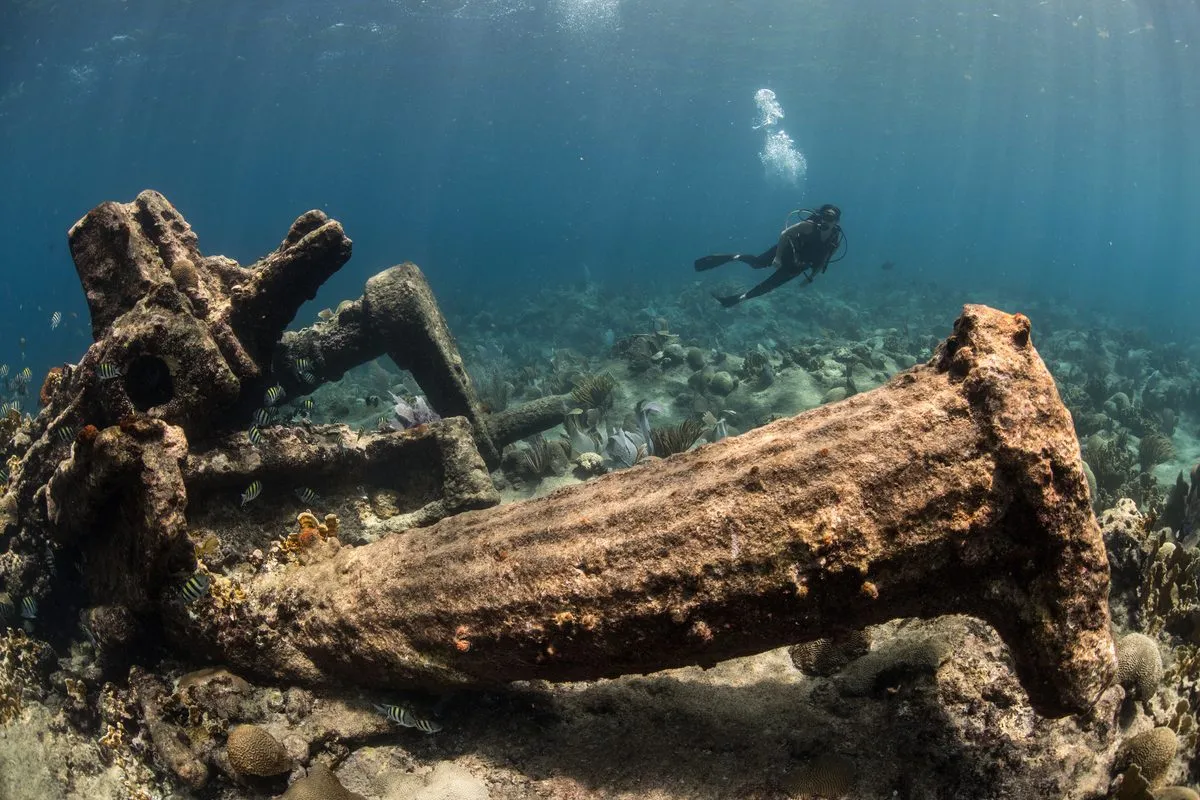
Deep in the remote waters of the North Atlantic Ocean, there’s a Lost City. But maybe not the kind you’re thinking of.
This isn’t a submerged civilisation that has been lost to history but a unique type of hydrothermal system that may help to explain the origins of life itself.
This article is an excerpt. To read the full content, visit the original source. BBC Wildlife Magazine
Related articles

New Form of Superconductor Behavior Discovered That We've Never Seen Before - ScienceAlert
Materials in a superconducting state are of huge interest to scientists. That's because of rare properties – primarily the ability to conduct electricity with zero resistance, with nothing lost to heat – that promise to transform computing, energy grids, and transport. This phenomenon happens when free electrons condense into a low-energy quantum state at very cold temperatures, pairing up into what are called Cooper pairs so they can zip through materials without interference. Back in 2007, scientists predicted the existence of a more exotic type of electron movement, called a pair density wave (PDW), where the Cooper pairs form specific patterns while moving, like ripples on sand. Now a team led by researchers from the University of Illinois at Urbana-Champaign has found compelling evidence of PDWs on the surface of the metal uranium ditelluride, with their results published in PNAS. What's more, the patterns were found to persist outside of the standard superconducting state, something that's never been seen before. "Pair density waves are the Cheshire Cat's grin of superconductivity," says physicist Eduardo Fradkin from the University of Illinois at Urbana-Champaign.
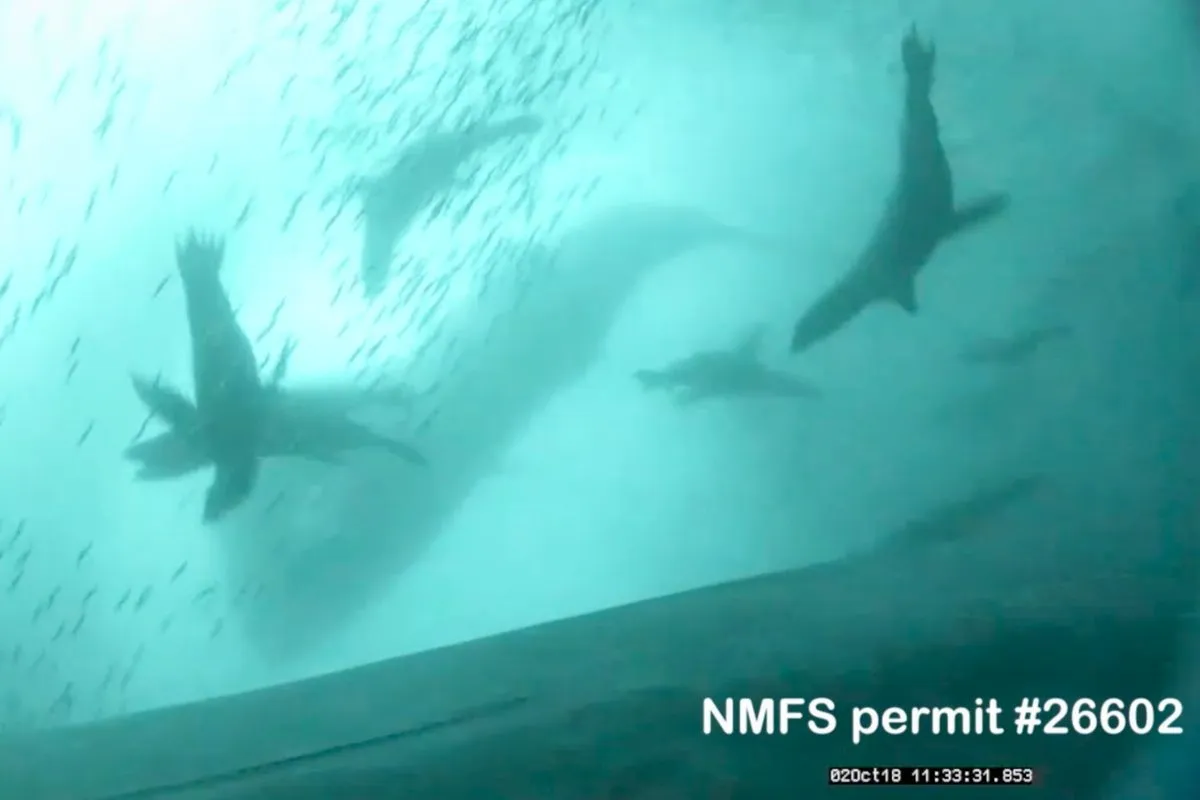
Astounding footage shows humpback whales teaming up with California sea lions to hunt in Monterey Bay - BBC Wildlife Magazine
Swimming downwards, the whale pelts head-first towards a large group of sea lions. After it opens its mouth and takes a huge gulp of fish, a sea lion darts across its back in hot pursuit of an anchovy that got away. This is a glimpse of some of the footage captured when marine researchers in Monterey Bay, California, put video tags on humpback whales and watched them lunge feeding on bait balls.

Tiny worm brains reveal surprising sex differences beyond neural wiring - Interesting Engineering
With 302 neurons, 200 of them in their heads, hermaphrodite female roundworms reveal surprising sex-specific differences in the nervous system and how these differences influence behavior, reproduction, and aging. Researchers at Northeastern University compared brain activity in male and hermaphroditic Caenorhabditis elegans, a microscopic worm widely used in biological research to understand how sex wires males and female nervous systems differently.
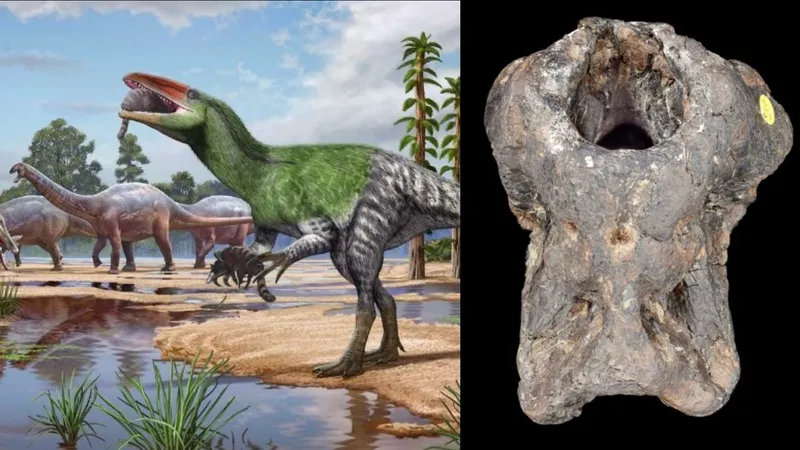
New dinosaur species identified from fossil stashed in drawer for a century - EarthSky
Artist’s concept of the new dinosaur species Invictibellatrix amberina, along with the fossil from which it was identified. The fossil had been sitting in a drawer for 100 years, until researchers pulled it out and became curious. Image via Sergey Krasovskiy and Pedro Salas/ Natural History Museum London. You deserve a daily dose of good news. For the latest in science and the night sky, subscribe to EarthSky’s free daily newsletter.
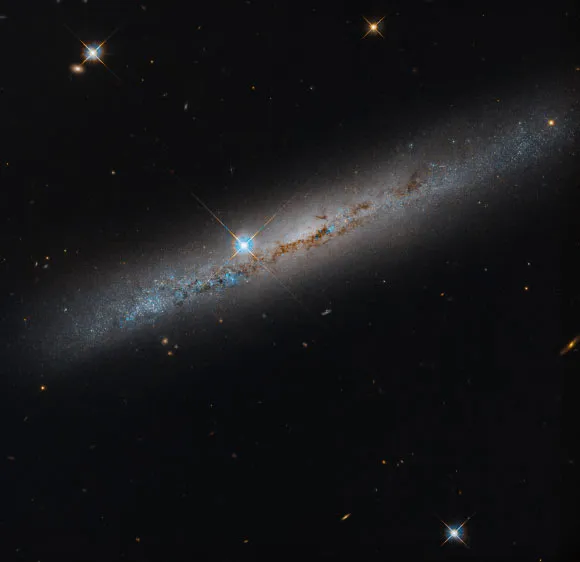
Hubble Space Telescope Spots Dusty Spiral Galaxy: NGC 1827 - Sci.News
Astronomers using the NASA/ESA Hubble Space Telescope have captured a new view of NGC 1827, an intermediate spiral galaxy seen edge-on in the constellation Columba. This Hubble image shows the edge-on, intermediate spiral galaxy NGC 1827. Image credit: NASA / ESA / Michael Jones, California Institute of Technology / Gladys Kober, NASA / Catholic University of America.
Ancient Nubian temple faience workshop reveals links between craft production and royal power - Phys.org
Archaeologists have discovered a faience workshop at a major temple complex in the ancient Nubian capital of Napata, showing how the rulers of ancient Kush used specialized craft production to reinforce royal power.
0 comments
No comments yet. Be the first to share your thoughts!