International Day of Epidemic Preparedness, 27 December - Welcome to the United Nations
This story deserves to be shared
Send it to someone who'd care, or post it on your networks.
This article is an excerpt. To read the full content, visit the original source. Welcome to the United Nations
Related articles
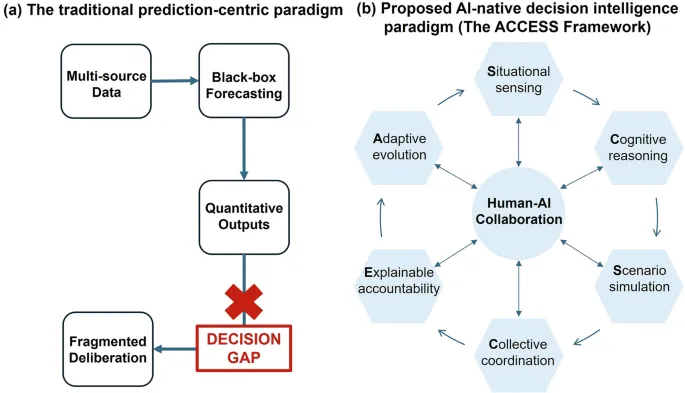
Reframing epidemic early warning: toward AI-native decision intelligence for public health governance - Nature
IntroductionEarly warning has long been regarded as a cornerstone of infectious disease surveillance and epidemic preparedness1,2. Substantial advances in epidemiological modeling, statistical inference, and data integration have improved outbreak detection and disease forecasting across diverse settings over recent decades3. Major public health emergencies, including SARS, influenza pandemics, COVID-19, and more recent emerging infectious diseases, have benefited from these developments in situational awareness4,5,6. Recent global health crises have, however, revealed a persistent limitation that we term the decision gap: technically sophisticated forecasts and risk indicators frequently fail to translate into timely, coordinated, context-sensitive action7,8,9. This gap has two linked faces: (1) Forecasts are often not decision-ready: they do not encode operational constraints, competing objectives, or uncertainty in usable form. (2) Institutions must still convert uncertain, evolving evidence into action through deliberation under legal and organizational constraints, a process current systems leave largely unsupported. This gap is not hypothetical.
0 comments
No comments yet. Be the first to share your thoughts!