Humans and Neanderthals interbred — but it was mostly male Neanderthals and female humans who coupled up, study finds - Live Science
This story deserves to be shared
Send it to someone who'd care, or post it on your networks.
This article is an excerpt. To read the full content, visit the original source. Live Science
Related articles
Coupled analytical and finite element investigation of dynamic and cyclic response in cracked functionally graded beams - Nature
We’re sharing this article early to provide faster access to peer-reviewed, accepted research. It is citable and carries a permanent DOI. This version is subject to further edits and will be replaced automatically by the final Version of Record. All legal disclaimers apply. AbstractOffshore and marine structures increasingly utilise Functionally Graded Materials (FGMs) because of their superior stiffness and enhanced resistance to damage under combined vibration and cyclic loading induced by waves, wind and operational conditions. This study presents a combined analytical and finite element investigation into the dynamic behaviour of a cracked FGM cantilever beam compared with eight conventional offshore structural steels. A fracture-mechanics-based analytical model, incorporating crack-induced flexibility and stiffness degradation under cyclic loading within a continuum damage mechanics framework, was developed to predict the beam’s natural frequencies and validated against finite element results, with deviations below 2%. The postulated cracks were represented by predefined notches to simulate pre-existing structural damage or defects, with crack depth ratios of a/h = 0.233, 0.
Blind Taste Test Busts The Leftovers Myth, Mostly - ScienceAlert
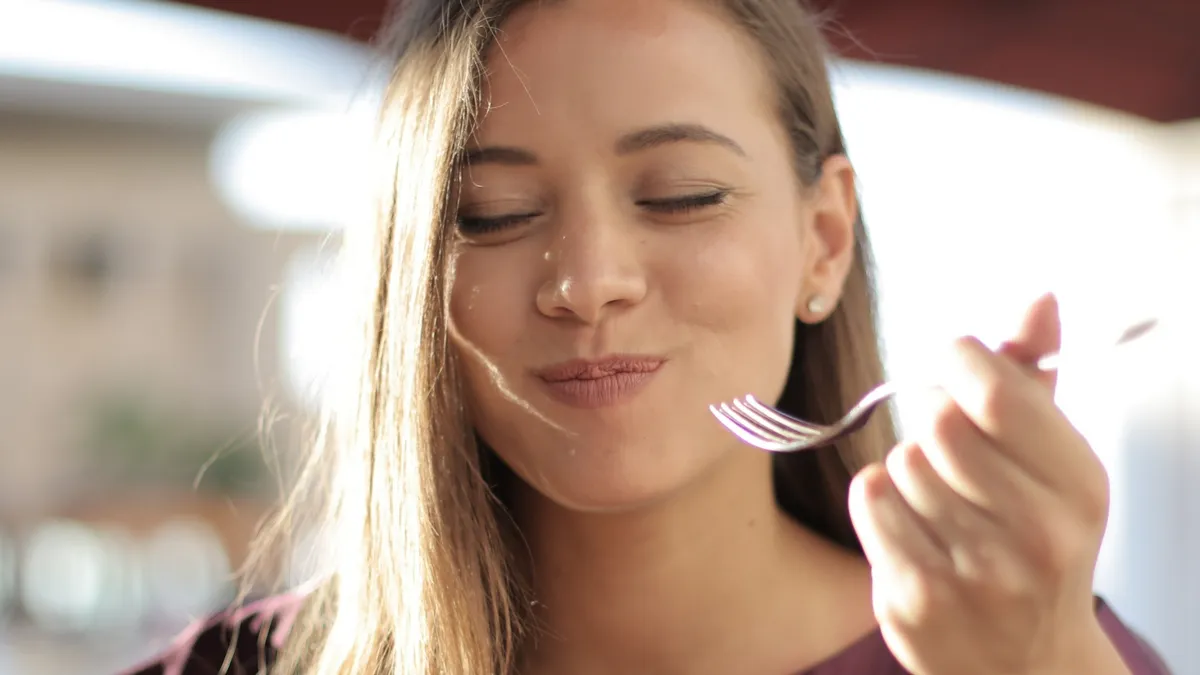
There's a specific kind of joy in opening the fridge to find leftovers waiting for you like a gift from your past self. Many people insist that they taste better than the original. Some might accept this as one of life's little quirks, similar to how one sock disappears in the wash. But scientists like to investigate quirks, and a team at Deakin University in Australia did just that. To see whether this kitchen myth is backed by evidence, they recruited people to blind-test fresh dishes against their day-old counterparts. Their study is posted as a preprint (it hasn't yet undergone peer review) and concludes that 'leftovers taste better' is not entirely a myth. But it isn't as universal as we might think. In fact, only one of their test dishes lived up to the reputation. "Few culinary beliefs are as persistent as the idea that some foods taste better the next day," the team writes. First author Russell Keast has a personal history with this phenomenon. Before becoming a food and sensory scientist, he trained as a chef and heard the claim many times, even experiencing it himself.
0 comments
No comments yet. Be the first to share your thoughts!