HHS Bans Illegal Aliens from Accessing its Taxpayer-Funded Programs - HHS.gov
This story deserves to be shared
Send it to someone who'd care, or post it on your networks.
This article is an excerpt. To read the full content, visit the original source. HHS.gov
Related articles
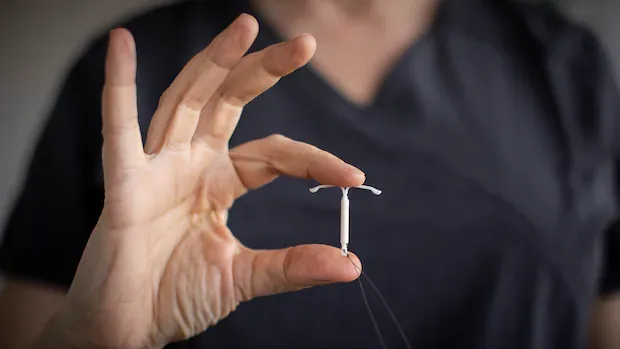
Dartmouth woman shares challenges accessing care for IUDs - CBC
Nova ScotiaStephanie Comeau says her family doctor told her he couldn't remove the birth control device. She said after he tried referrals to three gynecologists without success, he asked her to try a sexual health clinic. Comeau says it's disheartening there is seemingly little training on women's health.'If you're not advocating for yourself, you're going to suffer in silence,' says Stephanie ComeauAnjuli Patil · CBC News · Posted: Oct 04, 2026 5:00 AM EDT | Last Updated: October 4Listen to this articleEstimated 4 minutesThe audio version of this article is generated by AI-based technology. Mispronunciations can occur. We are working with our partners to continually review and improve the results. Stephanie Comeau said she has been trying to get the T-shaped birth control device removed since June. (Ben Nelms/CBC)A Dartmouth, N. S., woman says there is seemingly little research and training on women's health after she learned her family doctor couldn't remove her IUD.

Does CKD Require Restricting Potassium-Rich Foods? With Navdeep Tangri, MD - HCPLive
News|Videos|October 23, 2026 In a randomized crossover trial, a liberalized produce diet raised urinary potassium excretion without changing serum potassium. Urinary potassium excretion rose on a liberalized produce diet, while serum potassium did not differ significantly compared with a restricted diet. Patients with chronic kidney disease (CKD) are often advised to limit potassium-rich fruits and vegetables. In a randomized crossover trial, increasing potassium intake through these foods did not produce a statistically significant increase in serum potassium compared with a restricted diet.¹ Navdeep Tangri, MD, professor of medicine at the University of Manitoba in Canada, presented the findings at the American Society of Nephrology (ASN) Kidney Week 2026 in Denver, Colorado. In an interview with HCPLive, he highlighted the disconnect between dietary potassium intake, urinary potassium excretion, and blood potassium concentrations. “I think all of us, when we go back to our physiology textbooks, know that most potassium in the body is not in the blood; it’s inside cells,” Tangri said.
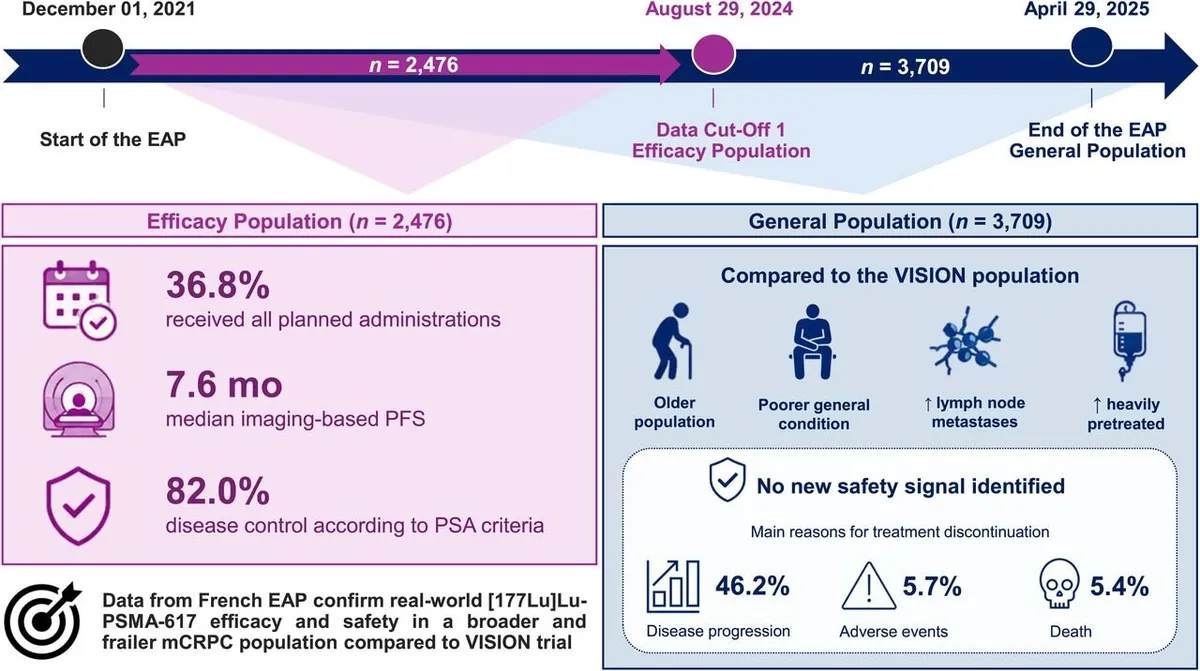
Real-world results confirm benefit of antigen therapy for prostate cancer - Medical Xpress
Overview of real-world treatment patterns and clinical outcomes with [¹⁷⁷Lu]Lu-PSMA-617 in patients with metastatic castration-resistant prostate cancer treated within the French Early-Access Program. The figure summarizes patient population, treatment exposure, efficacy outcomes and safety findings from routine clinical practice. Credit: KPL, Paris. Prostate-specific membrane antigen (PSMA)-targeted radiopharmaceutical therapy is safe and effective for patients with metastatic castration-resistant prostate cancer (mCRPC) in routine clinical practice, consistent with outcomes from the VISION trial. An analysis of outcomes from a French early-access program, the largest real-world cohort of patients studied to date, confirms the benefit-risk profile of the therapy, while also shedding light on patient selection and use trends. This research was published in The Journal of Nuclear Medicine.
0 comments
No comments yet. Be the first to share your thoughts!