Has the World Bank performed a U-turn on industrial policy?
This story deserves to be shared
Send it to someone who'd care, or post it on your networks.
Interventionists who think so should read its new report more closely
This article is an excerpt. To read the full content, visit the original source. The Economist
Related articles

Canadians are looking for somewhere to belong. Why should employers care?
Open this photo in gallery:YMCA members celebrate and encourage one another following a YMCA Arriba group fitness class. SuppliedLesley Davidson is the president and chief executive officer at the YMCA of Greater TorontoRecently, I watched a group of YMCA members linger in the hall after a fitness class ended. The workout was over but the conversations were just beginning. People swapped stories about their week, laughed about a misstep during class and checked in about their families. What struck me wasn’t simply their participation in the program. It was the connection that happened afterward. In a world where we can connect with almost anyone instantly electronically, opportunities for genuine in-person human connection can feel increasingly rare. And it’s not just affecting hybrid workers who lost access to their daily impromptu “water cooler” conversations. Our second annual YMCA Connections Snapshot showed only three in 10 Canadians say they feel a sense of belonging or connection. In-person connection remains incredibly important for everyone. It contributes to well-being and that’s not just good for individuals but the organizations they work for as well.

Heckler disrupts Nvidia CEO Huang’s speech at Berlin conference
The person shouted something that could not be heard on the company’s livestream about 20 minutes into the address, before being removed from the auditorium.

OCC finalizes GENIUS Act rules for stablecoin issuers and custody
Latest NewsPublishedOct 21, 2026The Office of the Comptroller of the Currency’s final rule covers payment stablecoin issuance and some custody activities, with the GENIUS Act framework taking effect in mid-January. The US Office of the Comptroller of the Currency finalized rules Wednesday for payment stablecoin reserves, redemptions and related custody activities, implementing the GENIUS Act for entities under its jurisdiction. The final rule states issuers must maintain reserves worth at least as much as their outstanding stablecoins and generally process redemption requests within two business days. The rule applies to national banks, federal savings associations and federal branches and their subsidiaries, as well as nonbank firms that seek or receive federal qualified issuer status, according to the agency’s announcement. It also covers state-qualified issuers when the OCC has regulatory or enforcement authority over them. The rule and the GENIUS Act will take effect Jan. 18, 2027.
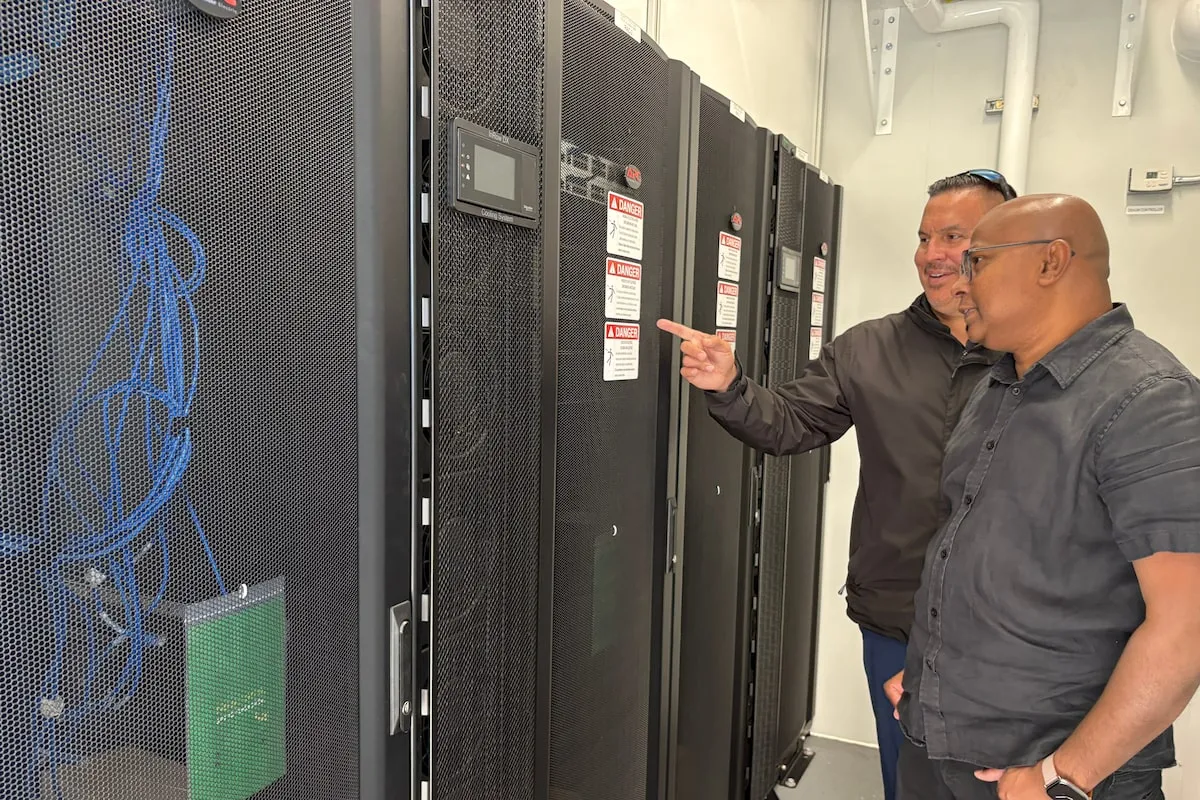
A First Nation community in Ontario is using a data centre to preserve its heritage
Open this photo in gallery:Wiikwemkoong's Chief Technology Officer Michael McCormick, left, and workers stand outside the community's data centre in Wiikwemkoong, Ont., July 22. Kelvin Chan/The Associated PressFor thousands of years, Indigenous peoples have passed down their traditions and culture through oral storytelling. Now, a Canadian Indigenous community is using a data centre to help preserve its heritage. The Wiikwemkoong Unceded Territory in rural Ontario installed a small data centre as it modernized its recordkeeping systems. Among the digital files it holds are video recordings of Anishinaabe speaking their native language. “Our language is one of the biggest things that most First Nations across the country are losing,” said Wiikwemkoong Chief Tim Ominika. “We will have our knowledge keepers, our language speakers who may be moving on to the spirit world, but their legacy is still going to be protected for many years to come by having our own data systems in place and protecting that.” Open this photo in gallery:Wiikwemkoong Chief Tim Ominika.
Why centralized exchanges refuse to list legacy crypto tokens without explicit SEC immunity
Skip to main contentCrypto NewsOct 21, 2026, 8:12 a.m. EDT2 min read(Nikhilesh De/CoinDesk)SummaryVault12 says exchanges want assurance the SEC won’t later challenge a token’s exit from securities rules before listing it. The firm raised $17.45 million selling VGT in 2018 and says it met or dropped every promise, yet the token has never traded on a centralized exchange. Vault12 wants filings to become conclusive if the SEC doesn’t object within 60 days, a fix it says would give exchanges certainty to list. The issuer of a cryptocurrency token that has never traded on a major exchange has presented an early test of the U. S. Securities and Exchange Commission’s (SEC) proposed safe harbor framework. Crypto wallet backup firm Vault12, backed by Winklevoss Capital and Naval Ravikant, warned that the SEC’s proposed token safe harbor could leave exchanges unwilling to list tokens because of the risk of a later regulatory challenge. The safe harbor is part of the SEC’s Regulation Crypto Assets proposal, issued in August to establish conditions under which a token would no longer be subject to its original investment contract.

Japanese visitors may be able to pay with yen stablecoins in South Korea under Shinhan-SBI pact
SummarySouth Korea’s Shinhan and Japan's SBI are testing yen-backed stablecoin payments for cross-border transactions and trade settlement. The collaboration will explore card-linked merchant payments for Japanese visitors in South Korea and peer-to-peer wallet transfers. While at an early stage without a set commercial timeline, the initiative builds on Shinhan's broader digital asset push with Visa. Japanese visitors to South Korea might one day be able to transact using yen stablecoins linked to payment cards following experiments conducted by South Korean card issuer Shinhan Card and subsidiaries of the Tokyo-based financial services company SBI Holdings. Shinhan Card, a unit of Shinhan Financial, is working with cryptocurrency exchange SBI VC Trade and trade finance blockchain company SBI XDC Network APAC to explore yen-backed stablecoin payments between the two countries, SBI Holdings said. The companies will also study wallet-to-wallet transfers and the use of stablecoins to settle cross-border trade payments. Their work will include systems to detect suspicious transactions and meet anti-money laundering rules. The process remains at an early stage.
0 comments
No comments yet. Be the first to share your thoughts!