Good Vibrations: Science Center’s Debut Up Late Event Hits All the Right Notes - Saint Louis Science Center
This story deserves to be shared
Send it to someone who'd care, or post it on your networks.
This article is an excerpt. To read the full content, visit the original source. Saint Louis Science Center
Related articles
A Strange New Time Crystal Emerges From Synchronized Vibrations - ScienceAlert
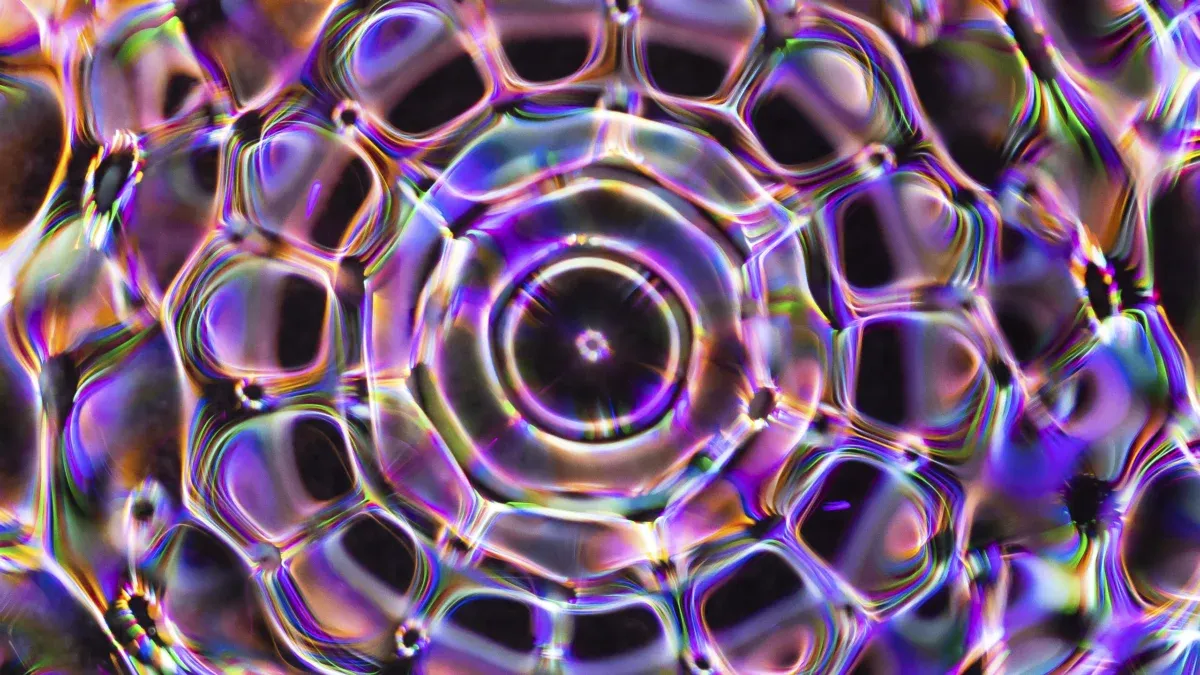
A colourful pattern formed by vibrations in a liquid, illustrating how waves can create intricate, organized structures. (Xvision/Moment/Getty Images) To us mortals, the flow of time goes one way. Yesterday is gone, tomorrow is yet to come, and no matter how precisely and faithfully a clock marks the passing seconds, we can never return to a moment that has passed. But for a time crystal, things are very different. The constituent ranks of this mysterious state of matter – be they atoms, sound waves, or topological defects – are strictly regimented in time, a repeating pattern of beats that could be snipped from a recording at regular intervals and perfectly superimposed, one over another. Once thought impossible, time crystals have been observed in systems from physical atomic lattices to levitating styrofoam. Now, physicists have discovered a strange new way for a time crystal to emerge – not through the imposition of an external rhythm, but through a spontaneous process in which competing vibrations gradually fall into step – order gradually emerging from chaos.
Good Vibrations: UMW Summer Science Institute Highlights Intense Undergrad Research - University of Mary Washington

Newly discovered protein controls the space between mitochondrial membranes - News-Medical
Mitochondria are the tiny powerpacks that supply most of the energy our cells need. Their ability to generate this energy relies on a distinctive architecture: two membranes, one tucked inside the other, separated by a narrow gap called the intermembrane space (IMS). This tiny space helps sustain the chemistry of energy production, making its organization critical to how these cellular powerpacks function. Now, a new study led by a University of Ottawa Faculty of Medicine investigator reports a potentially transformative discovery: the volume of the IMS is genetically controlled and adjustable. By controlling where this space expands or narrows within each mitochondrion, cells can actively shape the internal architecture of their powerpacks and tune how they function.

Ancient virus may help explain differences in human and chimpanzee brains - News-Medical
Pandemics can arise wherever animal or human populations are sufficiently large, and they are not confined to the modern age. Johan Jakobsson, Professor of Molecular Neurogenetics at Lund University, believes that the findings from the new study are highly relevant: they show that a virus can cause a DNA sequence to change across an entire population. "The virus we investigated specifically affected chimpanzees. Yet humans and chimpanzees have largely the same genetic makeup. That is why it is important to understand the differences in how genes are regulated. Our findings suggest that one gene, LINC00662, plays a significant role in early human brain development," says Johan Jakobsson.

Child-led citizen science helps Ecuadorian community tackle beach pollution and shape environmental decisions - Phys.org
Graphical summary of the project's key results. Credit: Fernández B., Bustos M., Vera T., Palacios M., Hill D. & Astudillo D. Pollution from human-generated waste in marine ecosystems has reached critical levels, with cigarette butts (CBs) among the most persistent and harmful pollutants. Globally, an estimated 4.5 trillion cigarette butts are discarded annually, making them the most common type of litter on beaches over the past three decades.
0 comments
No comments yet. Be the first to share your thoughts!