Giant Magellan Telescope Advances to National Science Foundation Final Design Phase - Center for Astrophysics | Harvard & Smithsonian
This story deserves to be shared
Send it to someone who'd care, or post it on your networks.
This article is an excerpt. To read the full content, visit the original source. Center for Astrophysics | Harvard & Smithsonian
Related articles
ROSES-25 D.4 Theoretical and Computational Astrophysics Networks. NoIs due 15 October 2026 - NASA Science (.gov)
The ROSES-25 program element D.4 Theoretical and Computational Astrophysics Networks (TCAN) supports coordinated efforts in fundamental theory and computational techniques to make advances in astrophysics that extend beyond the scope of individual investigator projects. The goals of the TCAN program include strengthening theoretical and computational astrophysics in the United States by uniting researchers in collaborative networks that cross institutional and geographical boundaries and advance the training of the future workforce of theoretical and computational scientists. For this program element, the TCAN program focuses its scope on grand challenges in Time Domain Multi-Messenger Astrophysics, and solicits proposals aimed at developing integrated theoretical and computational tools for modeling multi-messenger phenomena through collaborative networks.
General Astrophysics Surveys - NASA Science (.gov)
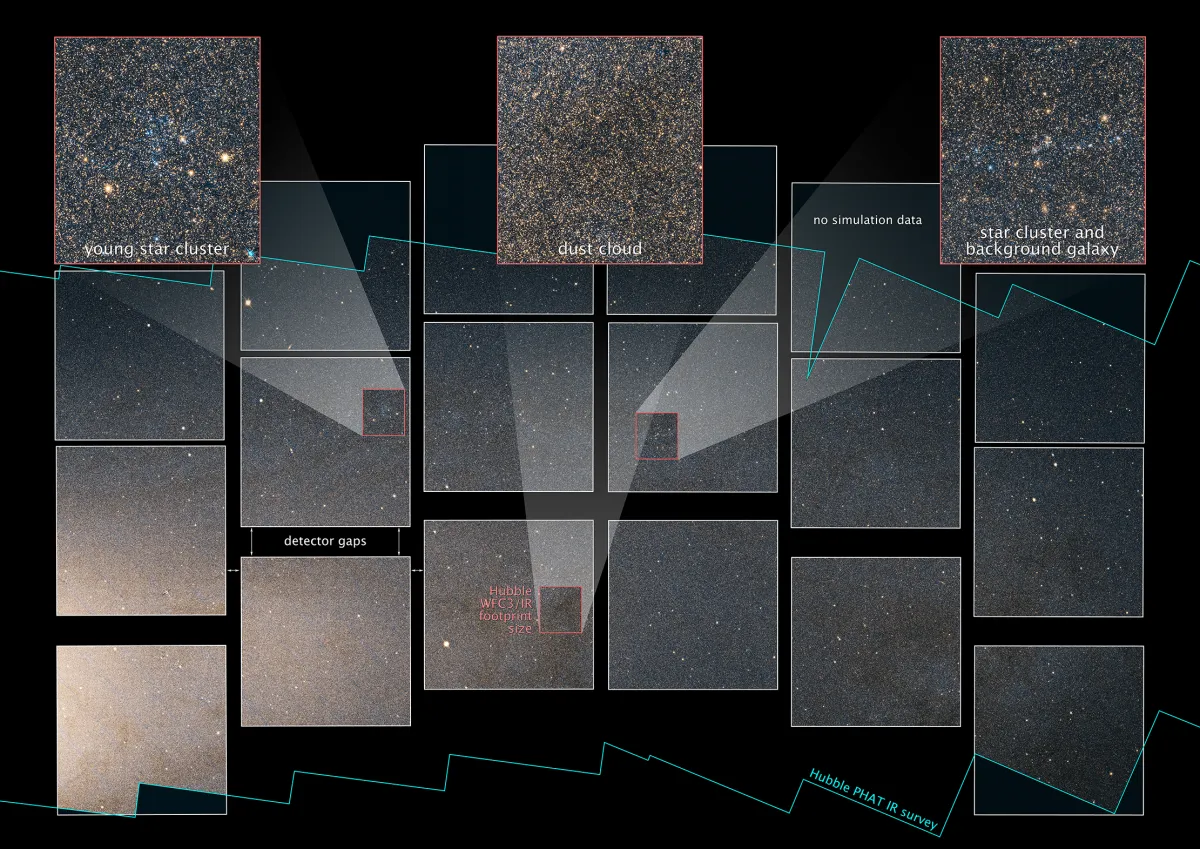
Scientists are invited to propose additional surveys dedicated to science that can’t be done with the mission’s core surveys. For example, astronomers could conduct a survey tuned to find things like stellar novae or other kinds of outbursts, or take a mega-exposure similar to but far larger than Hubble’s celebrated Ultra Deep Field image. And when observatories like the Hubble or Webb space telescopes find something strange, Roman could follow-up to provide a big-picture view that puts the discovery into context. Astronomers from all over the world can propose cutting-edge research, such as surveys of nearby galaxies or our own, enabling the astronomical community to utilize the full potential of Roman’s capabilities to conduct extraordinary science. A handful of surveys have now been selected, including the Galactic Plane Survey announced near the end of 2025 and the remaining five announced summer 2026. The Roman team will issue calls for proposals each year of Roman's five-year primary mission, giving astronomers more opportunities to submit new observations and research for consideration.
Open Science in Astrophysics: Citation Benefits of Open Code, Open Data, and Open Access - Astrobiology Web
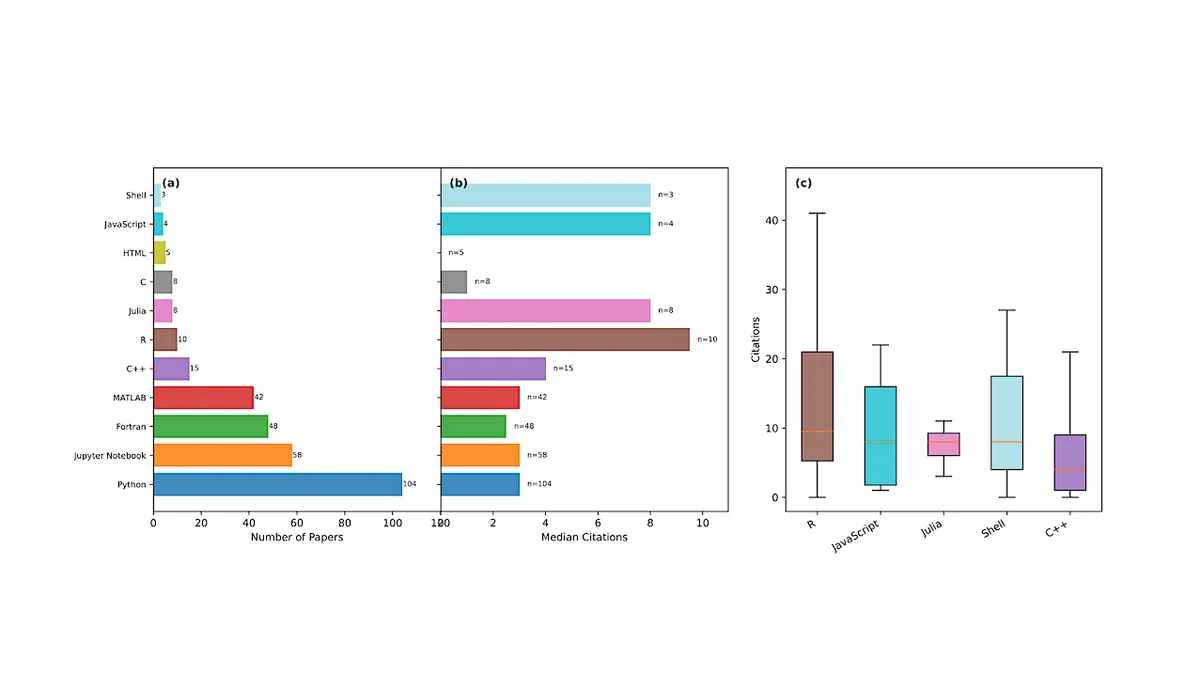
Programming language analysis for the 337 papers with a GitHub repository link. Colors are consistent across all three panels: each language has the same color in all panels. Languages with fewer than three papers are omitted. (a) Number of papers per dominant language. (b) Median citation count per language, sorted from highest to lowest. (c) Box-plot citation distributions for the five most common languages. -- astro-ph. IM [astro-ph. IM] We analyze the relationship between open-accessibility in data, code, and paper text in astrophysics using a sample of 53,194 peer reviewed papers published between January 2021 and April 2025, drawn from NASA’s Astrophysics Data System (ADS).

Galactic Plane General Astrophysics Survey Definition - NASA Science (.gov)
The Nancy Grace Roman Space Telescope’s Wide Field Instrument’s observing program will include both Core Community Surveys, defined by a community-led process, and General Astrophysics Surveys, for which a minimum of 25% of Roman’s observing time will be reserved in the first five years and which will primarily be selected via traditional peer-reviewed calls for proposals. In 2021 the Roman Project released a Request for Information to the science community to solicit comments on (a) whether to select an Early-Definition General Astrophysics Survey, and (b) to outline and submit survey concepts that would demonstrably benefit from selection as an Early-Definition General Astrophysics Survey. Twenty complete submissions were received with over 340 unique authors. A review of these submissions has been completed by an Early-Definition Astrophysics Survey Assessment Committee.
0 comments
No comments yet. Be the first to share your thoughts!