Full-parameter-modulated three-dimensional vectorial generalized vortex array | Light: Science & Applications - Nature
This story deserves to be shared
Send it to someone who'd care, or post it on your networks.
This article is an excerpt. To read the full content, visit the original source. Nature
Related articles
Explainable machine learning reveals a compact, low-dimensional geometric basis underlying sheet and skeletal TPMS architected materials - Nature
Georgios Mermigkis1,3, Chrysovalantis-Michail Liakopoulos1, Dimitrios C. Rodopoulos1, Panagiotis Hadjidoukas3 & … Nikolaos Karathanasopoulos1,2 We’re sharing this article early to provide faster access to peer-reviewed, accepted research. It is citable and carries a permanent DOI. This version is subject to further edits and will be replaced automatically by the final Version of Record. All legal disclaimers apply.
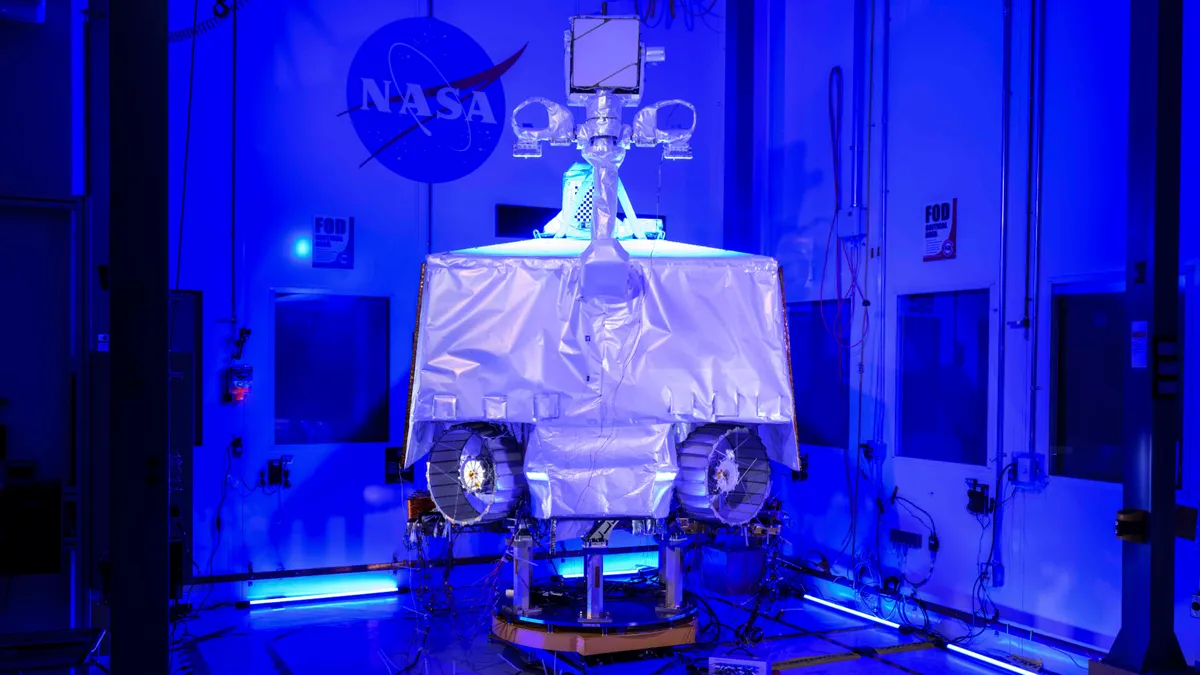
NASA advances lunar rover development for future Moon Base - chinadailyhk
This photo, provided by NASA, shows the Volatiles Investigating Polar Exploration Rover at the Johnson Space Center in Houston, US, on July 7, 2024. (PHOTO/HANDOUT VIA AP)LOS ANGELES – NASA on Tuesday provided an update on the development of crewed and robotic lunar rovers to support its planned Moon Base initiative, highlighting efforts to develop the surface mobility capabilities needed for future exploration and sustained human operations on the Moon. NASA's Volatiles Investigating Polar Exploration Rover is scheduled to embark on a mission to the lunar South Pole region in 2027 to explore permanently shadowed craters in search of water and other potentially valuable resources that could support sustainable lunar exploration. READ MORE: Blue Origin gets NASA contract to develop Mars telecommunications networkThe rover will be delivered to the lunar surface by Blue Origin's Blue Moon Mark 1 lander and is expected to travel more than 30 kilometers, collecting data on local temperatures, lighting conditions and terrain.
0 comments
No comments yet. Be the first to share your thoughts!