For 155 years, scientists believed a solar storm delayed a train in Exeter, England, in 1841, but the rai - The Times of India
This story deserves to be shared
Send it to someone who'd care, or post it on your networks.

For more than 150 years, a reported 16-minute train delay in Exeter, England, was cited as a possible early example of a solar storm disrupting human technology. But a railway timetable revealed a problem with the story: the railway line in question did not exist in 1841. According to a report published by ScienceDaily on October 21, 2026, researchers have now traced the incident to October 18, 1848, using historical railway records, newspaper accounts and measurements of Earth’s magnetic field. The findings were published in the journal Space Weather. The train delay that could not have happened in 1841The mystery originated in an account published anonymously in the scientific journal Nature on October 5, 1871. It described a “very intense magnetic disturbance” on October 18, 1841, which allegedly interfered with railway telegraph equipment in Exeter, a city in southwest England. According to the account, the disturbance prevented railway staff from establishing whether the track ahead, near the village of Starcross, was clear. As a result, the scheduled 10.05 pm express train from Exeter towards Newton Abbot was held up for 16 minutes.
This article is an excerpt. To read the full content, visit the original source. The Times of India
Related articles

Reg readers land on 'Binface' as name for UK space cleanup mission - The Register
Intergalactic Space Warrior, or a bin in orbit? The UK Space Agency asked for names for its Active Debris Removal Mission, and, of course, the Register readership didn't disappoint. The Active Debris Removal Mission, led by ClearSpace UK and intended to remove a pair of UK-registered satellites from Low Earth Orbit (thus demonstrating Blighty's prowess when it comes to orbital litter picking), needs a name. Let's face it, Active Debris Removal Mission hardly rolls off the tongue and, while engineers have long found ways to make meaning from acronyms (this writer has always been rather fond of PICNIC – Problem In Chair, Not In Computer), the UK Space Agency decided it needed a proper name.
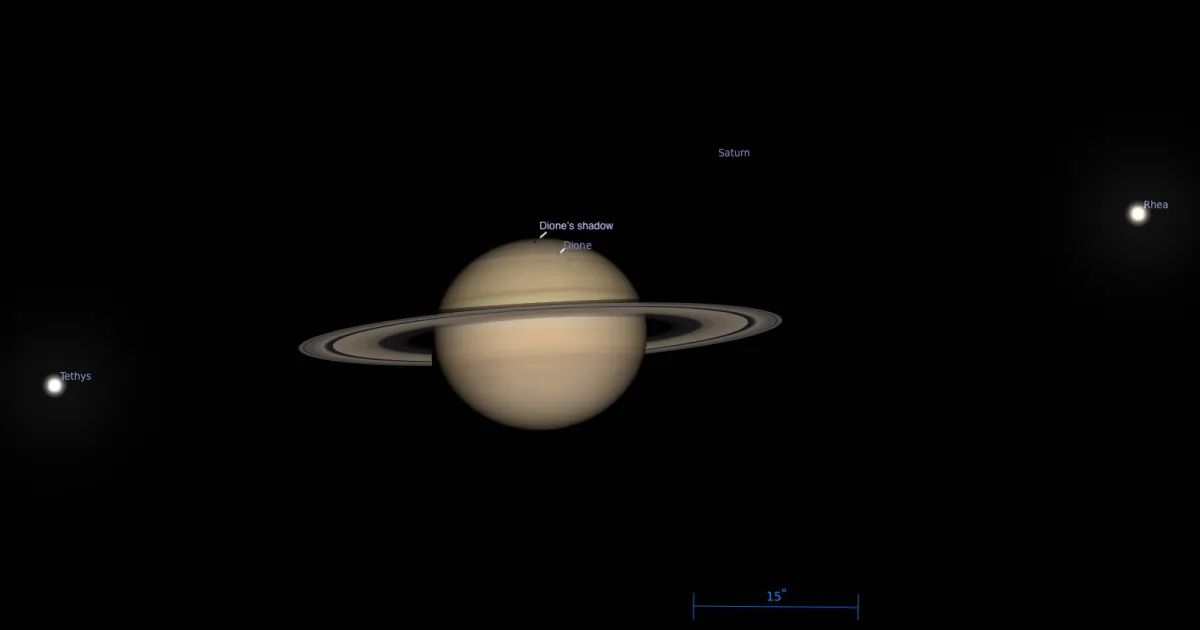
The Sky Today on Sunday, October 25: Dione crosses Saturn - Astronomy Magazine
Dione and its shadow cross Saturn’s disk this evening, while several more of the ringed planet’s moons stand nearby. Dione and its tiny shadow transit Saturn early in the evening on October 25. Credit: Stellarium/Oleg Pluton
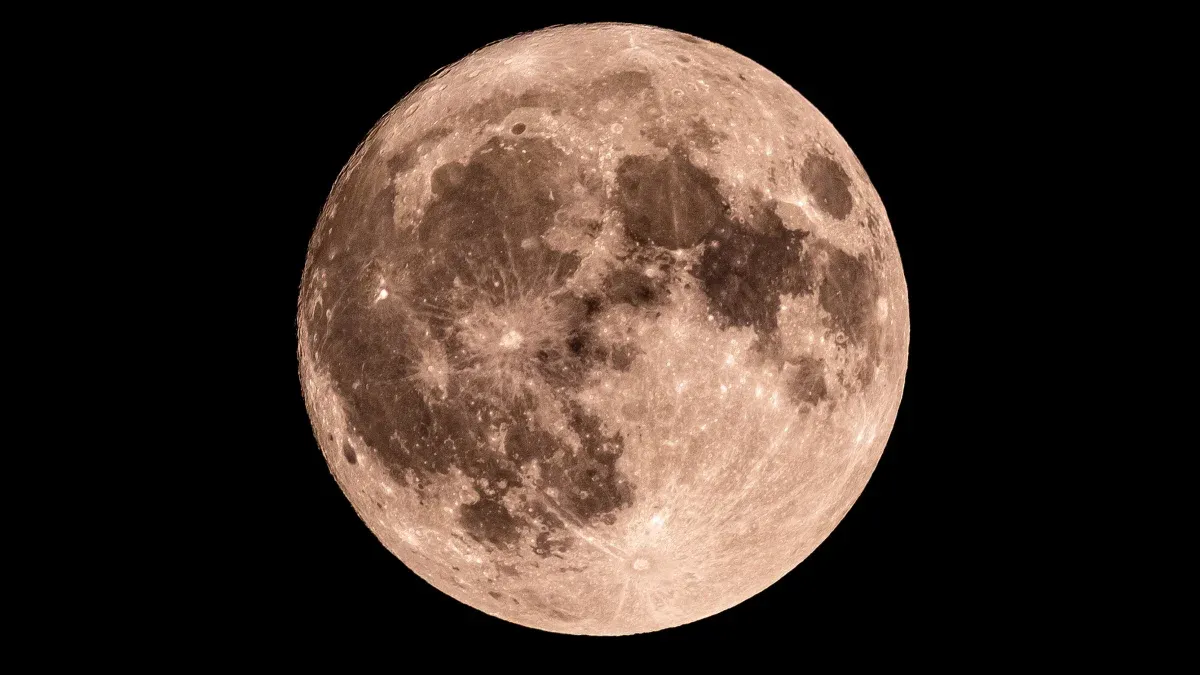
Moon phase today explained: What the Moon will look like on October 25, 2026 - Mashable
It's the Full Moon tomorrow (or tonight, depending on your timezone), which means the Moon looks big and bright in the tonight. Hoping to do some Moon gazing? Here's what you should be able to see. What is today's Moon phase? As of Sunday, Oct. 25, NASA's Daily Moon Guide tracker tells us the Moon is in the Waxing Gibbous phase, with 99% of its surface visible. Tonight, without the use of visual aids you should be able to spot the Copernicus Crater, Tycho Crater, and the Mare Crisium. If you have binoculars you'll also see the Endymion Crater, the Alphonsus Crater, and the Mare Nectaris. Finally, if you have a telescope, you'll also see the Apollo 16 and 17 landing spots, and the Schiller Crater. When is the next Full Moon? The next Full Moon will take place on October 25 or 26, depending on your timezone. What are Moon phases? The Moon takes around 29.5 days to travel around Earth, and its appearance changes throughout the month. As it moves around our planet, we see different amounts of its sunlit side, from a slim crescent to the quarter phases and eventually a Full Moon. It then begins the cycle again.

Scientists discover a hidden flaw that challenges 40 years of superconductor science - Science Daily
Scientists at the University of Warwick have uncovered a surprising secret inside a superconductor that researchers have studied for 40 years. Long believed to have a uniform crystal structure, the material actually contains a complex patchwork of different atomic arrangements. Using an advanced 3D imaging technique, the team was able to see deep inside the crystal for the first time, revealing hidden features that challenge decades of scientific assumptions. High-temperature superconductivity ranks among the most important scientific breakthroughs of the past four decades. Superconductors can carry electrical current without any resistance, eliminating the energy losses that normally occur as electricity travels through conventional materials. They also have the potential to support extraordinarily powerful magnets, making them promising for future power grids, medical scanners, and quantum computers.
0 comments
No comments yet. Be the first to share your thoughts!