Federal science cuts may have ripple effect on universities - University Affairs
This story deserves to be shared
Send it to someone who'd care, or post it on your networks.
This article is an excerpt. To read the full content, visit the original source. University Affairs
Related articles
Individual atomic collisions can now be detected in the lab, potentially opening up pathways to new physics - Phys.org
Tiny atoms and molecules are constantly bombarding each other all around us. While we regularly measure the large-scale effects of these interactions, measuring the effect of each individual collision is far more difficult. But now, researchers have managed to measure how tiny gas particles affect a single silica particle in the lab. In their new study, published in Physical Review Letters, the team describes how they detected the momentum transfers of individual collisions of gas particles with a nanoparticle levitated in laser light.
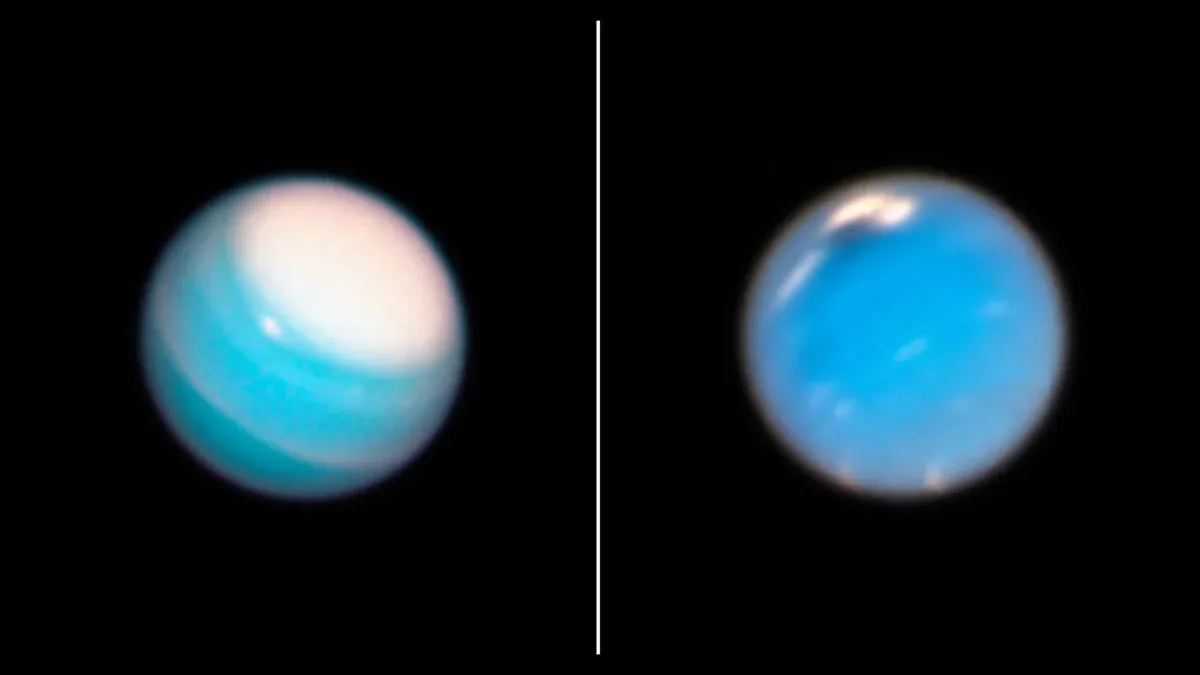
Uranus and Neptune Look Like Twins. Scientists Now Think It’s a Coincidence - Gizmodo
Despite the iconic documentary, Uranus and Neptune are arguably the real “blue planets” in our solar system. And their visual similarities in part convinced astronomers that they were evolutionary and chemical twins—but looks can deceive, as a new study has found. In short, the similarities we observe today between Uranus and Neptune may be a coincidence, according to research published in Astronomy & Astrophysics. Studying recent measurements of carbon monoxide revealed that Neptune’s deep atmosphere has more oxygen than that of Uranus. Using this information, the team ran models to track regions of the protoplanetary disk—a rotating “platter” of gas and dust that forms planets—that birthed Uranus and Neptune. Surprisingly, the analysis strongly suggested that Uranus and Neptune weren’t from the same section of the protoplanetary disk, which would also give them different chemical origins. “Uranus and Neptune may resemble twins today, but their chemistry is telling us that they are more like cousins with very different histories,” Olivier Mousis, the study’s co-author and a planetary scientist at the Southwest Research Institute, said in a statement.
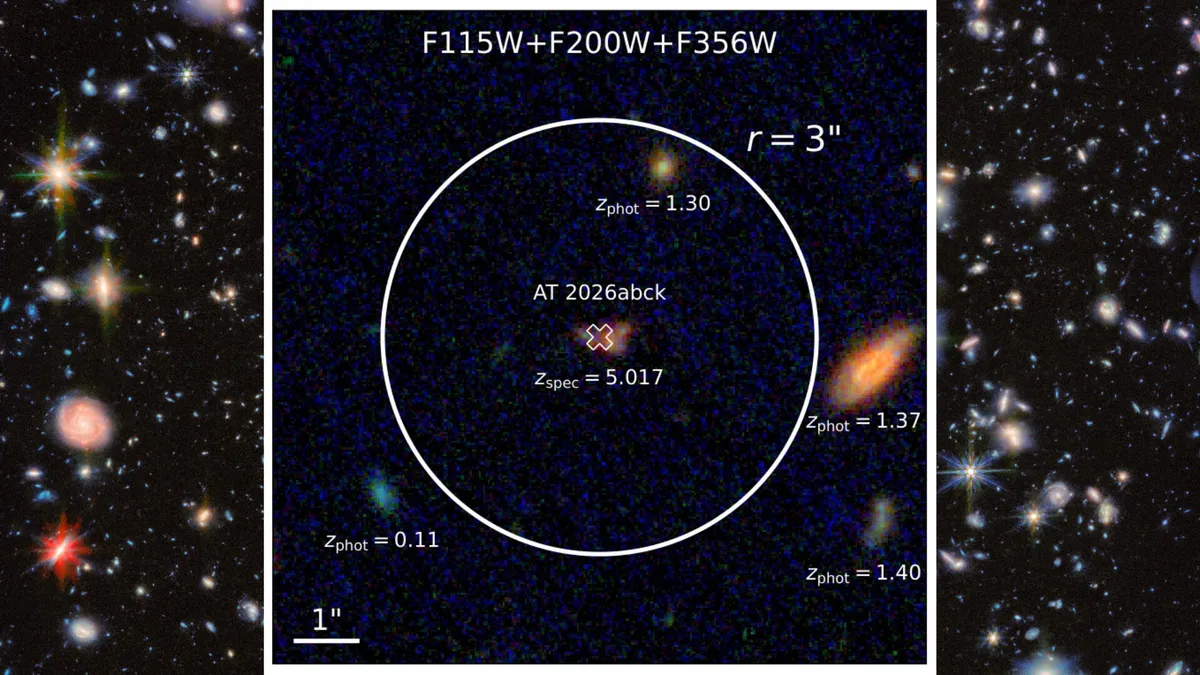
James Webb telescope discovers a supernova just 1.1 billion years after the Big Bang - Live Science
Astronomers using the James Webb Space Telescope may have discovered a supernova erupting just 1.1 billion years after the Big Bang.
0 comments
No comments yet. Be the first to share your thoughts!