Farmers’ Almanacs Are No Better than a Coin Toss - McGill University
This story deserves to be shared
Send it to someone who'd care, or post it on your networks.
This article is an excerpt. To read the full content, visit the original source. McGill University
Related articles

The Traitors: New Blood Recap: The Fruit Toss of Doom - Vulture
It’s a shame that one of the season’s more annoying Faithfuls is the one who actually stumbles onto the Traitors’ trail. If you’re wondering why The Traitors: New Blood seems much more rushed than a typical American Traitors season, it’s because it is! We are losing 18 to 28 minutes per week due to the shift from Peacock to NBC, and I am grumpy about it. This is why I don’t feel like I understand the ties between the players and why the annoying ones take up so much space! Did it take my sister-in-law mentioning this for me to realize it? Yes. I’m the youngest child; I just go along with things.
Churchill, Man., or Toronto, Ont.? Toss-up for who will be warmer on Wednesday
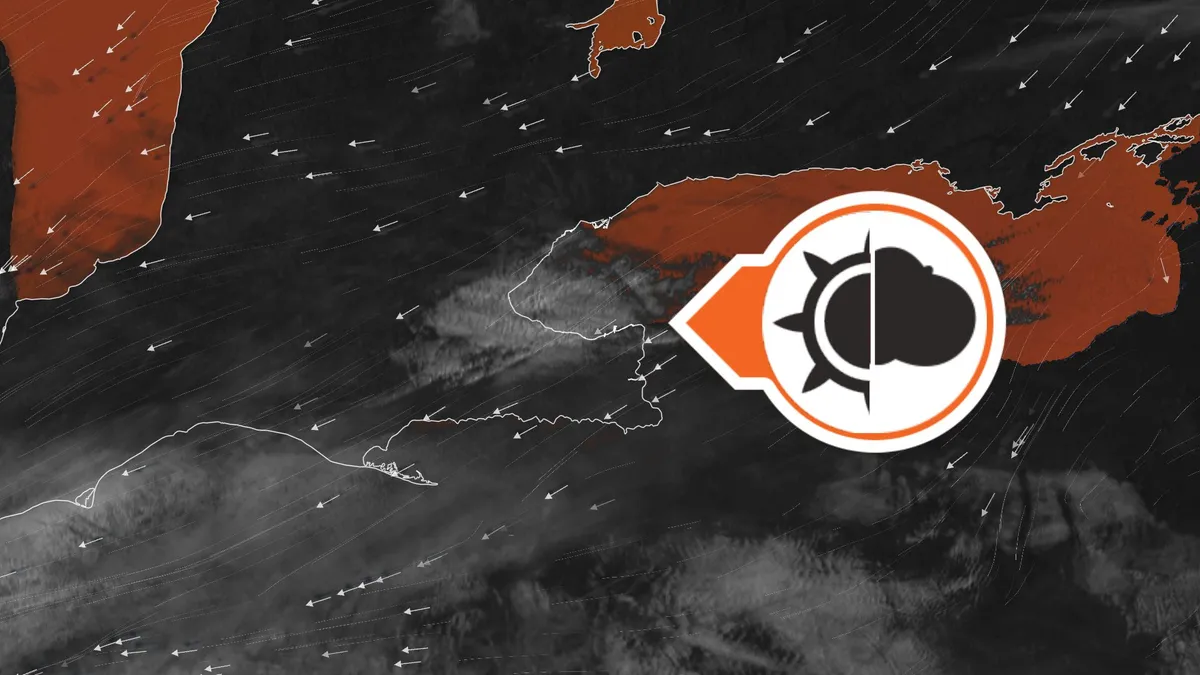
Even though fall is here, not every part of Canada is seeing the same, seasonal weather this week. Some areas could see snow, while at least one northern location on the Prairies could end up seeing a warmer temperature than multiple Southern Canadian communities on Wednesday. DON'T MISS: Three reasons why you could see an early-fall snow in CanadaSuch may be the case in Churchill, Man., which is forecast to see a daytime high of 18°C-- the same value that is projected in Toronto, Ont. It's possible that Churchill or Toronto ends up warmer than the other locale. That will come after a contrasting weather divide in the Greater Toronto Area (GTA) on Tuesday to kick off the fall. Wednesday remains cool in southern Ontario after a contrasting TuesdayOn the Priaries, there is a seperate high pressure and ridge that's bringing in sun and a warm, southerly wind, allowing for above-normal temperatures in northern areas of the region, including Churchill. Meanwhile, in southern Ontario, temperatures aren't quite as rosy.
Single-cell RNA sequencing dataset of hippocampus from mice of neuropathic pain at different time points - Nature
We’re sharing this article early to provide faster access to peer-reviewed, accepted research. It is citable and carries a permanent DOI. This version is subject to further edits and will be replaced automatically by the final Version of Record. All legal disclaimers apply. AbstractChronic pain (CP) affects more than 30% of the global population and is often accompanied by significant cognitive impairments. Although an increasing number of studies have focused on the pathological mechanisms associated with chronic pain-induced cognitive impairments, most have concentrated on the stage after the onset of cognitive impairments. Currently, the course by which chronic pain induces cognitive impairment has not been fully reported. Therefore, single-cell RNA sequencing were conducted in this study in order to map the mice hippocampus altas before and after cognitive impairments induced by spared nerve injury (SNI) on days 3, 7, 14, and 21. After quality control screening, 53852 out of 64207 cells from 11 samples were retained for subsequent analysis. The reliability of the sequencing data was verified through analysis of various evaluation indicators and sequencing alignment rates.
Giant fungus discovered in Yunnan reveals new fungal family_InKunming - 昆明信息港
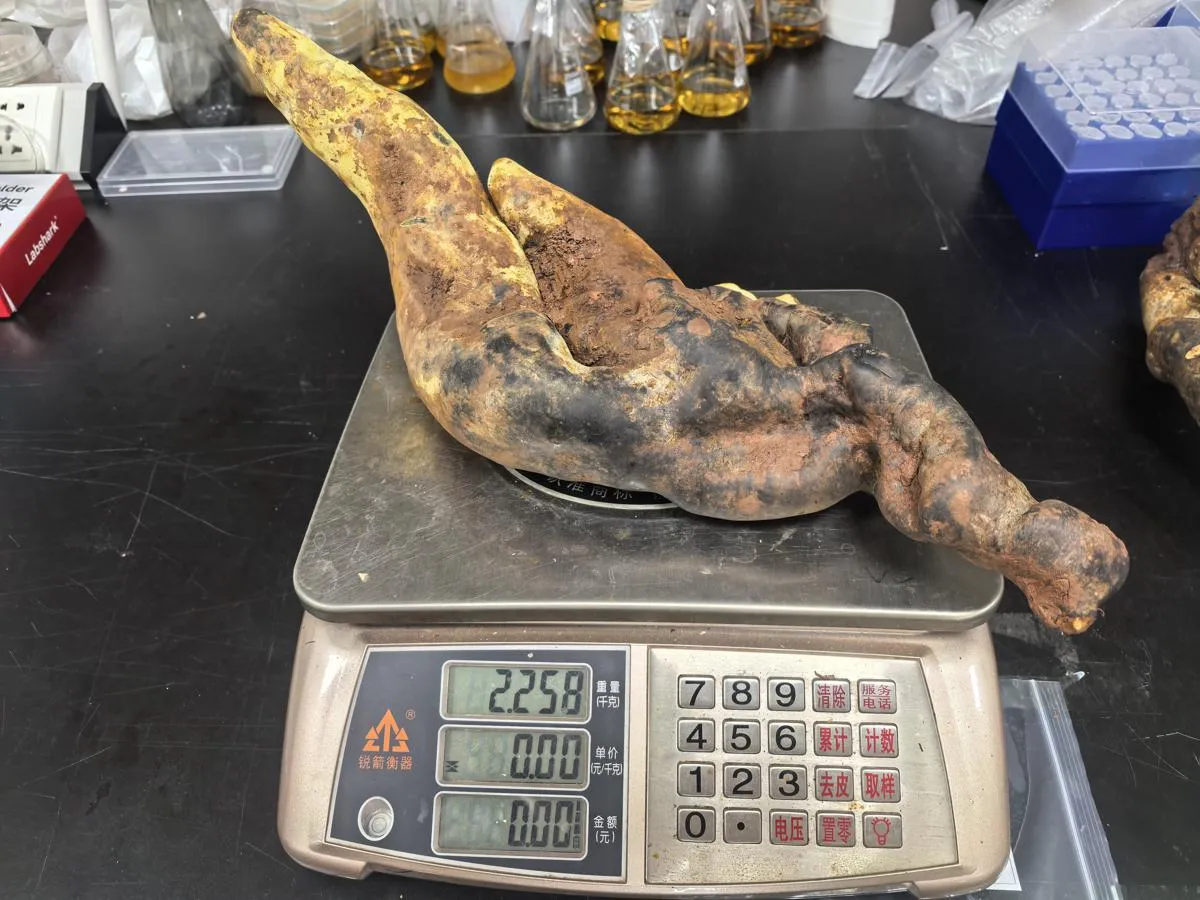
Dianjunus rex can weigh more than 2 kilograms. [Photo/Kunming Institute of Botany under the Chinese Academy of Sciences]Chinese scientists have discovered a previously unknown giant fungus in Yunnan province that constitutes a new fungal family after finding specimens that can grow up to 50 centimeters tall and weigh more than 2 kilograms. Dianjunus rex was identified by a research team led by Yu Fuqiang of the Kunming Institute of Botany under the Chinese Academy of Sciences, together with collaborators. Their findings were recently published in the journal Frontiers in Fungal Biology. The research established an entirely new fungal family, Dianjunaceae, highlighting how much remains unknown about fungal diversity even in a region renowned for its rich plant and animal life, according to the team. Dianjunus rex growing in a forest. [Photo/Kunming Institute of Botany under the Chinese Academy of Sciences]Researchers collected specimens from tropical and subtropical forests in Yunnan between August 2024 and July 2025. The fungi were found growing from the roots of recently dead trees and surrounding soil.

New Form of Superconductor Behavior Discovered That We've Never Seen Before - ScienceAlert
Materials in a superconducting state are of huge interest to scientists. That's because of rare properties – primarily the ability to conduct electricity with zero resistance, with nothing lost to heat – that promise to transform computing, energy grids, and transport. This phenomenon happens when free electrons condense into a low-energy quantum state at very cold temperatures, pairing up into what are called Cooper pairs so they can zip through materials without interference. Back in 2007, scientists predicted the existence of a more exotic type of electron movement, called a pair density wave (PDW), where the Cooper pairs form specific patterns while moving, like ripples on sand. Now a team led by researchers from the University of Illinois at Urbana-Champaign has found compelling evidence of PDWs on the surface of the metal uranium ditelluride, with their results published in PNAS. What's more, the patterns were found to persist outside of the standard superconducting state, something that's never been seen before. "Pair density waves are the Cheshire Cat's grin of superconductivity," says physicist Eduardo Fradkin from the University of Illinois at Urbana-Champaign.
0 comments
No comments yet. Be the first to share your thoughts!