Fact sheet: Sub-seasonal and seasonal predictions - ECMWF
This story deserves to be shared
Send it to someone who'd care, or post it on your networks.
This article is an excerpt. To read the full content, visit the original source. ECMWF
Related articles

One giant clam contains a month‑by‑month diary of the Great Barrier Reef’s climate 200 years ago
Giant Clam (Tridacna gigas) from Jiigurru (Lizard Island Group). (Andy Lewis/Coral Sea Foundation)When you swim through the azure waters of the Great Barrier Reef, there is one entity on the seafloor that’s almost impossible to miss: the giant clam. Its huge, fluted shell frames a soft mantle shimmering with electric blue, green and gold. As the world’s largest living bivalve, Tridacna gigas can reach 1.2 metres, weigh more than 200 kilograms and live for over a century. Across their long lives, these clams record their daily life in their shells, creating an autobiographical shell diary. In our new research, we read one of these shell diaries to reconstruct month-by-month climate conditions at Jiigurru (also known as the Lizard Island Group), in the northern Great Barrier Reef. The shell’s story reveals that, before widespread industrial-era warming, Jiigurru’s summers were cooler than today, while winters were surprisingly similar. Jiigurru (Lizard Island Group) showing Blue Lagoon where our giant clam recorded its shell diary. (Sean Ulm)How can a shell keep a diary?

Stop bagging leaves: a farmer's guide to regenerative gardening
What is regenerative farming? How to start it in your own backyardThis fall, goldenrod is abundant and monarch butterflies have been passing through the Moonbeam Blooms Flower Farm in Cane Creek Valley, just south of Asheville, North Carolina. Owner Jessica Stark won’t be bagging up the leaves, and she says you shouldn't either. Moonbeam Blooms is a regenerative flower farm, where the priority is keeping the soil healthy. “Regenerative farming is focused on really building a relationship with the land and the soil, and has some differences from conventional and even organic farming,” Stark explains. What is regenerative farming? While there’s no legal definition for regenerative farming, its core draws on the USDA’s principles for soil health:Disturb the soil as little as possibleKeep it coveredKeep living roots in the groundGrow a mix of plantsYou don’t need a farm to try it. Here’s how to start in your own yard. Swap plastic for mulchStark says to swap landscape fabric or plastic sheeting for mulch. Get More of Our News on GoogleSet The Weather Company as a 'Preferred Source' to get quicker access to the news you value.
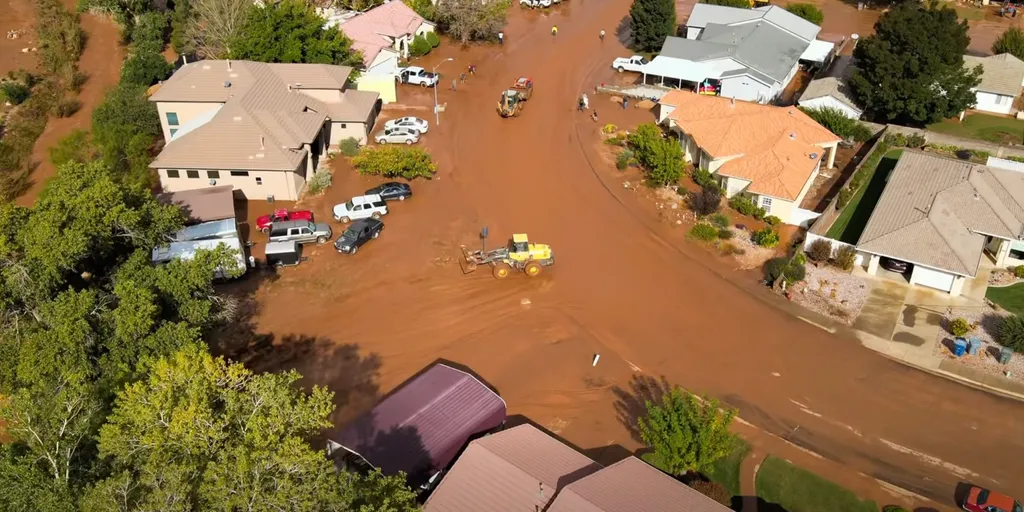
See it: Utah city forced to evacuate immediately as dangerous flash flooding inundates the region
THE TAKEAWAY: Life-threatening flash flooding inundates Hurricane, Utah. Residents living near Gould Wash were forced to evacuate immediately. City officials issued a Proclamation of Local Emergency to address the ongoing flooding. Evacuation orders were issued for residents in Hurricane, Utah, on Thursday as life-threatening flash flooding slammed the city. WHAT IS A SUPERCELL THUNDERSTORM? Residents living near Gould Wash were forced to evacuate immediately as floodwaters inundated the area. Hurricane experienced substantial flooding after more than an inch of rain fell in 12 hours. (Paul Canfield / FOX Weather)The typically dry region was transformed by the heavy rainfall, with floodwaters turning streets into rushing waterways. HOW HIGH PRESSURE AND LOW PRESSURE DRIVE THE WEATHER"Hurricane City crews and emergency response partners have been actively responding to significant flooding and related infrastructure damage throughout the community," Hurricane City Emergency Services said in a press release. City officials issued a Proclamation of Local Emergency on Thursday to address the ongoing flooding and assess the damage.
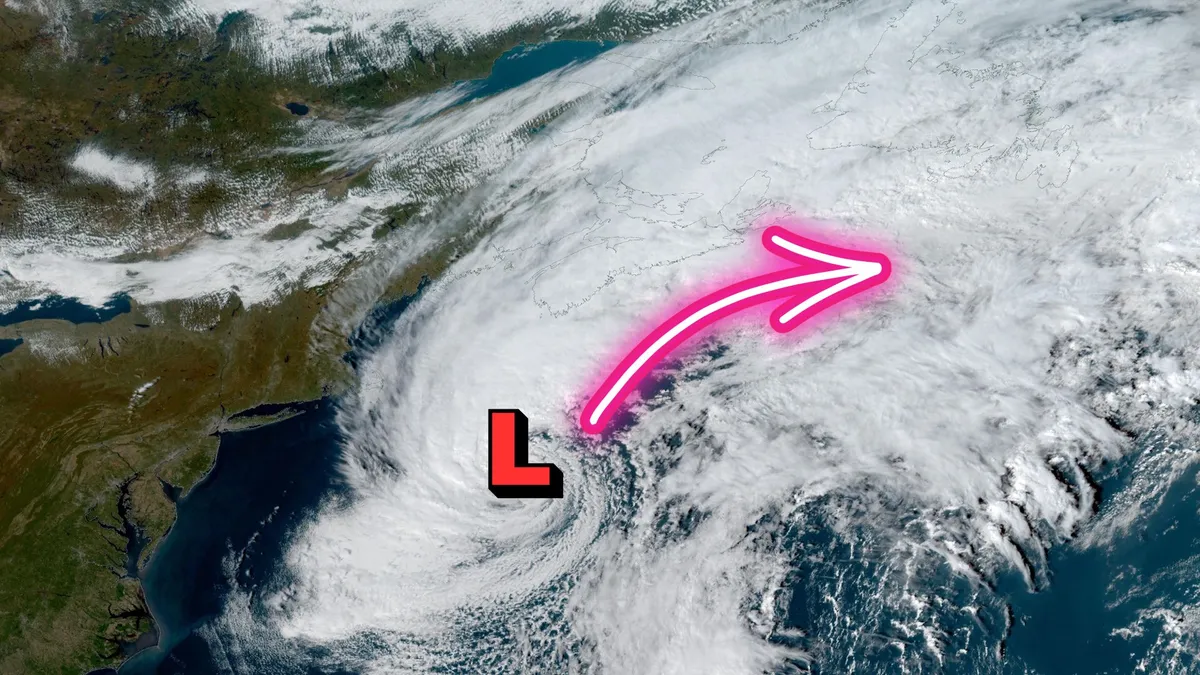
Powerful ex-Josephine threatens heavy rain, wicked winds
Atlantic Canada may be in for a rough second half of the week, with forecasters keeping a close eye on the system formerly known as Subtropical Storm Josephine. The storm has been meandering up the Eastern Seaboard this week as a powerful low-pressure system. DON'T MISS: Canada's Winter Sneak Peek: El Niño puts record warmth in playThe system will swipe southern Atlantic Canada with potent wind gusts, heavy rainfall, snowfall and three- to five-metre waves along the coastal areas, elevating the risk of flooding. Low-pressure systems exist on a spectrum between tropical and extratropical (non-tropical). Josephine has slipped across the spectrum in both directions several times over the past week. Originally a strong nor’easter, the system evolved into a subtropical storm on Wednesday before returning to its roots on Thursday. A subtropical storm is one that has characteristics of both a tropical and extratropical system, a sort of hybrid storm that can bring hazardous weather to the affected regions. Content continues belowWhile this is no longer a named storm, it will still pack hazardous winds and heavy rainfall across the region.
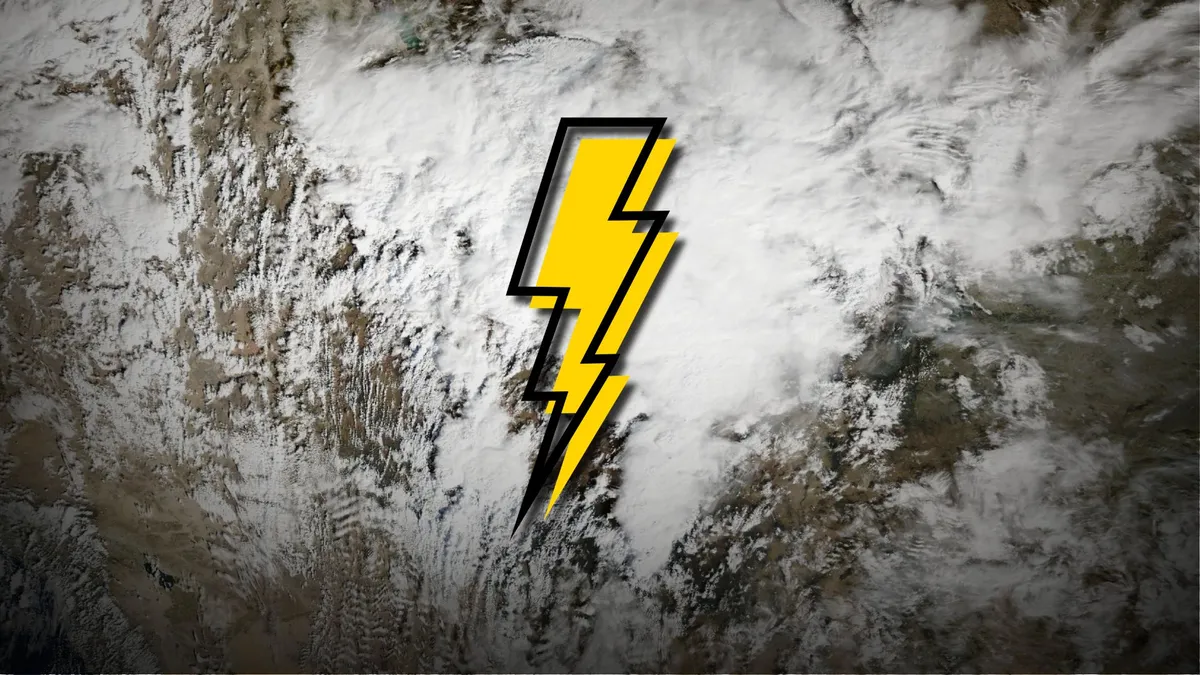
Rare tornadic setup covers desert cities again on Thursday
An unusually potent threat for severe weather covers portions of the U. S. Southwest again on Thursday, bringing a second day of severe storms to the region. Thursday’s severe weather risk is a continuation of the same setup that brought the region multiple reports of rotation and hail the size of golf balls and larger on Wednesday. DON’T MISS: Canada records its northernmost tornado in nearly 50 yearsThe atmospheric setup over this desert region is more akin to what you’d expect to see on the Plains or the Prairies. An upper-level trough swinging across California brought the lift needed to spark thunderstorms amid enhanced instability and moisture. Strong wind shear aloft has allowed thunderstorms to turn severe, with some organizing into supercells capable of producing very large hail, damaging wind gusts, and tornadoes. Wednesday’s storms prompted widespread severe thunderstorm and tornado warnings across Arizona and Utah. Storm chasers reported several potential tornadoes in the region, and one report came in of hail up to 5 cm (2 in.) in diameter northwest of Phoenix. Content continues belowA similar setup on Thursday prompted the U. S.

Vermont ski mountains prepare to open as winter weather looms
Let's see what the prediction markets, sponsored by Kalshi, are saying about when Stowe Mountain Resort will open for the season. STOWE, Vermont – The Northeast is gearing up for winter, and that means ski season for Vermont. The National Oceanic and Atmospheric Administration Winter Outlook favors warmer-than-average temperatures and wetter-than-average conditions across much of the Northeast, including Vermont, as a strong El Niño shifts the jet stream. Brooks Curran hikes up a mountain in waist deep snow in search of the perfect run in Stowe, VT on Feb. 21, 2021. (Jessica Rinaldi/The Boston Globe via Getty Images / Getty Images)The outlook does not predict seasonal snowfall totals, but the combination of added moisture and occasional cold-air outbreaks could still produce significant snow in the Green Mountains. COLORADO BOY MAY BE WORLD'S YOUNGEST TO SKI ON ALL CONTINENTSLet’s take a look at how prediction markets are trading the question of when Stowe Mountain Resort will open for the season. Stowe Mountain Resort has opened by Nov. 26 in seven of the past eight seasons, with opening dates ranging from Nov. 16 to Dec. 3 and a median opening date of Nov. 21.
0 comments
No comments yet. Be the first to share your thoughts!