Evidence of optical Aharonov-Bohm interference in spin-polarized moiré excitonic complexes - Nature
This story deserves to be shared
Send it to someone who'd care, or post it on your networks.
AcknowledgementsA. C. G. thanks Klaus Krambrock and Isabela Santos Silveira. L. M. M. thanks INCT de Nanocarbono e Materiais 2D (CNPq) e Rede Mineira de Materiais 2D (FAPEMIG). A. C., A. C. G., D. R. C., and M. D. T. acknowledge support from CNPq, via the PQ Program. A. C. and I. C. A., acknowledge financial support from CAPES/PROEX. L. F. D. A. and R. C. R. N. B. acknowledge financial support from CNPq (PIBIC). K. W. and T. T. acknowledge support from the CREST (JPMJCR24A5), JST and World Premier International Research Center Initiative (WPI), MEXT, Japan. R. R. R. L. thanks CAPES-PrInt program No. 88887.830556/2023-00. FundingThis work was supported by FAPESP - 2022/10340-2, number 2022/00209-6, 2025/02343-0 and 2024/01205-0, and FAPESP-FAPERJ numbers 2025/23224-9 and E-26/210.370/2026. Author informationAuthors and AffiliationsDepartamento de Física, Universidade Federal de São Carlos, São Carlos, São Paulo, BrazilAndreij C. Gadelha, André Pelais, Luciano F. D. Almeida, Frederico B. Sousa, Alessandra Ames, Gilmar E. Marques & Marcio D. TeodoroCentro Brasileiro de Pesquisas Físicas (CBPF), Rua Dr. Xavier Sigaud 150, Rio de Janeiro-RJ, BrazilAndreij C. Gadelha & Danian A.
This article is an excerpt. To read the full content, visit the original source. Nature
Related articles
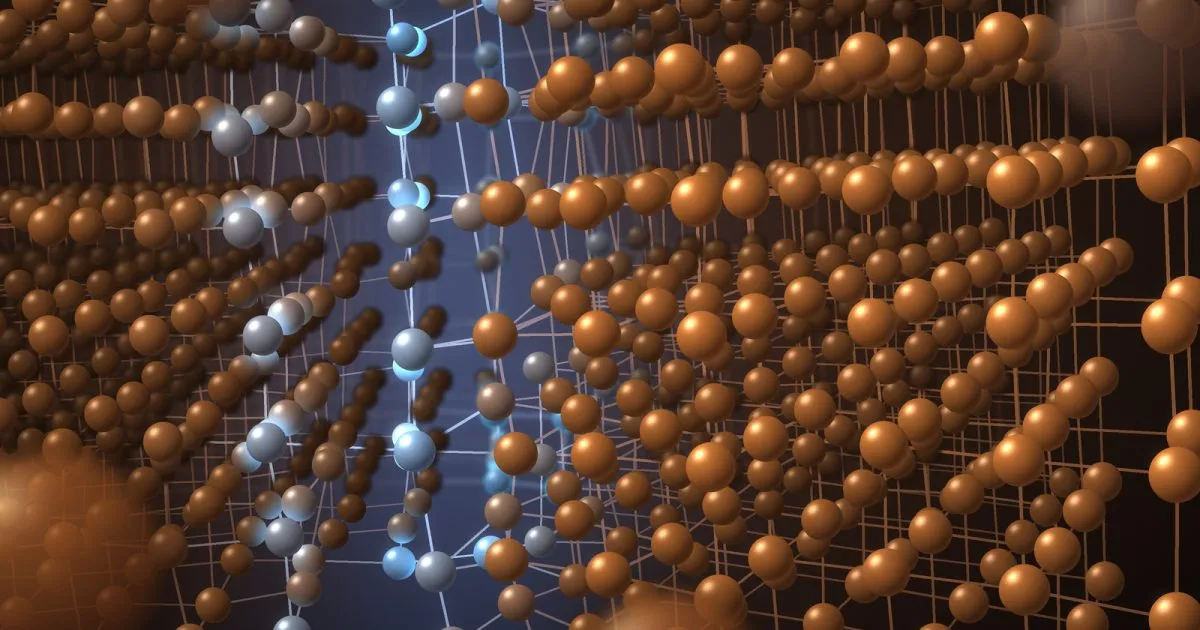
A New Way To Spot Excitonic Order Could Unlock Quantum Materials - Quantum Zeitgeist
Demonstrating the existence of excitonic insulators remains a significant challenge despite improvements in materials synthesis and spectroscopic tools. These unusual materials rely on a ground state formed by spontaneously interacting electron-hole pairs, differing fundamentally from traditional insulators. Researchers are now focusing on layered chalcogenides and even artificial excitonic platforms as potential candidates for realizing this elusive state. The team outlines essential theoretical ingredients and experimental fingerprints, proposing strategies to distinguish excitonic order from competing phases and identifying frontiers for the next decade of research. Distinguishing excitonic order from other insulating states requires identifying signatures beyond standard spectroscopic techniques. Layered chalcogenides, both in two and three dimensions, are receiving increased attention as potential hosts for these excitonic states, alongside the more novel development of artificial excitonic platforms. “We survey the rapidly expanding family of candidate materials,” the review states, highlighting the growing interest in these systems.
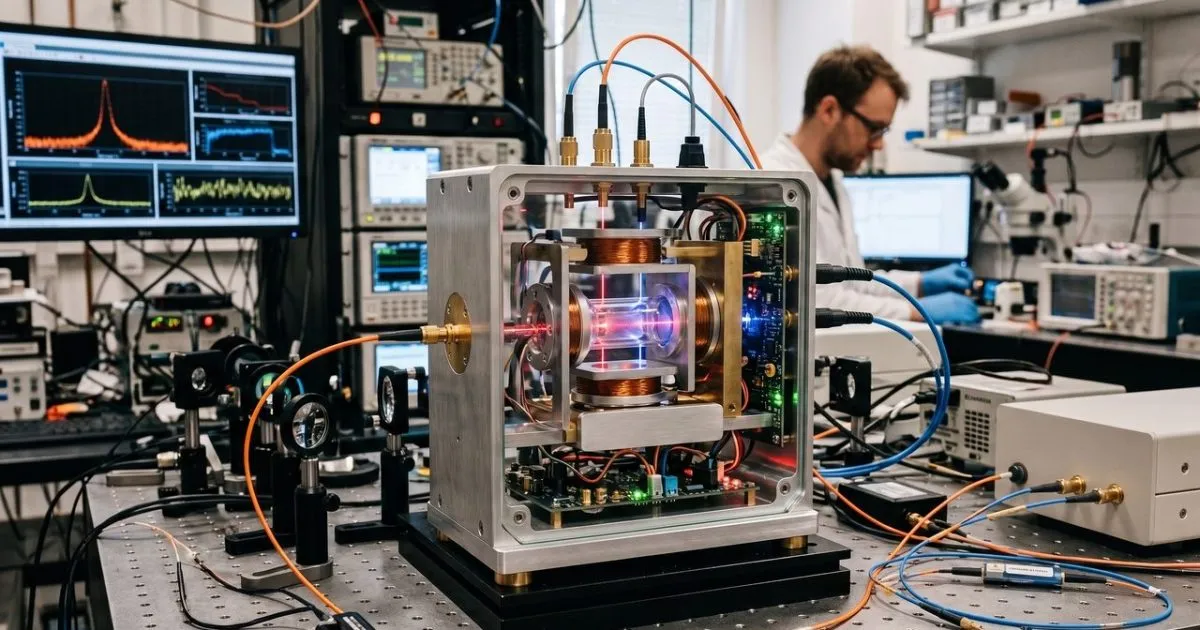
Quantum Leap For Canadian INRS High-temperature Materials Research - Quantum Zeitgeist
After nearly 40 years since the discovery of cuprates, copper-based compounds promising lossless electricity transmission, the mechanisms behind their superconductivity remain elusive. Researchers at the Institut national de la recherche scientifique (INRS), led by Professor Fabio Boschini, have now published findings in Nature Physics revealing a competition between superconductivity and the pseudogap, a mysterious quantum state. “The pseudogap is one of the greatest mysteries in condensed-matter physics,” says Professor Boschini, a specialist in ultrafast spectroscopy of quantum condensed matter at INRS, adding that understanding its interaction with superconductivity is essential to explaining high-temperature superconductivity. The INRS team used a pulse of light to temporarily suppress superconductivity, observing how the material responded in real time and uncovering previously hidden electronic states.
0 comments
No comments yet. Be the first to share your thoughts!