Early Cambrian Fossil Rewrites Starfish Family Tree - Sci.News
This story deserves to be shared
Send it to someone who'd care, or post it on your networks.
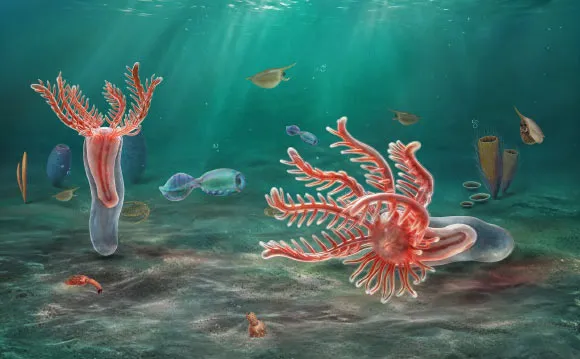
A 518-million-year-old ambulacrarian fossil from China suggests that the common ancestor of starfish and their relatives was not a burrowing worm; it was probably a tentacled animal that fed from the water around it.
An artist’s impression of Yujingia glutenotunica. Image credit: He et al., doi: 10.1016/j.cub.2026.08.053.
This article is an excerpt. To read the full content, visit the original source. Sci.News
Related articles
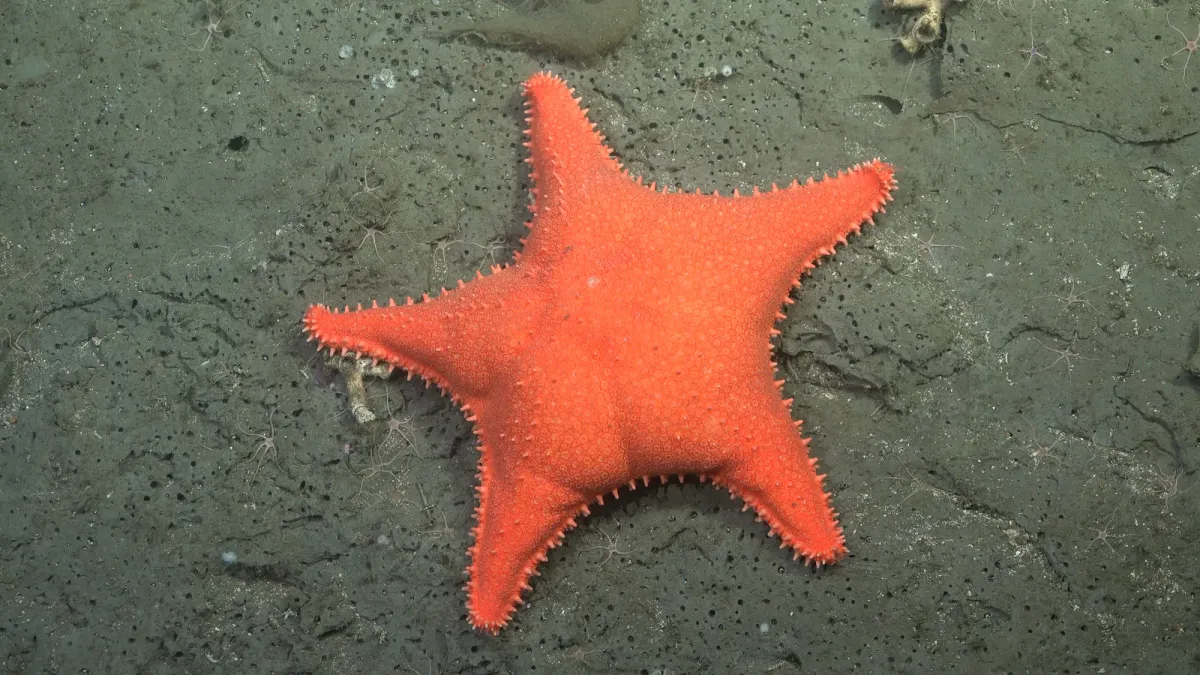
Scientists Found a Starfish That Looks Like Patrick. Yes, That Patrick. - VICE
According to the Schmidt Ocean Institute, a team of Latin American and European scientists identified 57 new species and 5 new genera in just two weeks! Most interestingly, one discovery from a 2025 mission they analyzed, though not a new species, is back in the news: Meet the starfish that strongly resembles Patrick Star—the beloved dunderhead companion of children’s cartoon protagonist SpongeBob SquarePants. The Nippon Foundation-Nekton Ocean Census led the Species Discovery Workshop, which, in partnership with the Schmidt Ocean Institute, resulted in the identifications. It took place in Buenos Aires from July 13-24, 2026. Participants examined deep-sea biological samples, mostly from the Schmidt Ocean Institute’s Underwater Oasis of the Mar del Plata Canyon expedition.
Algae fossils from Cambrian explosion hint at sophisticated reproductive system - Phys.org
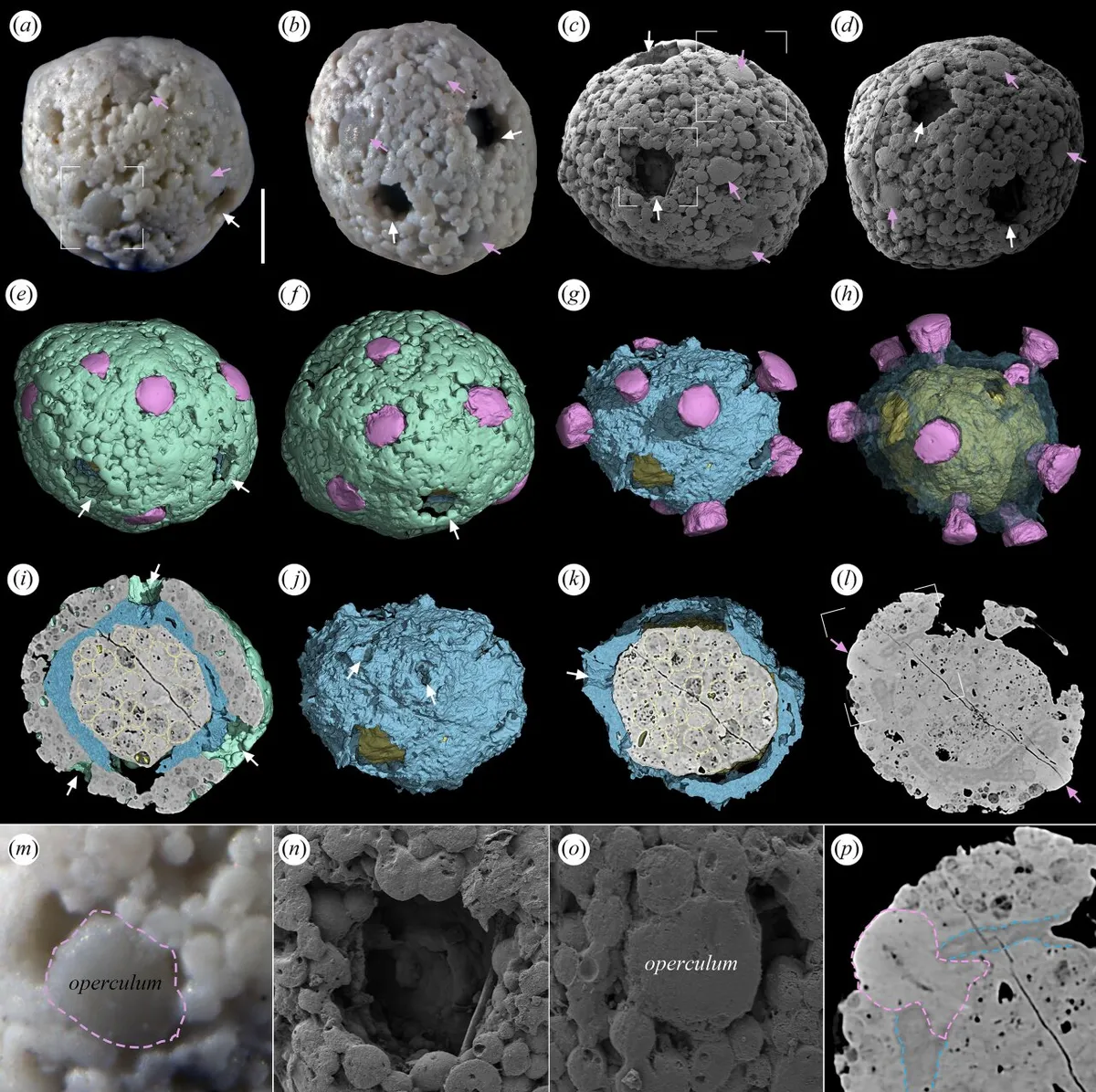
The holotype of Polyostiosphaera operculata gen. et sp. nov. from the early Cambrian Kuanchuanpu Biota (NIGP210977). (a, b) Light microscopy images. (c, d) Scanning electron microscopy images. (e–g, j) Surface renderings; the outer envelope, plug-like opercula, membrane and inner body are indicated by green, pink, blue and yellow, respectively. (h) Transparent model showing the inner body. (i, k) Virtual three-dimensional sections of (f) and (j), respectively. (l) Virtual slice of (f). (m) Close-up view of (a). (n, o) Close-up views of (c). (p) Close-up view of (l), showing the spatial relationships among the plug-like opercula, outer envelope, membrane and internal cells. White arrows, apertures; pink arrows, plug-like opercula. Yellow, blue and pink outline internal cells, the membrane and plug-like opercula, respectively. Scale bars: (a–i, l) 200 μm, (j, k) 180 μm, (m) 66 μm, (n) 60 μm, (o) 64 μm, (p) 37 μm. Credit: Chen et al. (Proceedings of the Royal Society B, 2026). The Cambrian explosion was a major diversification of animal life that unfolded early in the Cambrian period, which began around 538.8 million years ago.
Study Rewrites Cattle Pregnancy Science - Farms.com
Oct 12, 2026By Farms.com Researchers discover cattle pregnancies can succeed without a protein long considered essential For many years, scientists believed that a protein known as interferon tau (IFNT) was essential for successful pregnancy in cattle. This protein is produced by the developing embryo and was thought to send a crucial signal to the mother, helping maintain the pregnancy. However, new research from Ludwig Maximilian University (LMU) Munich has challenged this long-standing scientific belief. The study, recently published in Nature Communications, found that cattle embryos can establish and maintain pregnancies even without producing interferon tau. The discovery could change how scientists understand reproduction in cattle and may lead to new strategies to improve fertility in livestock. The research team, led by Dr.
0 comments
No comments yet. Be the first to share your thoughts!