Deep intronic NIPBL variants underlie unresolved Cornelia de Lange syndrome revealed by integrated epigenomic and transcriptomic analysis - Nature
This story deserves to be shared
Send it to someone who'd care, or post it on your networks.
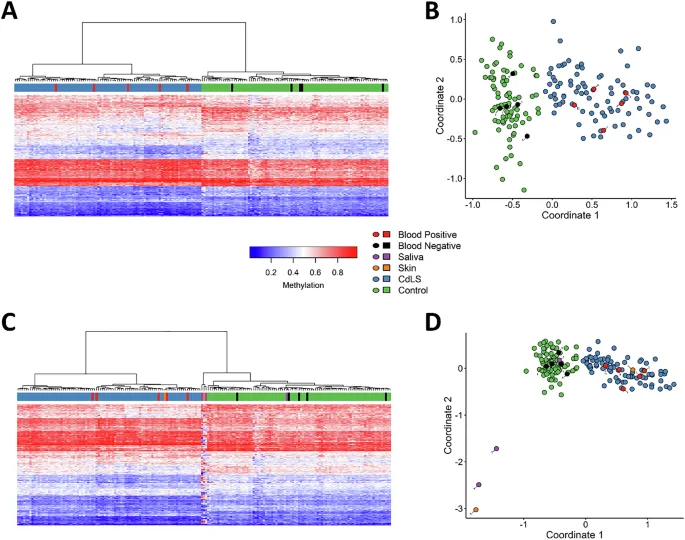
AbstractCornelia de Lange syndrome (CdLS) is a rare congenital disorder characterised by craniofacial features, growth retardation, limb anomalies, and intellectual disability. The condition arises from pathogenic variants in genes encoding cohesin complex components or regulators, most frequently NIPBL. Despite advances in genomic testing, approximately 30% of clinically diagnosed cases remain unresolved, suggesting the presence of non-coding variants. We investigated 10 classical CdLS patients negative for pathogenic variants in NIPBL, SMC1A, SMC3, RAD21, and HDAC8. Genome-wide methylation profiling was performed to identify CdLS-specific epigenetic signatures. Episignature-positive cases underwent trio-based deep sequencing of the entire NIPBL locus while targeted NIPBL RNA sequencing was used to assess splicing. Whole-genome sequencing (WGS) was performed in episignature-negative individuals. Five of ten patients exhibited a positive CdLS episignature in blood, saliva, or skin. Deep sequencing identified de novo deep intronic NIPBL variants in all cases, and two additional variants in episignature-negative patients.
This article is an excerpt. To read the full content, visit the original source. Nature
Related articles
ISSET Seminar Series - Prof. Carlos Lange - University of Alberta
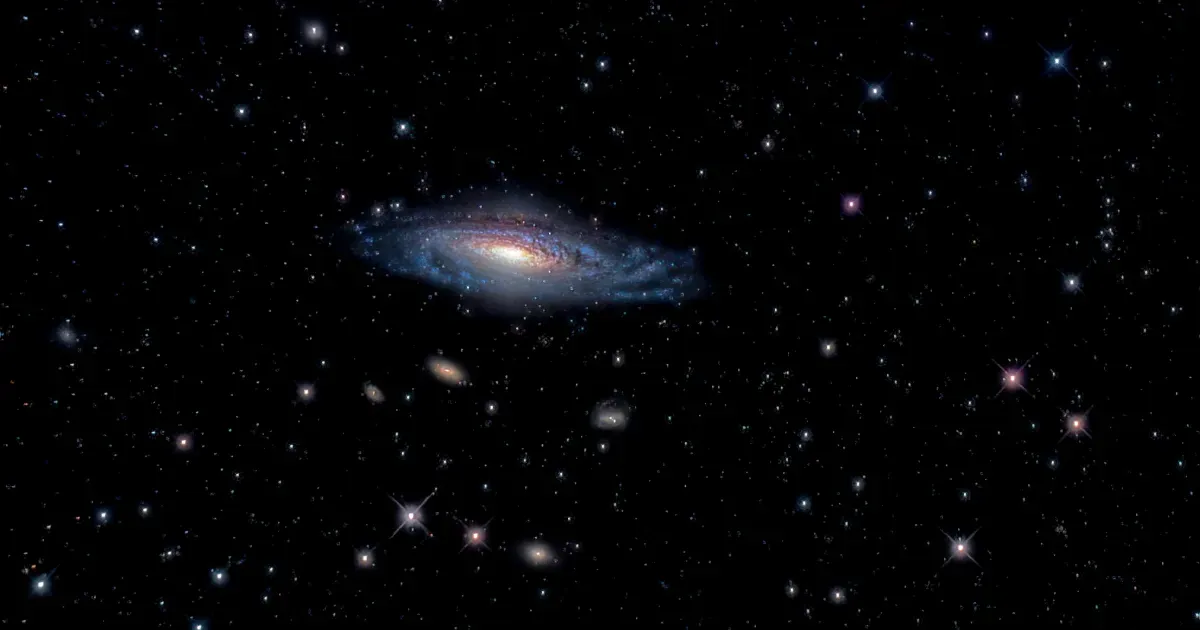
The Sky Today on Tuesday, October 20: Lovely spiral NGC 7331 - Astronomy.com
The biggest galaxy in the Deer Lick Group, galaxy NGC 7331 has lots to offer through a telescope, so track it down tonight. Looking for a sky event this week? Check out our full Sky This Week column.
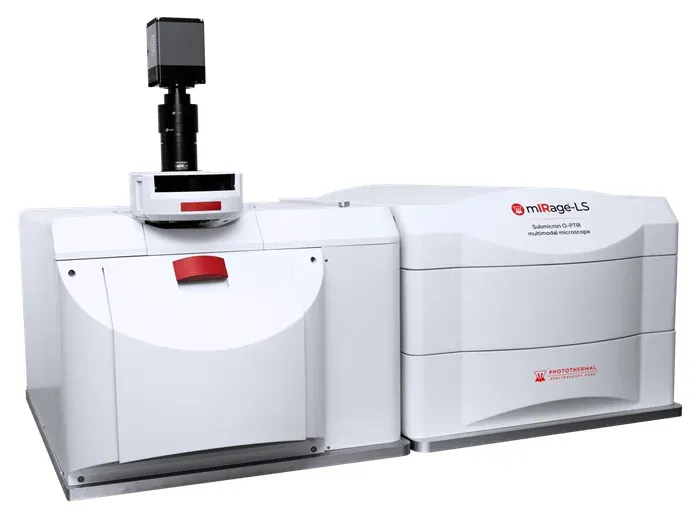
mIRage-LS - Multimodal submicron IR imaging & spectroscopy for life science research - News-Medical
Experience sub-500 nm O-PTIR featuring integrated fluorescence and simultaneous Raman spectroscopy with the mIRage-LS, a global first in microscopy systems. Fluorescence microscopy and O-PTIR spectroscopy with submicron resolution positioned together

Photonic Grating Chip Reduces Strontium Frequency Uncertainty Over Fifty Times - AZoM
The Korea Research Institute of Standards and Science (KRISS, President Dr. Ho Seong Lee) has re-measured a key transition frequency of the strontium (Sr) atom for the first time in 88 years since 1938, using a photonic grating chip, and has established a new absolute frequency value with a measurement uncertainty reduced by more than 50 times. By securing an accurate reference value needed for next-generation quantum technologies ahead of time, this achievement is expected to greatly contribute to the precise control and miniaturization of quantum devices, including atomic clocks and neutral-atom quantum computers. Strontium is an atom widely used in precision quantum technologies such as optical lattice clocks and quantum sensors. To use strontium in these technologies, fast-moving atoms must be slowed down and trapped with precisely tuned lasers, and for this, it is essential to know exactly the resonant frequency of the laser light for the atomic transition.
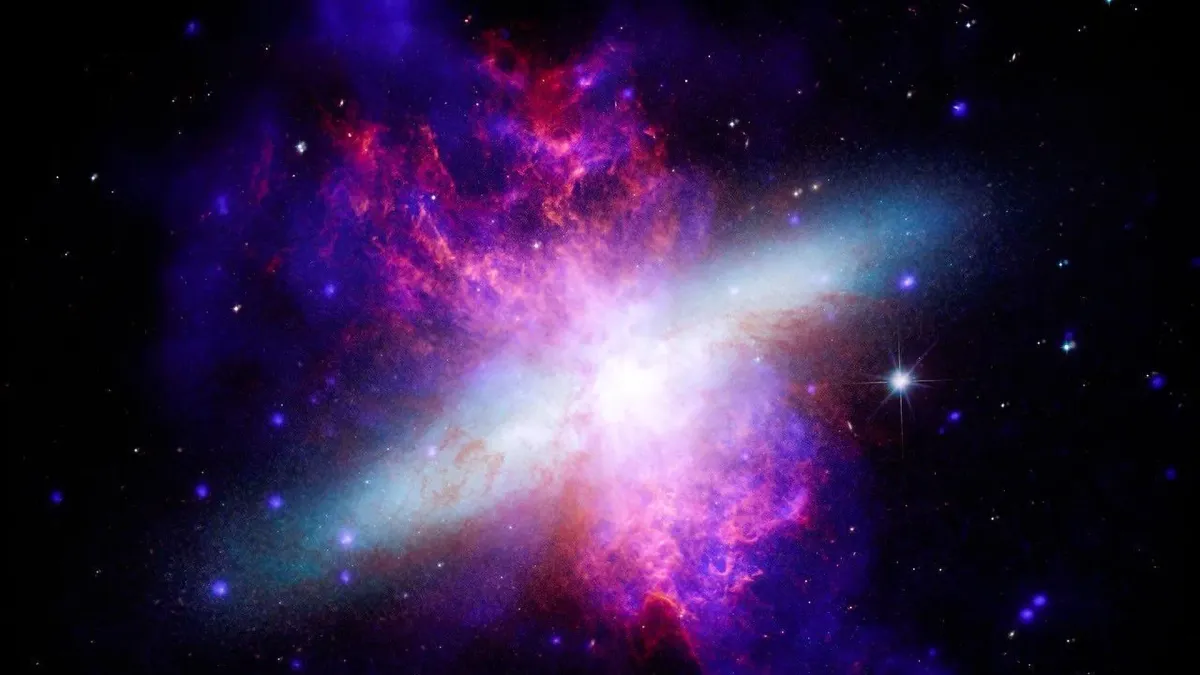
NASA reveals 16 stunning galaxies hiding cosmic chaos - Science Daily
Some galaxies glow with sweeping spiral arms, while others are shaped by violent collisions, powerful black holes, and explosive bursts of star formation. A newly released collection of 16 images from NASA's Chandra X-ray Observatory and other telescopes reveals the extraordinary diversity of these cosmic structures. Like precious gemstones, galaxies come in many shapes and sizes, each with characteristics that tell a story about its history. Astronomers generally classify them into three major groups. Spiral galaxies, including our Milky Way, have winding arms extending from their centers. Elliptical galaxies typically contain older stars and are often thought to form through galactic mergers. Irregular galaxies have less orderly structures and can display a wide variety of cosmic activity.
0 comments
No comments yet. Be the first to share your thoughts!