Curious gravitational wave may hint at primordial black holes—or just be noise - Science | AAAS
This story deserves to be shared
Send it to someone who'd care, or post it on your networks.
This article is an excerpt. To read the full content, visit the original source. Science | AAAS
Related articles
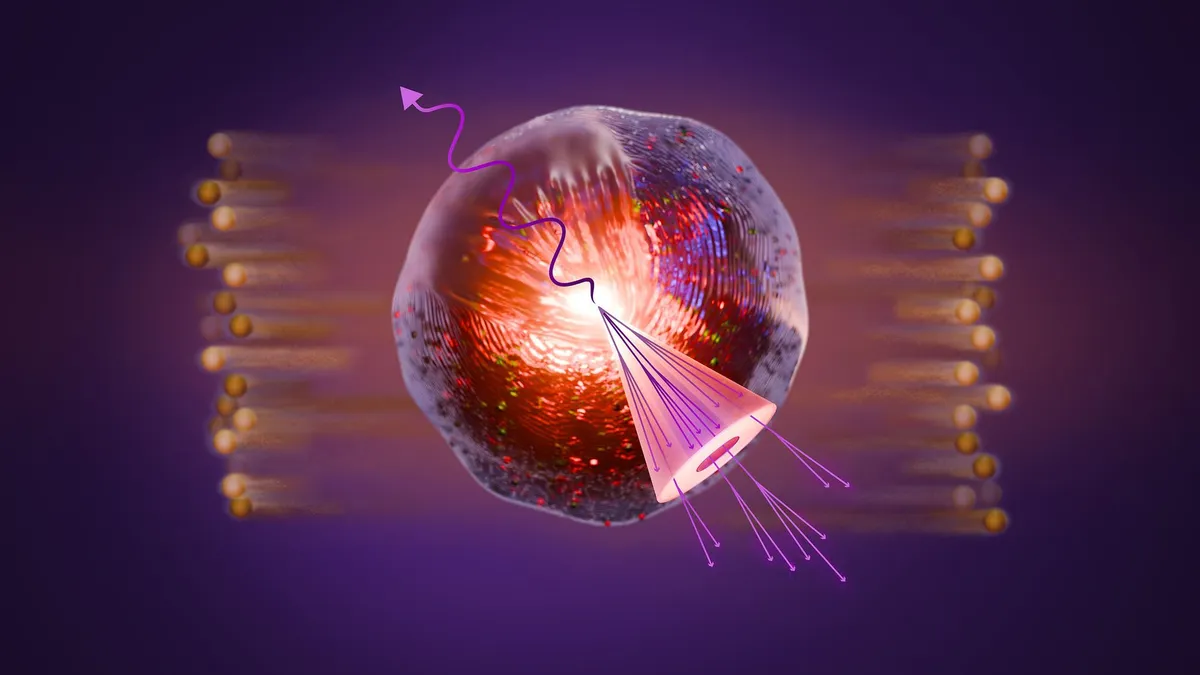
Particle collider experiment recreates the Big Bang's primordial soup — and finds an unexpected twist - Live Science
A particle collider experiment just revealed something unexpected about how the fiery soup of particles that filled the universe after the Big Bang coalesced into the protons and neutrons that make up matter today.
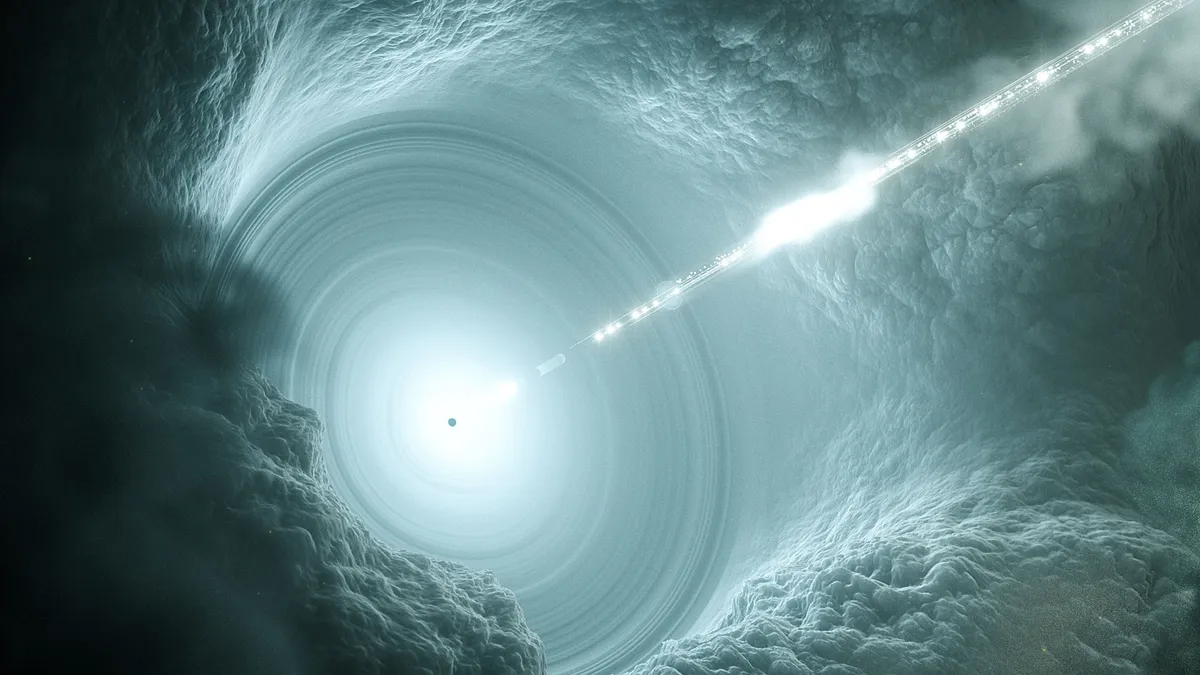
If The Dark Dimension Is Real, The Geometry of Primordial Black Holes Could Reach a Place We Cannot Go - ScienceAlert
No matter how free we are, human existence will always be confined. We cannot escape the dimensions of the classical Universe – three spatial directions and the inexorable march of time. But gravity may not be bound by the same rules that apply to flesh and stone. It may bleed into a hidden, fifth 'dark' dimension beyond the brane to which matter is bound. And if such a demesne exists, there may be objects whose gravity reaches into it, warping their geometry in ways that could give us a window into a plane our minds can barely perceive. Such a window could take the form of primordial black holes – microscopic, but incredibly dense objects thought to have formed in the extreme conditions shortly after the Big Bang. In fact, according to a new study led by physicist Luis Anchordoqui of Lehman College in the US, in a Universe with a dark dimension, all primordial black holes (PBHs) must be five-dimensional – barring some exotic, unknown new physics at low energies. They can't help themselves otherwise. You're probably already familiar with the concept of black holes – ultra-dense objects that form from the collapsed cores of massive stars after they run out of fuel and go
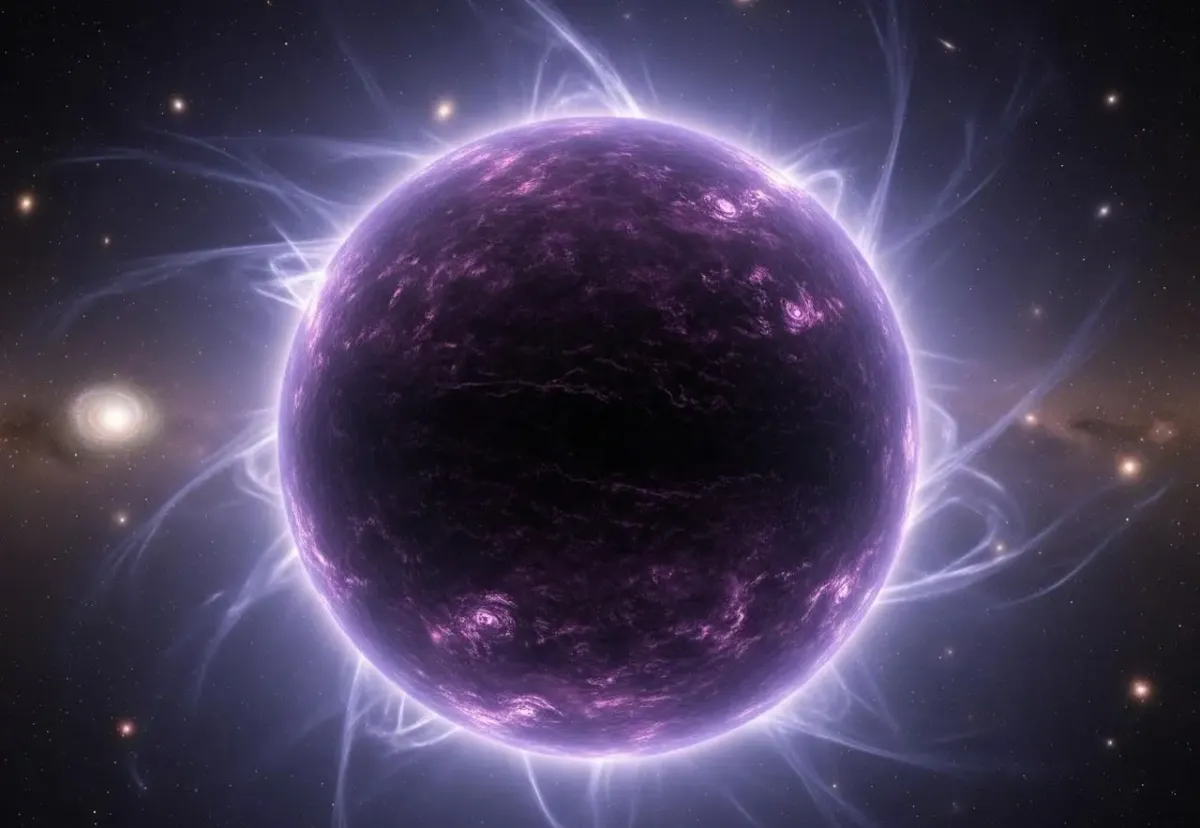
Hypothetical ‘dark stars’ could explain gravitational-wave hum, study finds - Futura, le média qui explore le monde
A decade of listening for cosmic ripples Scientists made the first direct detection of gravitational waves in 2015. That high-frequency burst came from colliding stellar-mass black holes. That signal matched what Einstein’s general relativity had predicted decades earlier.
0 comments
No comments yet. Be the first to share your thoughts!