Confined growth of armchair MoS2 nanotubes at the 1-nm limit - Science | AAAS
This story deserves to be shared
Send it to someone who'd care, or post it on your networks.
This article is an excerpt. To read the full content, visit the original source. Science | AAAS
Related articles
AI used to be a nemesis confined to science fiction. Will it really destroy us all? - University of Colorado Boulder
How Naegleria Fowleri Navigates Confined Spaces to Invade the Brain - EMJ
New research reveals how Naegleria fowleri utilizes narrow anatomical confinement to rapidly migrate into central nervous pathways. The post How Naegleria Fowleri Navigates Confined Spaces to Invade the Brain appeared first on European Medical Journal .
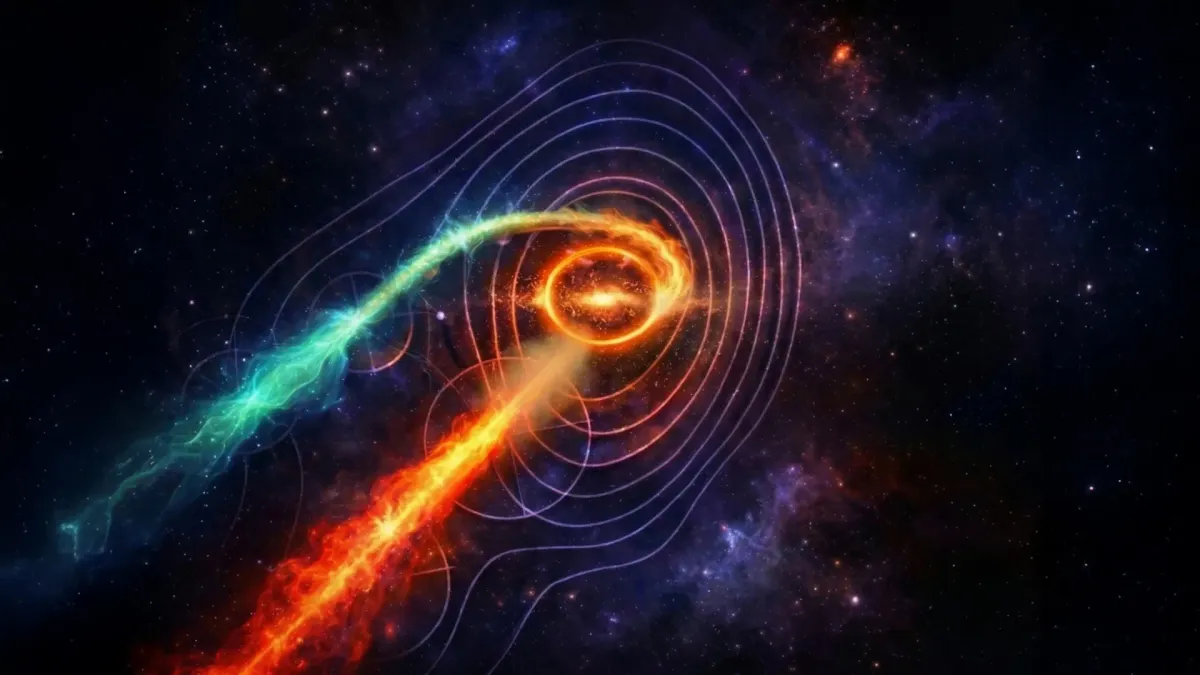
Two monster black holes could collide in just 100 years - Science Daily
Supermassive black holes are thought to exist at the centers of nearly all large galaxies. These enormous objects can weigh millions or even billions of times as much as the Sun, but scientists still do not fully understand how they grow to such extraordinary sizes. Pulling in (accreting) gas from their surroundings is one way they gain mass, although this process alone may be too slow to explain the largest examples. Merging with other massive black holes could provide the missing explanation. Galaxy collisions are common throughout the universe, making it likely that their central black holes also eventually come together. As two galaxies merge, their black holes are expected to move closer, begin orbiting one another, and gradually spiral inward until they combine into a single object.
NASA satellite can monitor most of world’s irrigation canals, study finds - Technology Org
Irrigation canals form a sort of circulatory system for global agriculture. Across the world, millions of kilometers of
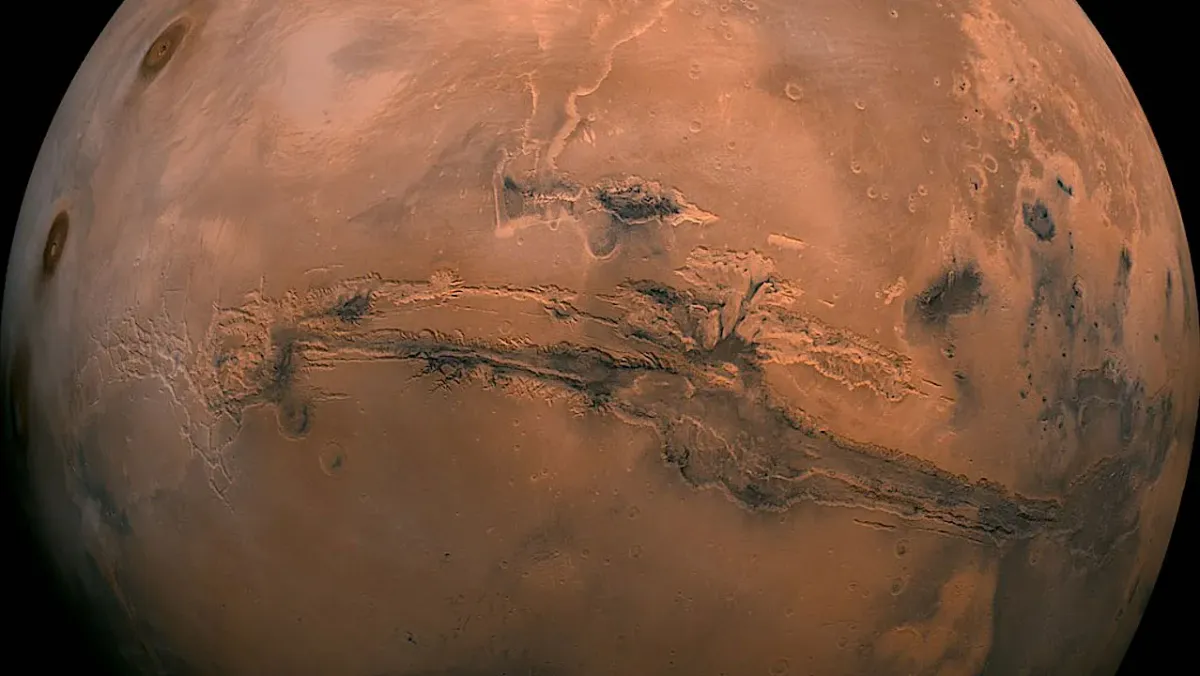
Astronomers discover a giant volcano on Mars that may hide the remnants of an ice glacier - The Brighter Side of News
Orbital observations suggest that a deeply eroded region near Mars’ equator contains the remains of a giant volcanic complex. Landforms and sulfate deposits point to past interactions between volcanic material and ice, but surviving buried glacier ice remains unconfirmed. Follow-up research and a proposed helicopter mission highlight the region’s scientific appeal without establishing present volcanic activity or a usable water reserve. A maze of fractured plateaus and canyons near Mars’ equator may preserve the remains of an enormous volcano. Within that landscape, scientists have also identified clues that glacier ice could survive beneath volcanic debris. Together, the observations make eastern Noctis Labyrinthus a compelling target for investigating the planet’s changing environment. The proposal concerns terrain already photographed by generations of spacecraft. Its significance lies in recognizing a possible geological structure within that familiar landscape, rather than discovering an unseen mountain. The volcano’s history and the present condition of any buried ice remain open questions.
0 comments
No comments yet. Be the first to share your thoughts!