Colorectal cancer risk linked to gut microbiome alterations - Harvard T.H. Chan School of Public Health
This story deserves to be shared
Send it to someone who'd care, or post it on your networks.
This article is an excerpt. To read the full content, visit the original source. Harvard T.H. Chan School of Public Health
Related articles
The molecular heterogeneity and clinical impact of genomic driver alterations in prostate cancer - Nature
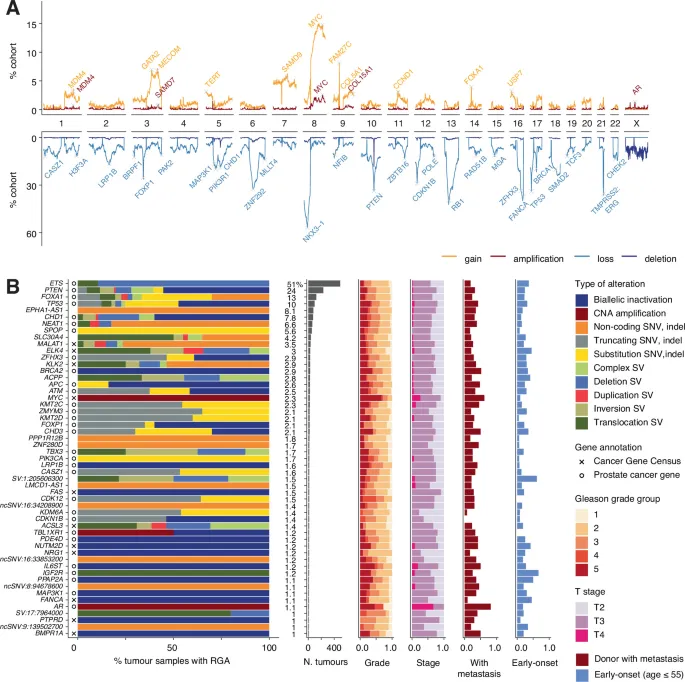
IntroductionProstate cancer is the most common malignancy in men that accounts for 10% of male cancer-related deaths and is expected to increase in incidence in the coming decades1. Its clinical trajectory is highly variable, with disease courses ranging from localised disease with long indolent phases that often require no therapy, to early-onset cancer that typically necessitates definitive treatment with curative intent2 and life-threatening metastatic prostate cancer3. The management of newly diagnosed prostate cancer is primarily based on established clinical and pathological information along with small gene or mRNA panels. The most pressing unmet clinical needs include reliable prognostic approaches to minimize overtreatment and the identification of therapeutic targets4. This is especially challenging due to the considerable molecular heterogeneity of the disease. Its genomic landscape is dominated by structural variation (SV) and copy-number alteration (CNA) drivers, while in contrast, drivers involving small mutations including single-nucleotide variants (SNVs) and insertions-deletions (indels) are relatively infrequent5,6.
Feasibility of diffuse reflectance spectroscopy for tumor border detection in colorectal cancer surgery - Nature
Joris T. Hepkema1, Isis Boeije2, Arend G. J. Aalbers3, Brechtje A. Grotenhuis3, Marinke Westerterp3, Freija Geldof1, Behdad Dashtbozorg1 & … Theo J. M. Ruers1 We’re sharing this article early to provide faster access to peer-reviewed, accepted research. It is citable and carries a permanent DOI. This version is subject to further edits and will be replaced automatically by the final Version of Record. All legal disclaimers apply.
5 Warning Signs of Colorectal Cancer You Shouldn’t Ignore - UC San Diego Health
Colorectal cancer: What this doctor wants you to know - Faculty of Health Sciences - McMaster University
Fatty liver disease is actually five different conditions, scientists discover - Science Daily
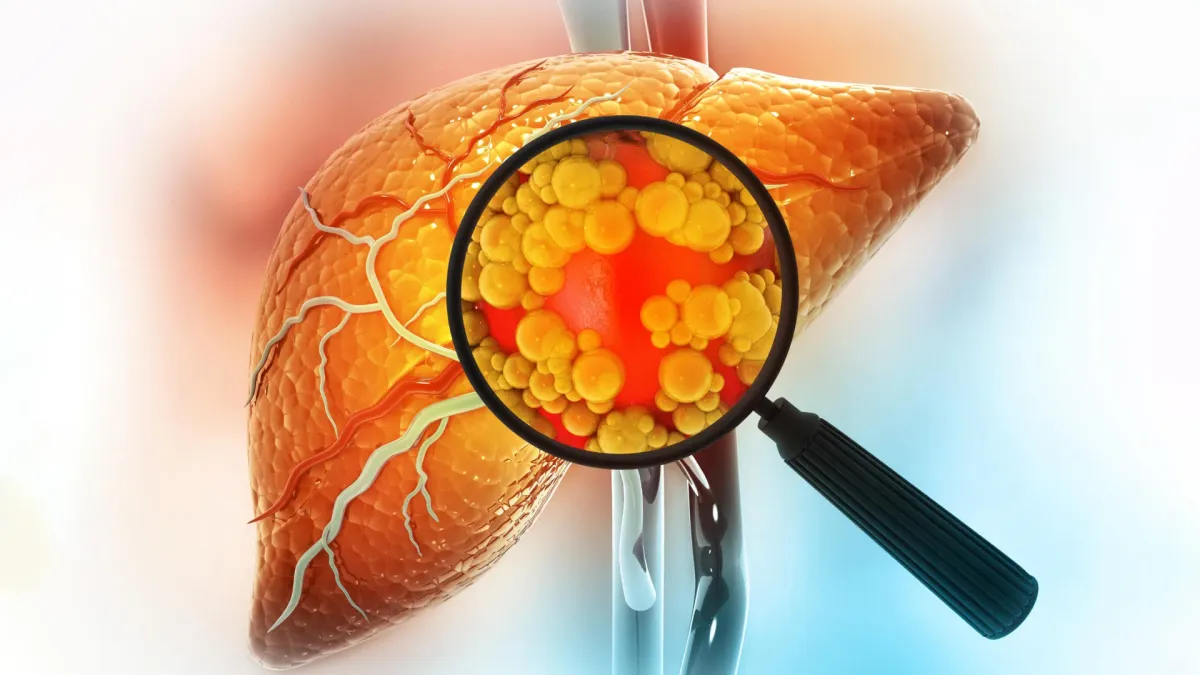
A common liver disease affecting nearly 30% of adults worldwide is far more complex than previously understood. Researchers at Mayo Clinic have identified five biologically distinct forms of the condition, each associated with different risks of serious health complications, including heart disease, liver failure, cancer, and the need for a liver transplant. The findings, published in Nature Communications, come from a collaboration between Mayo Clinic and Virginia Tech. Scientists discovered that metabolic dysfunction-associated steatotic liver disease, or MASLD, can develop through several different biological pathways. Some are closely connected to obesity and diabetes, while others appear to be driven by inherited genetic differences.
0 comments
No comments yet. Be the first to share your thoughts!