Citizen science in plastic composting: a practical approach to the search for PLA-degrading microorganisms - Frontiers
This story deserves to be shared
Send it to someone who'd care, or post it on your networks.
This article is an excerpt. To read the full content, visit the original source. Frontiers
Related articles
Could wood provide a better home for oil-degrading microbes? - Phys.org
According to a study conducted by researchers at Sultan Qaboos University, the material used to support microbial biofilms could influence their potential role in treating water generated during oil production. The research was led by Ph.D. candidate Arwa Al-Hadhrami under the supervision of Dr. Daniel Blackburn and conducted by a Sultan Qaboos University team representing the College of Agricultural and Marine Sciences and the Water Research Center, Oman. The results are published in Environmental Advances.
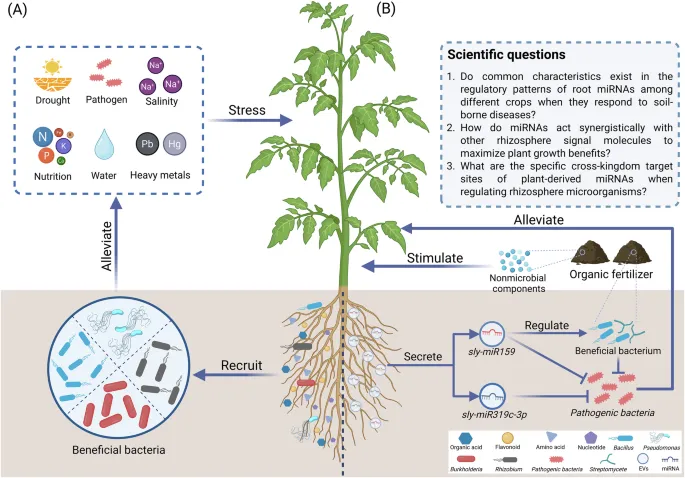
Plant microRNAs recruit beneficial microorganisms: implications for sustainable agriculture - Nature
Soil-borne diseases hinder crop yield and quality. Liu et al. found that organic fertilizer induces tomato roots to secrete specific microRNAs (miRNAs) likely via exosome-like extracellular vesicles (EVs) to regulate rhizosphere microbiomes and enhance soil disease resistance, revealing a new mechanism and informing sustainable agriculture. MicroRNA-mediated rhizosphere microbiome regulation: a new insight into plant “cry for help” theoryBeing sessile organisms, plants frequently encounter various biotic and abiotic stresses during growth and development. The rhizosphere microbiome is regarded as the “second genome” of plants, and its community structure and functional diversity are directly related to the plant’s survival strategies and ecological adaptability1,2,3. Soil-borne diseases are a key bottleneck limiting crop yield and quality improvement. Conventional chemical control methods not only disrupt the soil microecological balance but also may pose food safety risks4,5.
How human composting turns bodies into soil - Popular Science
Composting: Giving organic waste another shot at life - Statistique Canada
Scientists probe link between early brain development and conditions such as autism - Financial Times
Venture will harness clinical data and laboratory tissue models in quest for potential new therapies
0 comments
No comments yet. Be the first to share your thoughts!