China buys time for its young scientists as US rations it - Asia Times
This story deserves to be shared
Send it to someone who'd care, or post it on your networks.
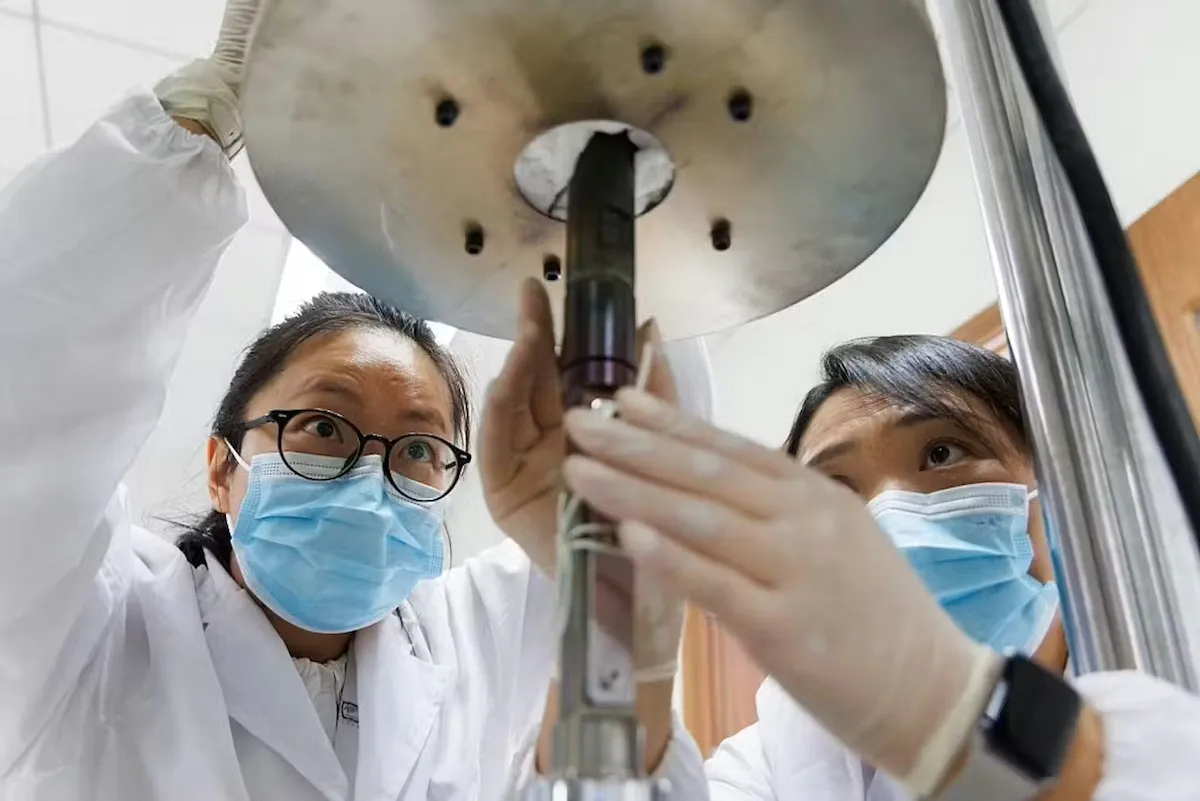
On September 19, Dou Xiankang, who heads the National Natural Science Foundation of China, described a grant that most young scientists anywhere would envy.
Researchers under 35 will get 15 years of support. The money doubles after five years and doubles again after ten, and there are no short-term performance reviews. The only test, Dou said, is “whether they are in the laboratory.” Forty-four people were chosen this year. Nine came from overseas.
This article is an excerpt. To read the full content, visit the original source. Asia Times
Related articles

The generation raised on sugar rations – and what their health reveals 70 years later - The Guardian
They were born into a Britain still recovering from the hardships of war. Though the air-raid sirens had fallen silent, many everyday foods remained rationed, including sugar. Adults were restricted to about 3 tablespoons (40g) a day to stretch between cups of tea, baking and desserts; children were limited to less than a tablespoon. Babies and very young children were expected to have little or no added sugar. Then, in 1953, the brakes came off. Separate restrictions on sweets and chocolate were lifted in February, followed by sugar in September. By the second half of 1954, average sugar consumption had almost doubled. A London shopkeeper puts up a sign announcing the new price of sugar, as announced in the budget in September 1939. The price has risen by a penny a pound. Photograph: Fox Photos/Getty ImagesThe lifting of postwar sugar rationing inadvertently created a natural experiment, whose consequences scientists are only beginning to unpick. A flurry of recent studies suggests that spending the first 1,000 days of life under sugar rationing may have left traces on people’s health more than seven decades later.

SpaceX Sent 6,300 Pounds to the Space Station. The Strangest Cargo Was Grown in a Lab - Inc.com
The spacecraft delivered materials and equipment for new research studies to the station.
Integrating hippopotamus optimization algorithm into machine learning frameworks for predicting suspended sediment concentrations - Nature
ORCID: orcid.org/0000-0001-8061-88361, Yaser Mehri2, Ali Abdolrazaq Sabbar3, Mohammad Javad Nahvinia3 & … Mohammad Hosein Omid2 We’re sharing this article early to provide faster access to peer-reviewed, accepted research. It is citable and carries a permanent DOI. This version is subject to further edits and will be replaced automatically by the final Version of Record. All legal disclaimers apply.
Development of a human respiratory tract effector cell-mediated antiviral assay using blood and airway immune cells from individuals previously hospitalised with COVID-19 - Nature
AcknowledgementsWe would like to thank Prof Alex Sigal (African Health Research Institute, South Africa) for providing the H1299 ACE-2 cell line used in the study. We thank the patients and their families for making this study possible. FundingResearch reported in this publication was supported by the South African Medical Research Council (SA MRC; grant number: 6803/CO AP 2021) with funds received from the Department of Science and Innovation. The content and findings reported/illustrated are the sole deduction, view and responsibility of the researcher and do not reflect the official position and sentiments of the SA MRC.

Ancient mud reveals a surprising secret about Greenland’s ice - Earth.com
Mud from a fjord shows an Atlantic air pattern brought wetter, colder spells to southern Greenland, a clue to how its ice may fare. Greenland’s ice is shrinking as the planet warms. But in the island’s southwest, rainfall and snowfall have been influenced by the same North Atlantic air-pressure pattern for at least 5,000 years. When that pattern tipped one way, the region turned wetter and colder. The record comes from mud on the floor of a Greenland fjord, and it suggests snowfall, not only temperature, shaped how the area’s ice grew and shrank. It doesn’t yet show how glaciers there will respond to the warming ahead. Johan Faust, a researcher at MARUM, the Center for Marine Environmental Sciences at the University of Bremen in Germany, led the work with colleagues in Germany, Norway, Denmark and Canada. A seesaw in the airThe pattern is called the North Atlantic Oscillation. It’s the difference in air pressure between a low that sits near Iceland and a high near the Azores, and it’s strongest in winter. When that difference is large, the pattern is in its positive phase. Northwestern Europe and southwestern Greenland both get more rain and snow.
0 comments
No comments yet. Be the first to share your thoughts!