Children with partial deafness face unseen challenges, parents say - BBC
This story deserves to be shared
Send it to someone who'd care, or post it on your networks.
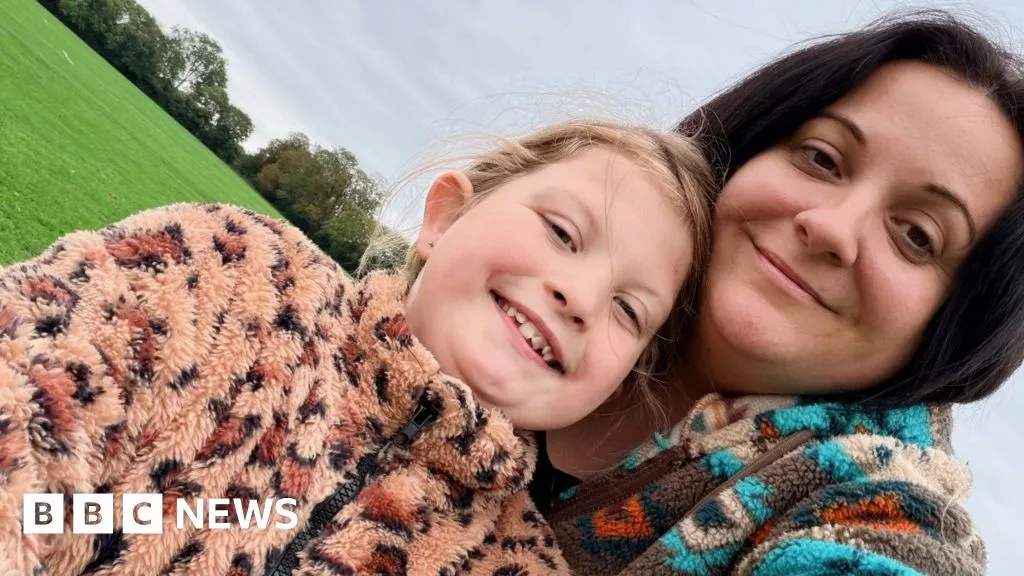
Partial hearing loss in children overlooked, parents say5 hours agoFiona CallowYorkshireFamily suppliedEight-year-old Arlo (left), pictured with her mum Ali, has unilateral hearing lossChildren with partial or mild hearing loss can encounter challenges in everyday environments that go unnoticed due to their diagnosis, parents say. Arlo, eight, from Cottingham, has unilateral hearing loss, or single-sided deafness, which wasn't picked up by healthcare professionals until she was two. She uses a hearing aid, but busier environments such as a classroom can make it difficult to concentrate, or pinpoint individual speakers, according to her mum Ali. "It can definitely take it out of her after a school day," the 38-year-old explains. "She says: 'my ears are aching now, I'm very tired'. "People can wrongly assume if you're not fully or profoundly deaf, then everything's okay and you can just carry on your day as normal. "Arlo is one of more than 53,000 deaf children and young people in the UK, according to the National Deaf Children's Society (NDCS). 48% are reported to have mild or unilateral hearing loss.
This article is an excerpt. To read the full content, visit the original source. BBC
Related articles
Optogenetic Therapy Restores Partial Vision - Optics & Photonics News
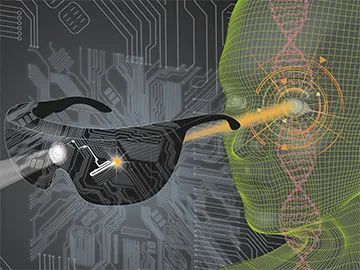
A gene therapy makes surviving retinal ganglion cells light-sensitive, allowing blind patients to detect objects using stimulating goggles. [Image: IOB, Veronique Juvin, 2021] An international team of researchers has shown that optogenetic therapy can improve the vision of people who have become blind through an inherited eye disease (N. Engl. J. Med., doi: 10.1056/NEJMoa2602215). Clinical tests showed that seven out of the 10 patients became more sensitive to light while some of the participants were also able to detect and reach for specific objects.
Deafness and hearing loss - World Health Organization (WHO)
Bilateral Sensorineural Hearing Loss as the Sentinel Presentation of Granulomatosis With Polyangiitis - Cureus
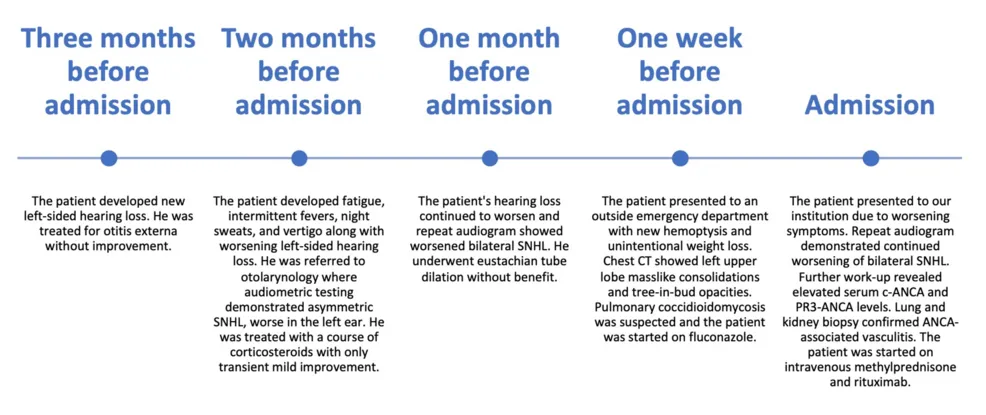
Granulomatosis with polyangiitis (GPA) is a systemic necrotizing granulomatous vasculitis classically involving the upper and lower respiratory tracts and kidneys. Timely diagnosis requires a high index of suspicion for the presenting symptoms. Otolaryngologic manifestations are commonly reported but most often involve the nasal and paranasal sinuses. Sensorineural hearing loss (SNHL) as the sole initial manifestation of GPA is uncommon and may contribute to diagnostic delay. We report a case of a 67-year-old male who presented with rapidly progressive bilateral SNHL that preceded pulmonary and renal manifestations by several months, during which the patient was treated for otitis externa and Eustachian tube dysfunction without improvement. Development of pulmonary symptoms prompted additional workup, which demonstrated markedly elevated cytoplasmic anti-neutrophil cytoplasmic antibody (c-ANCA) and proteinase 3-anti-neutrophil cytoplasmic antibody (PR3-ANCA), raising concern for GPA. Histopathology then confirmed the diagnosis. The patient was treated with high-dose corticosteroids and rituximab with serologic remission; however, his hearing loss was largely irreversible. This case

Modern neuroscience is rediscovering a surprising idea freud had 130 years ago - Science Daily
What if the human brain works in ways that Sigmund Freud began describing more than 130 years ago? A new scientific analysis suggests that some of his ideas about the mind share surprising similarities with one of the most influential theories in modern neuroscience. Published in the scientific journal Entropy, the paper explores connections between Freud's original theories, later developments in psychoanalysis, and a modern approach to brain research known as the prediction paradigm.
0 comments
No comments yet. Be the first to share your thoughts!