Chainlink, Cardano, other blockchain groups push SEC for clearer crypto rules
This story deserves to be shared
Send it to someone who'd care, or post it on your networks.

Six major blockchain organizations urged the SEC to formally recognize digital commodities as non-securities in its proposed regulatory framework. Six major blockchain organizations, including Chainlink Labs and the Cardano Foundation, have urged the US Securities and Exchange Commission (SEC) to formally classify digital commodities as non-securities, as the agency’s public consultation on proposed crypto regulations came to a close Tuesday. In a joint letter dated Oct. 20, Chainlink Labs, the Cardano Foundation, Hedera, Aptos Labs, Ava Labs and the Stellar Development Foundation called on the SEC to incorporate its digital commodity classification directly into the proposed Regulation Crypto Assets framework, arguing that interpretive guidance alone leaves market participants facing legal uncertainty. The groups argued that the SEC’s existing interpretation recognizes digital commodities as a distinct category but that the proposed rules fail to explicitly reflect that distinction, potentially leaving developers and other market participants uncertain about which securities regulations apply.
This article is an excerpt. To read the full content, visit the original source. Cointelegraph
Related articles
Private equity: Clearer view, tougher terrain - McKinsey & Company

7 healthcare stocks that stand out as investors pay up for the sector
Investors have pushed the healthcare sector to a record high, and some favored stocks have high projected revenue growth rates through 2028.

Trump says data centers should generate their own electricity — but experts say only states can mandate that
The president’s statement comes as a voter backlash against the facilities intensifies ahead of the midterm elections.
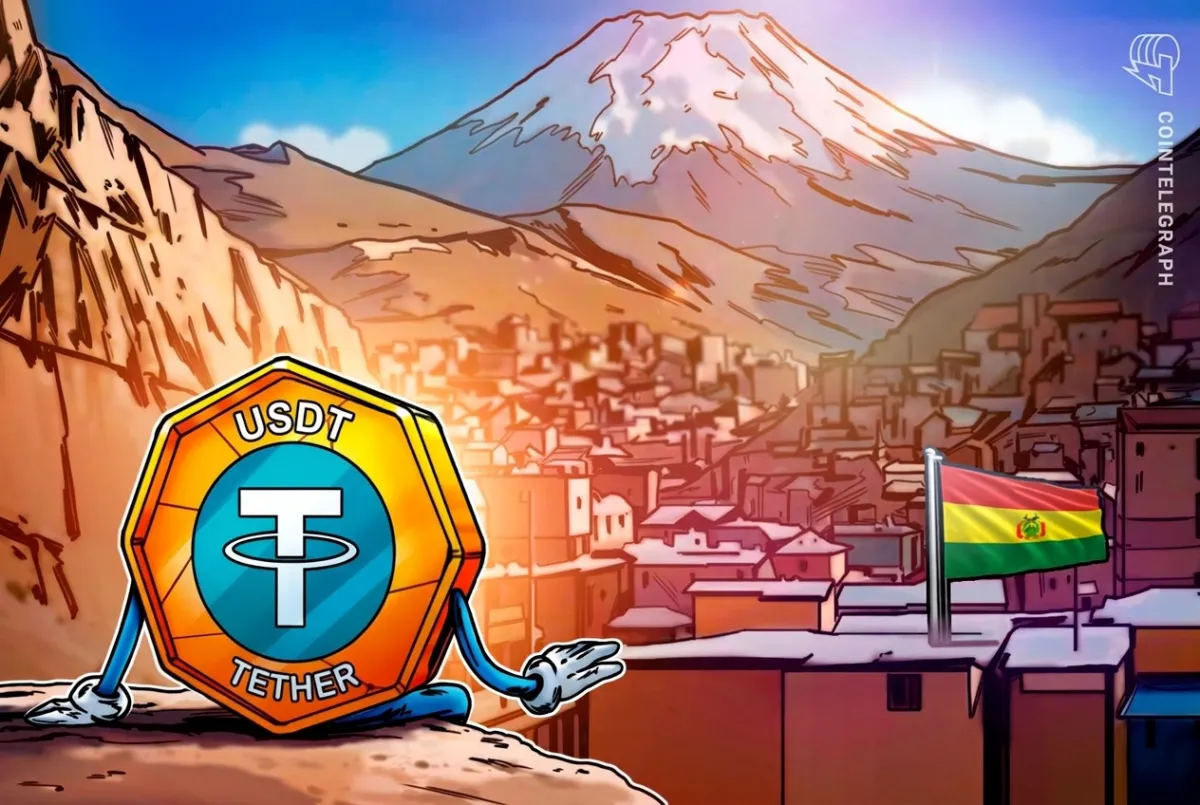
Tether backs Bolivian fintech bringing USDT payments to food delivery and banking
Tether has led a pre-seed funding round in Bolivian fintech Peso, which offers USDT payments through food delivery apps and local banking networks, to support the company’s expansion across Latin America. In a Wednesday announcement, Tether said the investment will help Peso expand its stablecoin payment infrastructure across Bolivia, Brazil, Colombia and Argentina, including services that connect USDT with local currencies through banking and merchant payment systems. Peso has integrated USDT payments into Yango’s food delivery service in Bolivia, allowing customers to pay for orders using the stablecoin. The fintech offers QR payments, point-of-sale services for merchants and virtual accounts linked to Bolivia’s banking system through ACH transfers. Tether did not disclose the size of its investment. Source: TetherThe investment comes as other fintech companies expand USDT-based financial services in Bolivia. On Tuesday, lending platform Tala announced a partnership with El Dorado to offer credit directly through the digital wallet, allowing eligible customers to receive and repay loans in USDT on the Tempo blockchain.

IBM raises annual software revenue outlook
Open this photo in gallery:The IBM logo at the 56th annual World Economic Forum (WEF) meeting, in Davos, Switzerland in January. Romina Amato/ReutersIBM finance chief James Kavanaugh on Wednesday said delayed software deals that rattled investors in the last quarter were beginning to close, as the company lifted its forecast for the business and reported better-than-expected third-quarter earnings. In an interview with Reuters, Kavanaugh said IBM now expects annual software revenue growth of about 7 per cent to 8 per cent, up from 6 per cent to 8 per cent previously. Third-quarter revenue rose 4.7 per cent to US$17.10-billion, above analysts’ average estimate of US$16.82-billion, according to data compiled by LSEG. Adjusted profit came in at US$2.95 per share, beating estimates of US$2.86 per share. IBM cuts annual revenue growth forecast, days after warning of shift to AI spendingCEO Arvind Krishna had said in July that IBM had “faltered” in adapting to a shift in customer spending from software to data-centre infrastructure, triggering its steepest one-day share drop in over a century.

Trump didn‘t mention ‘crypto’ once in White House cybercrime roundtable
US President Donald Trump hosted a roundtable at the White House on cybercrime, even as he and members of his administration face scrutiny from lawmakers and voters over accusations that they used their positions to enrich themselves with digital assets. Speaking at the roundtable event on Wednesday, Trump said “countless” Americans lost more than $20 billion from cybercrime in 2025 through impersonation schemes, ransomware attacks, scam centers and other methods. The president added that federal officials had frozen $1 billion in “cybercurrency tied to foreign scammers” and prevented $1.6 billion in losses in 2025 from going to criminals engaging in cybercrime following a March executive order. Secretary of Defense Pete Hegseth (left), President Donald Trump (center) and Attorney General Todd Blanche (right) speaking at the White House on Wednesday. Source: White HouseNotably, neither the president nor Attorney General Todd Blanche explicitly used the term “cryptocurrency” or “digital assets” when discussing the scams affecting many Americans, despite reports before the roundtable signaling a crackdown on foreign crypto scams would be the focus of the event.
0 comments
No comments yet. Be the first to share your thoughts!