Blocking RAN translation without altering repeat RNAs rescues C9ORF72-related ALS and FTD phenotypes - Science | AAAS
This story deserves to be shared
Send it to someone who'd care, or post it on your networks.
This article is an excerpt. To read the full content, visit the original source. Science | AAAS
Related articles
Functional chimeric RNAs expand the mammalian proteome - Nature
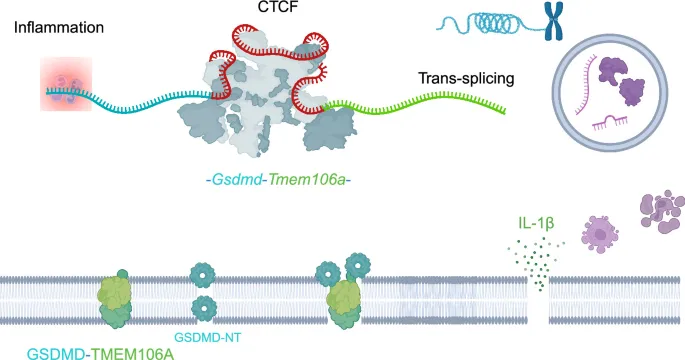
Chimeric RNAs (chRNAs) expand transcriptomic and proteomic diversity by joining sequences from distinct genomic loci, yet their physiological functions remain poorly understood. In a recent paper published in Nature, Venezia et al. show that inflammation induces CTCF-dependent chRNA formation in mammalian immune cells and that a Gsdmd-Tmem106a chRNA encodes a functional fusion protein that modulates pyroptosis and the balance between antibacterial defense and inflammatory pathology. The mammalian genome contains a surprisingly limited number of protein-coding genes relative to the complexity of mammalian organisms. Alternative splicing, RNA editing, non-canonical translation and post-translational modification expand the functional output of this finite genome. Chimeric RNAs (chRNAs), in which sequences from distinct genomic loci are joined within a single transcript, may represent another layer of this regulatory complexity.1,2,3 Historically, chimeric transcripts have been closely associated with cancer-associated chromosomal rearrangements.
0 comments
No comments yet. Be the first to share your thoughts!