Bangladesh battles massive outbreaks of dengue and measles - Outbreak News Today
This story deserves to be shared
Send it to someone who'd care, or post it on your networks.
Dengue feverAccording to the Directorate General of Health Services (DGHS) in Dhaka, at least six dengue patients died and 2,088 others were hospitalised in the past 24 hours, bringing the total cases and deaths to 112,400 and 348, respectively. September has been the deadliest month of the year so far, logging 43,774 hospital admissions and 148 deaths. Significant outbreaks are hitting the Dhaka area and the Chattogram, Khulna, and Barishal divisions due to high population density and inadequate waste management. Typically a monsoon-season illness (June to September), dengue transmission in Bangladesh is increasingly shifting and extending into late autumn due to unseasonal rains and climate shifts. Currently, 6,026 dengue patients are undergoing treatment at hospitals across the country. Bangladesh’s record dengue fever season in 2023 with Dr. Md Rafiul HasanMeaslesThe large measles outbreak in Bangladesh has yet to be contained. Sonce mid-March, the country reported 203,000 suspected measles cases, including 23,000 confirmed cases have been reported. At least 1,196 people have died, with children under five accounting for 94% of reported deaths.
This article is an excerpt. To read the full content, visit the original source. Outbreak News Today
Related articles

Two flu outbreaks active at Island Health facilities as flu cases rise in B.C. - CHEK News
Royal Jubilee Hospital in Victoria is shown in this file photo. (CHEK News) Island Health says two flu outbreaks are active at health facilities on Vancouver Island, as the BCCDC reports an increase in flu positivity province-wide.
WHO Pandemic Hub sets ambitious goal to detect new outbreaks within 24 hours - World Health Organization (WHO)
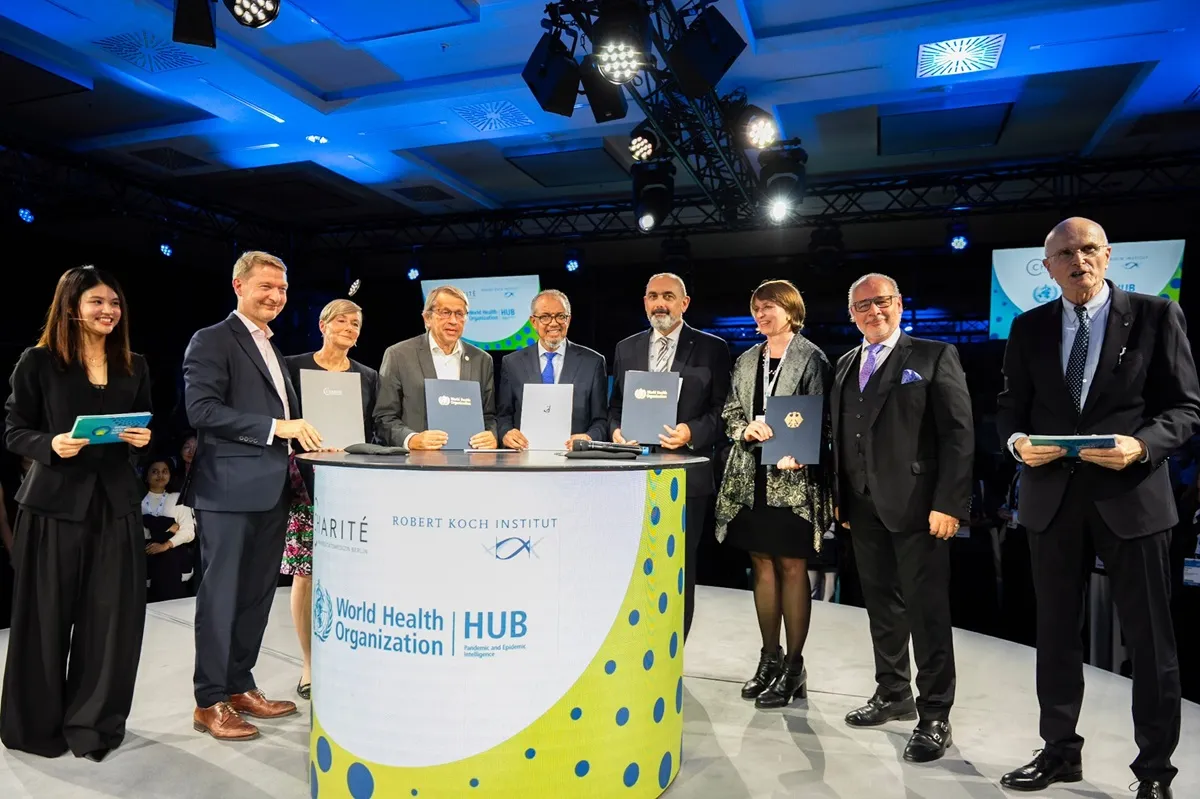
The World Health Organization (WHO) launched a new five-year strategy for its Hub for Pandemic and Epidemic Intelligence, charting a path towards a world where every country can detect and understand emerging health threats within 24 hours of their appearance by 2030. Strengthening rapid detection is a cornerstone of global health security, helping countries contain outbreaks before they escalate into larger epidemics or spread internationally. The Hub’s strategy aims to equip every country with the capabilities needed to rapidly identify and understand emerging health threats, thus supporting them in developing the systems, capacities and partnerships necessary to prevent outbreaks from escalating into epidemics or pandemics. Speaking at the opening of the World Health Summit in Berlin, in the presence of Germany’s Parliamentary State Secretary at the Federal Ministry of Health, Georg Kippels, WHO Director-General Dr Tedros Adhanom Ghebreyesus reflected on the Hub’s achievements in the five years since its creation. "Five years after its establishment, the WHO Hub for Pandemic and Epidemic Intelligence has become an integral part of the global health security system," he said.
0 comments
No comments yet. Be the first to share your thoughts!